


- Retail media is advertising that retailers and marketplaces sell to brands on their own sites, apps and stores, targeted with the retailer’s shopper data. Amazon Ads is the largest network; Walmart Connect, Roundel and Instacart Ads run others.
- On-site sponsored listings are usually sold per click in an auction. Off-site display and video using retailer audiences, and in-store screens, are usually sold per thousand impressions.
- Attributed ROAS is not incremental ROAS. Branded campaigns often credit sales that would have happened anyway, so use holdout tests, new-to-brand sales and TACoS.
- A sponsored listing does not make a product the one Rufus, ChatGPT or Perplexity recommends.
Where AmICited fits
AmICited’s Shopping report shows which sellers and products appear on AI product cards for the prompts you track and what share of those appearances are paid. Competitor Analysis shows which brands AI engines name beside yours, and which prompts each rival wins.
See competitor analysis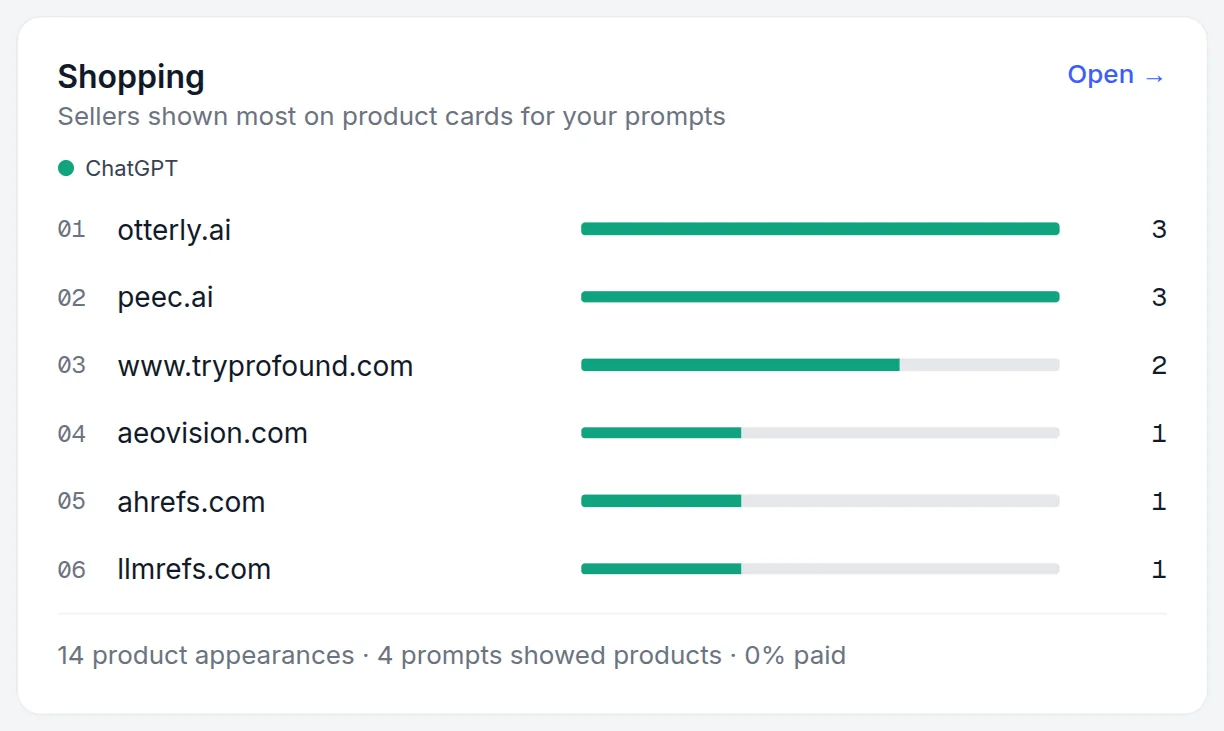
What Is Retail Media?
Retail media is advertising that retailers and marketplaces sell to brands, placed on the retailer’s own website, app or stores and targeted with the retailer’s own shopper data. When a shopper searches “protein powder” on Amazon and the first listings carry a “Sponsored” label, that is retail media. A brand paid Amazon to appear there.
The business behind it is called a retail media network (RMN). Amazon Ads is the largest. Walmart Connect, Target’s Roundel, Instacart Ads, Kroger Precision Marketing and many grocery, pharmacy and specialty chains run their own. Brands that sell through these retailers, from consumer packaged goods to electronics, use retail media to win placement on the digital shelf at the moment a shopper is ready to buy.
How Retail Media Works
Retail media has three main parts:
- Inventory. The retailer sells ad slots: sponsored listings in search results, banners on category pages, placements on product detail pages, video, and screens in physical stores.
- Data. Targeting uses what the retailer knows from purchases and browsing: who bought a category before, who bought a competitor, who has not reordered.
- Closed-loop measurement. Because the retailer sees both the ad and the checkout, it can report which ad was followed by a sale.
Most on-site formats, such as sponsored products and sponsored brands, are sold by cost per click in an auction. Display and off-site formats are usually sold by CPM.
The headline metrics are return on ad spend and its inverse, ACoS:
ROAS = Attributed sales ÷ Ad spend and ACoS = Ad spend ÷ Attributed sales
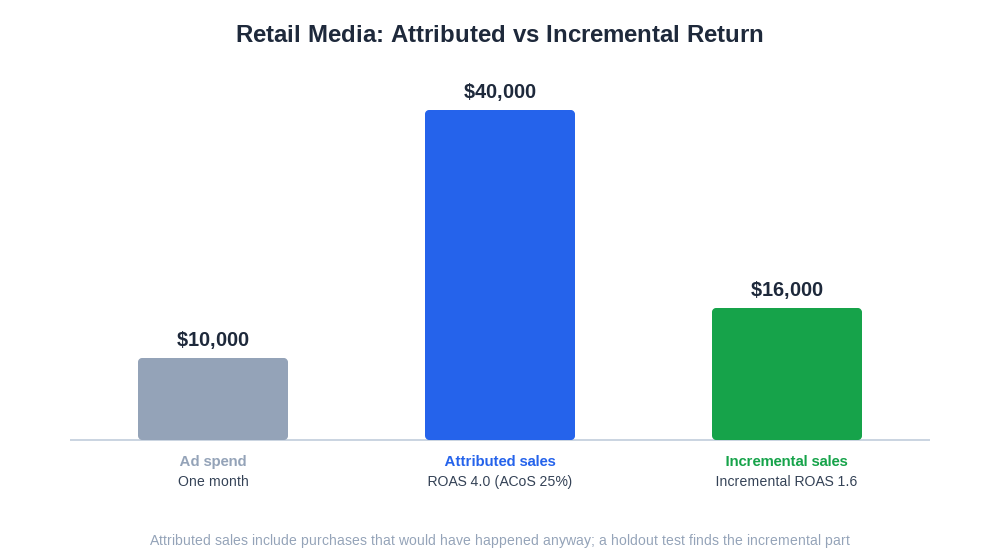
Say a brand spends $10,000 in a month and the network attributes $40,000 in sales. ROAS is 40,000 ÷ 10,000 = 4.0 and ACoS is 25%. Now suppose an incrementality test shows that only $16,000 of those sales would not have happened without the ads. Incremental ROAS is 16,000 ÷ 10,000 = 1.6. Both numbers are true. They answer different questions, and the second one decides whether the spend is worth it.
On-Site vs Off-Site vs In-Store Retail Media
| Type | Where ads run | Typical formats | Pricing | Best for |
|---|---|---|---|---|
| On-site | Retailer’s site and app | Sponsored products, sponsored brands, banners | CPC (search), CPM (display) | Capturing shoppers already searching |
| Off-site | Other websites, social, CTV | Display, video, social ads using retailer audiences | CPM | Reaching category buyers before they shop |
| In-store | Physical stores | Digital screens, checkout displays, audio | CPM or flat fee | Influencing shoppers at the shelf |
On-site search ads are the core of most budgets because the shopper’s intent is clear. Off-site campaigns extend reach but are harder to judge, because the retailer reports the sale while the ad ran somewhere else.
Retail Media vs Traditional Trade Marketing
Before retail media, brands paid retailers for visibility through trade marketing: end-cap displays, circular placements and slotting fees, often negotiated as part of a supply deal. Retail media moves much of that money into auction-based digital ads with targeting and reporting. The two still overlap, and some brands find that retail media budgets are expected as part of the commercial relationship with a large retailer.
Retail media also changes who controls the budget. Money that used to sit in a brand’s trade or shopper marketing line now often goes through a media team, and large retailers expect suppliers to spend with their network. That makes it worth agreeing upfront which metrics count as success, because the retailer’s report and the brand’s own sales data rarely match exactly.

Stay Updated on AI Visibility Trends
Get the latest insights on AI mentions, brand monitoring, and optimization strategies.
Retail Media and AI Search
Shoppers are starting to ask AI assistants, such as Amazon Rufus, ChatGPT and Perplexity, which product to buy. Those answers are shaped by product data, reviews and third-party content, and a paid sponsored listing does not automatically make a product the AI’s recommendation. Retail media buys the shelf; AI answers decide who gets named in the conversation.
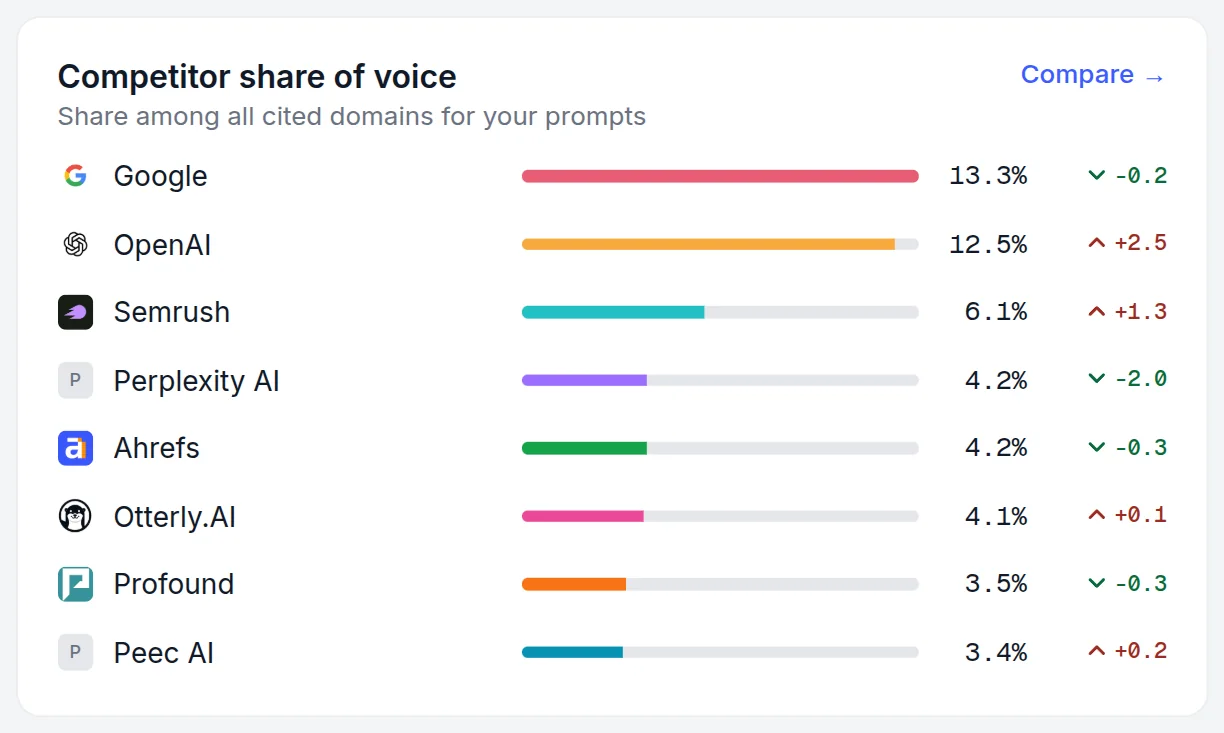
AmICited’s Competitor Analysis shows which brands AI engines mention beside yours and which prompts a rival wins. It is a useful check on whether your organic product presence matches what you pay for on retail media.
Best Practices for Retail Media
- Fix your product listings first: titles, images, reviews and in-stock status affect conversion on every paid click.
- Split brand-term campaigns from category and competitor campaigns, and judge them separately.
- Track new-to-brand sales where the network reports them, not only total attributed sales.
- Run holdout or geo tests on large budgets to estimate incremental sales.
- Watch total sales and organic rank, not only ad-attributed sales. TACoS (ad spend ÷ total sales) shows whether ads are building the business.
- Compare attribution windows before comparing ROAS across networks.
Common Retail Media Mistakes
The most common mistake is reading attributed ROAS as profit. A strong ROAS on branded search terms often reflects shoppers who were going to buy your product anyway. Pouring budget there looks efficient but adds little. Another mistake is advertising products that are out of stock, lose the Buy Box or have weak reviews, which wastes clicks.
Brands also compare networks on numbers that are not comparable. Attribution windows, view-through rules and what counts as a halo sale differ between retailers. Finally, many brands spread small budgets across too many networks and never reach enough data to learn which one actually grows sales.