



How to See Your Share of Voice
Find your AmICited Share of Voice and learn how it compares with your Visibility Score.
8 min read
Every AI search tool, including AmICited, measures AEO with share of voice and visibility score. Here’s why those are proxies, not proof, and what better measurements look like based on Eli Schwartz’s framework.
How is AEO actually supposed to be measured? It’s become one of the most contested questions in the industry, and most of the disagreement comes down to whether AI search tools are giving marketers the measurement they actually need. This breakdown is based on a blog post by Eli Schwartz about how he thinks the industry should measure AEO, walking through the proxies he identifies as most important, plus one more that AmICited adds to the list.
Almost every product in the AI search visibility space right now, including AmICited, is fundamentally measuring two things:
Both of these numbers are useful, and both are proxies. Neither one tells you, on its own, whether AEO is actually moving your business.

Track how AI chatbots mention your brand across ChatGPT, Perplexity, and other platforms.
The first point Schwartz makes is one that’s easy to gloss over: traffic is not a goal. As AI Overviews and chatbot answers satisfy more queries directly, people click less on top-of-funnel web pages. That means your traffic is going to fall, full stop, regardless of how well you’re doing at AEO.
That said, the picture isn’t uniformly bad. For important, transactional pages, traffic still drives revenue directly. There are examples where overall traffic hasn’t changed much and revenue hasn’t changed much either, which suggests the mix matters more than the headline number. AEO does not drive revenue directly. It shapes awareness, trust, and consideration long before a transaction happens, which makes a raw traffic chart a poor scoreboard for whether it’s working.
Attribution for SEO revenue was already messy. To connect a conversion back to search, you needed to know the click immediately before that conversion had Google as its source. Ad blockers, privacy settings, and missing referrer data made that unreliable even in a mature, well-understood channel.
AEO is harder. Set aside the entire funnel from a user landing on your page, even before that, it’s genuinely difficult to know that the prompt you’re tracking reflects the real context an AI agent is working with. If you have access to your own AI assistant’s settings, you can see this directly: there are memory and personalization capabilities that store data about you, and that data becomes part of the context sent to the model on every question.
Ask an assistant something like “what’s the best CRM in 2026?” and it isn’t going to just run a plain search. First it checks its memory for personalization or data about you, and that context can shape which search it actually runs and which sources it surfaces. So when a tool reports a citation, a share-of-voice number, or a visibility score, there’s no way to be 100% certain that measurement reflects what a real user, with their own memory and context, would actually see.
Get the latest insights on AI mentions, brand monitoring, and optimization strategies.
Given those limits, what measurements come closer to the truth? Here are the proxies worth tracking alongside share of voice and visibility score.
Brand traffic is one of the simplest and most reliable signals available. Filter your Google Search Console queries for your brand name and watch how impressions and clicks change over time. The same applies to AI search: as AI-driven awareness grows, you should see a real bump in branded query volume, both in Search Console and in Google Trends.
This isn’t hypothetical. It showed up directly in FlowHunt, another product from the same team: a measurable bump in impressions and clicks specifically for the “FlowHunt” brand query. Tracking this bump, and putting in the effort to keep growing it, is one of the more trustworthy proxies available, because as brand awareness increases, AI search becomes a stronger and more durable revenue channel.
This is the proxy most companies skip entirely. Add a “how did you find us?” question to your onboarding flow to capture what people report as their acquisition channel. If you run demo calls, ask directly. It’s not perfectly precise, but it’s a data point no AI visibility tool can fabricate or approximate for you, and it’s often the most honest signal in the whole stack.
This is where current tools, AmICited included, can add real value. Track which of your pages are most frequently cited, then build new prompt groups directly from that data. Pull the pages that ChatGPT is referring users to from Google Analytics, turn those pages into prompts, and start tracking them in your AI search tool. You can do this manually with any AI search tool, but a direct Google Analytics integration (which AmICited is building) can surface these prompt suggestions automatically, rather than requiring you to reverse-engineer them by hand.
Go through the accounts you’ve already gathered, whether from an e-commerce store or a SaaS product, and work out what prompts those specific customers would plausibly ask an AI system, and where you’d want to rank for them. This grounds your prompt list in real buyers instead of assumed keywords, and it’s another way of building prompt groups that reflect actual demand rather than guesswork.
The last proxy is more traditional: commissioning share-of-voice surveys through a marketing or research agency. It’s slower and costs more than pulling a number from a dashboard, but it captures brand perception in a way that prompt-based tracking, by its nature, can’t fully replicate.
None of this means share of voice and visibility score are useless, they’re still the fastest way to see directional movement across the prompts and platforms you care about. But treating them as the whole picture, rather than one layer of it, is a mistake given how much personalization and memory can shift what an AI agent actually searches for and cites.
The more resilient approach: use share of voice and visibility score for day-to-day tracking, and validate the story they tell with brand traffic bumps, direct customer feedback, and prompt groups built from pages you’re already getting cited on. This is very much an evolving conversation. It’ll be worth watching how the rest of the industry responds as more of these proxies get standardized.
Arshia is an AI Workflow Engineer at FlowHunt. With a background in computer science and a passion for AI, he specializes in creating efficient workflows that integrate AI tools into everyday tasks, enhancing productivity and creativity.

AmICited gives you share of voice and visibility score out of the box, plus the data you need to build better proxies: cited-page mapping, brand query tracking, and prompt groups built from what's actually working.
Find your AmICited Share of Voice and learn how it compares with your Visibility Score.
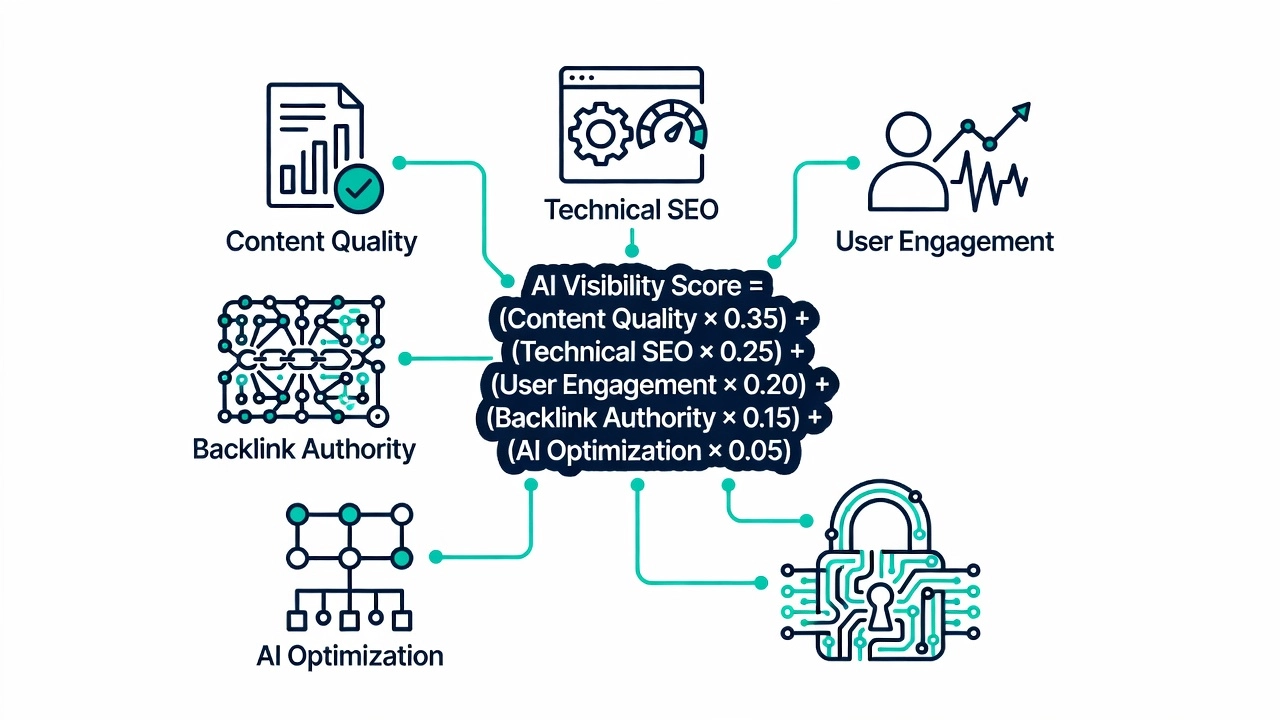
AI visibility scores vary wildly between vendors for the same brand, and it's not a bug. Here's the actual math behind the five components that typically feed a...
Learn what the AmICited Visibility Score measures and how its gauge and platform breakdown show your AI visibility.
Cookie Consent
We use cookies to enhance your browsing experience and analyze our traffic. See our privacy policy.