


- Reverse logistics is goods moving back from the customer: mostly returns, plus warranty repairs, recalls, trade-ins, refurbishment and recycling.
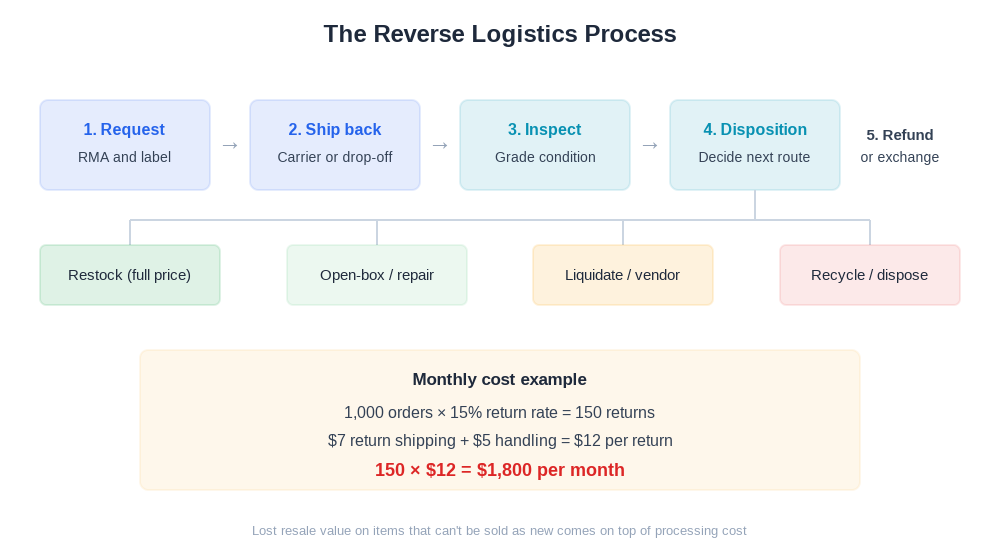
- A typical ecommerce return runs through five steps: authorization, return shipping, inspection, disposition, and refund or exchange.
- Returns cost more per unit than outbound orders because each parcel arrives alone, in unknown condition, and needs a human decision.
- Slow inspection lowers resale value, so measure receipt-to-restock time and set disposition rules by category and condition.
Where AmICited fits
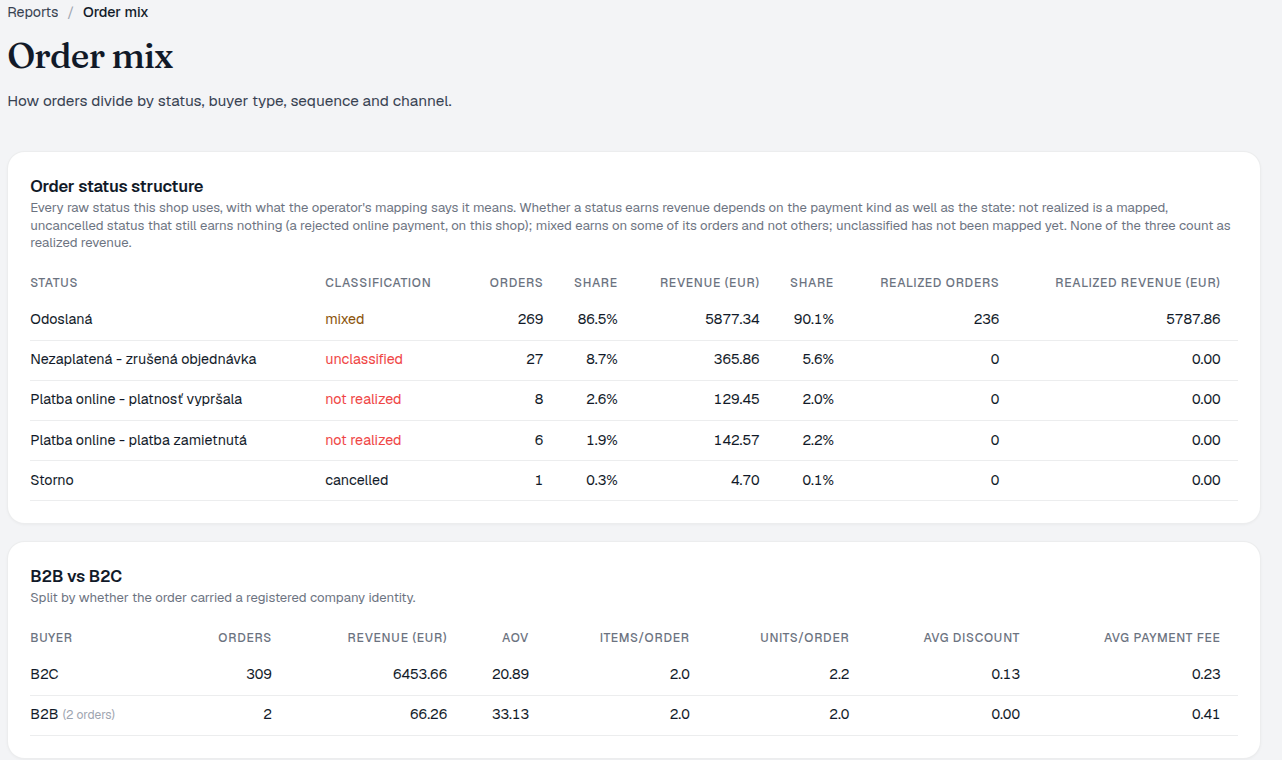
AmICited’s Economics report shows contribution margin as a revenue-to-profit bridge, and the Order Mix report splits orders by status and cancellations, so you can see how much revenue survives once returns and cancellations come out.
See the economics report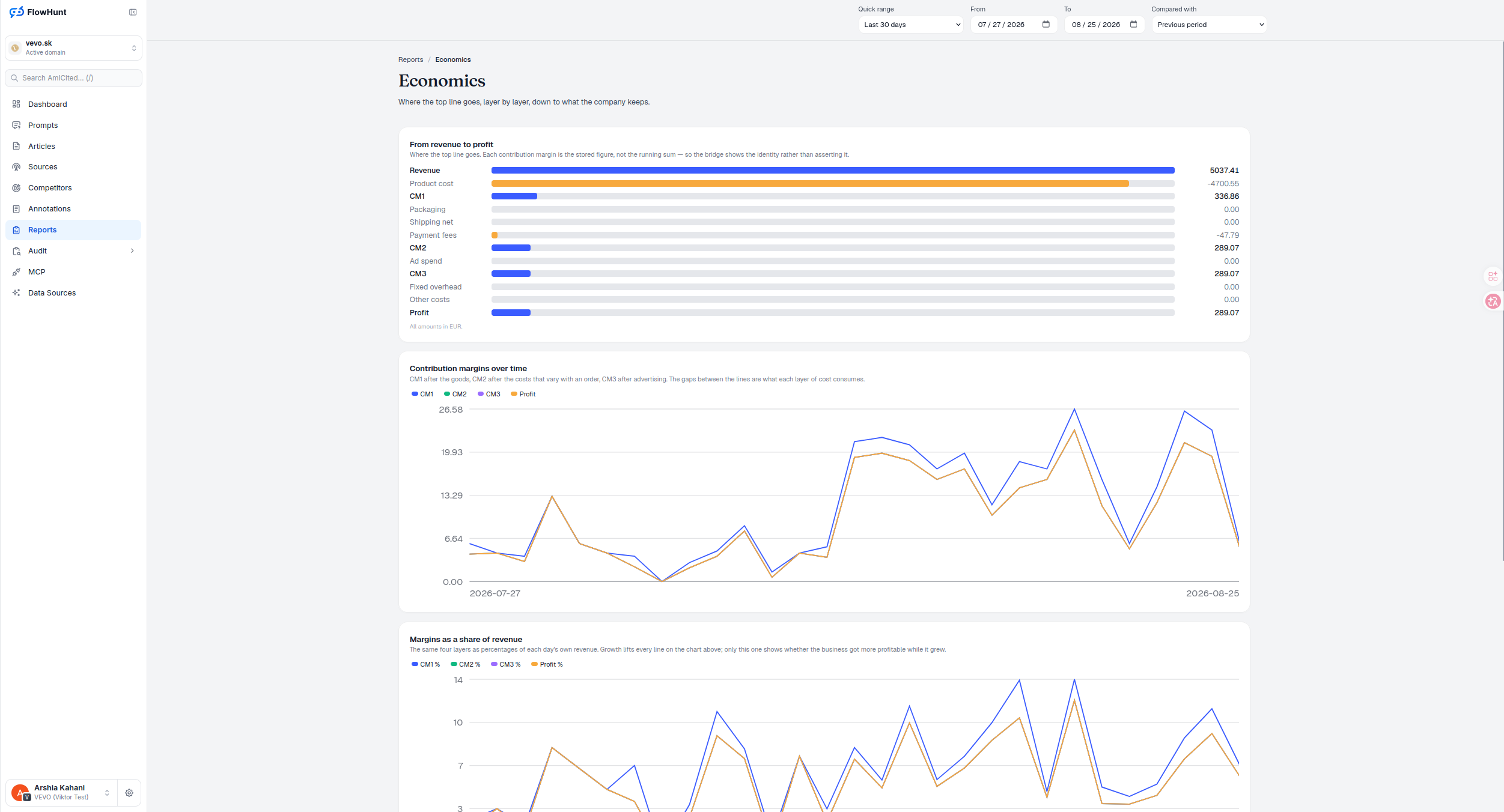
What Is Reverse Logistics?
Reverse logistics is everything that happens when goods travel backward in the supply chain: from the customer to the retailer, brand or manufacturer. In ecommerce that is mainly returns, but it also covers warranty repairs, product recalls, trade-ins, refurbishment and recycling of packaging or old devices.
Every online seller deals with it, from a Shopify store handling a handful of returns to large retailers running dedicated returns centers. It touches your return policy, the RMA workflow, carriers, warehouse staff and finance, since a returned item has to be refunded, credited or exchanged. A third-party logistics provider often runs part of it.
How the Reverse Logistics Process Works
Most ecommerce returns follow five steps:
- Request and authorization. The customer starts a return in a portal or by email. The store checks eligibility (window, condition, reason) and issues an RMA and a label.
- Return shipping. The parcel travels back by carrier, a drop-off point or in store.
- Receiving and inspection. The warehouse logs the item, matches it to the order and grades its condition.
- Disposition. Someone decides where it goes: back to stock, open-box sale, repair, return to vendor, liquidation, donation, recycling or disposal.
- Refund or exchange. Finance issues the refund, store credit or replacement, and inventory records update.
To size the problem, multiply your return volume by the cost of each return. Say you ship 1,000 orders a month and 15% come back. That’s 150 returns. If return shipping costs $7 and handling and inspection cost $5, each return costs $12 before any lost resale value. 150 × $12 = $1,800 a month in processing alone. If a third of those items can’t be sold at full price and lose $10 of value each, add 50 × $10 = $500.
Reverse Logistics Disposition Options
| Disposition | When it fits | Value recovered |
|---|---|---|
| Restock as new | Unopened or like-new, sealed packaging | Full price |
| Open-box or refurbished sale | Minor wear, opened packaging, fixable faults | Partial |
| Return to vendor | Defects covered by supplier agreement | Credit from supplier |
| Liquidation | Excess or seasonal stock, mixed condition | Low |
| Donation | Usable items not worth reselling | Tax benefit where applicable |
| Recycling or disposal | Damaged, unsafe or hygiene-restricted items | None, often a cost |
The faster an item moves through inspection, the more likely it can still sell at full price. A winter coat returned in January and restocked in March has often lost most of its season, and may end up as dead stock.
Some categories have extra rules. Cosmetics, underwear and food often can’t be resold once opened, for hygiene or safety reasons. Electronics may need data wiping and testing before resale. Products under recall follow the manufacturer’s or regulator’s instructions instead of normal disposition. Build these rules into the inspection step so staff don’t have to look them up for each parcel.
Reverse Logistics vs Forward Logistics
Forward logistics is the planned flow outward: bulk inbound shipments, put-away, picking and outbound parcels to customers. Volumes are forecastable, items are new and every unit follows the same path.
Reverse logistics runs on single parcels, arriving at random, in unknown condition, often without the original packaging. Each one needs a human decision. That’s why the cost per unit is usually higher than for an outbound order, and why returns are a margin problem, not only a customer service one. A high return rate quietly turns profitable products into break-even ones.

Stay Updated on AI Visibility Trends
Get the latest insights on AI mentions, brand monitoring, and optimization strategies.
Reverse Logistics and AI Search
Returns rarely come up in AI search directly, but the return experience does. When someone asks ChatGPT or Perplexity “is it easy to return to [brand]?” or “best online shoe store with free returns”, the answer is built from your policy page, review sites and forum threads. A clear, crawlable returns policy page with concrete terms (window, who pays shipping, how refunds work) gives AI engines something accurate to quote.
On the cost side, AmICited’s Economics report shows contribution margin as a revenue-to-profit bridge, and the Order Mix report splits orders by status and cancellations. Together they show how much of your revenue survives once returns are taken out.
Best Practices for Reverse Logistics
- Track return reasons in fixed categories (size, damaged, not as described, changed mind), and review them by product every month.
- Fix the top return reasons at the source: size charts, better photos, accurate descriptions and sturdier packaging.
- Use a returns portal that issues labels automatically and records the reason before the item ships back.
- Set a target for receipt-to-restock time and measure it, since slow inspection cuts resale value.
- Define disposition rules by category and condition, so staff don’t have to decide case by case.
- Offer exchanges or store credit first where it fits, so some returns keep the revenue in the business.
- Include return costs in product profitability, not just in a general overhead line.
Common Reverse Logistics Mistakes
The biggest mistake is treating returns as a customer service task and never measuring their full cost per product. Many stores know their return rate but not what each return costs them, so they keep promoting items that lose money once returns come back. Another is letting returned stock pile up uninspected for weeks, which turns sellable items into markdowns.
Stores also restock items without proper inspection, which sends damaged goods to the next customer and creates a second return. And a vague returns policy causes both more disputes and more chargebacks, because customers who can’t figure out how to return an item go to their bank instead.