


- B2C ecommerce is selling online from a business to people buying for their own use, through a brand’s own store, an online retailer, a marketplace or a subscription.
- Revenue is sessions × conversion rate × average order value. If paid traffic costs more per visit than a visit earns, that traffic loses money.
- Compared with B2B, B2C means many more customers, smaller orders, payment at checkout and buying decisions made in minutes.
- Profit usually comes from repeat orders, because a first order rarely covers the cost of the ad that brought the customer in.
Where AmICited fits
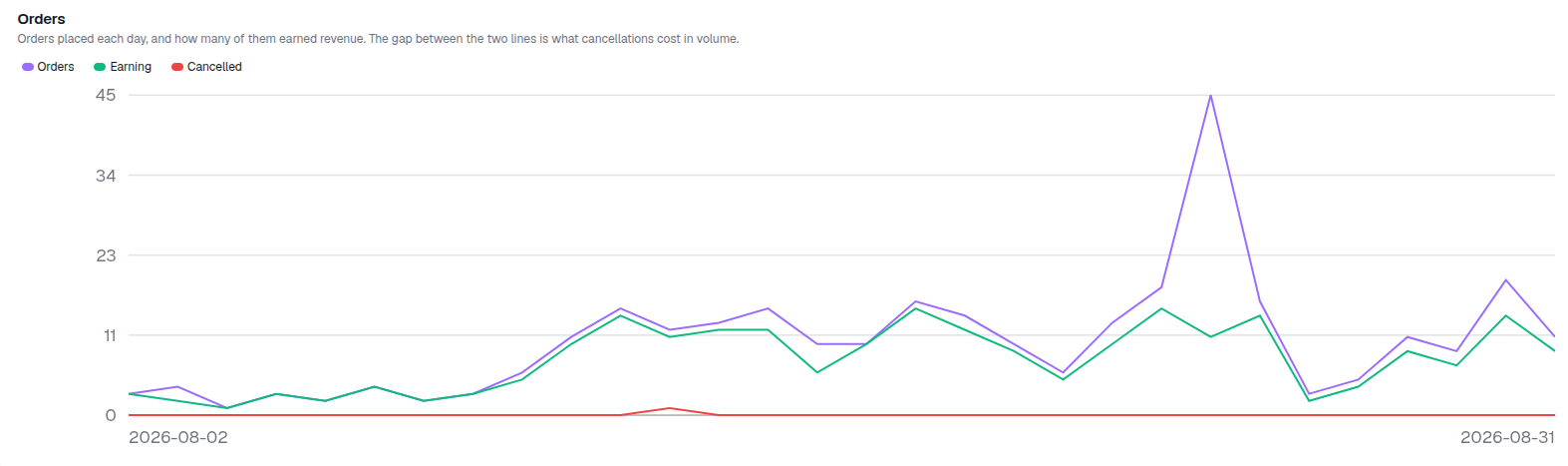
With a shop connected, AmICited’s Sales engine report shows revenue, orders, costs, average order value and cancellation rate day by day, and Order Mix reports B2C and B2B orders separately so a few large company orders don’t skew your averages.
See the sales engine report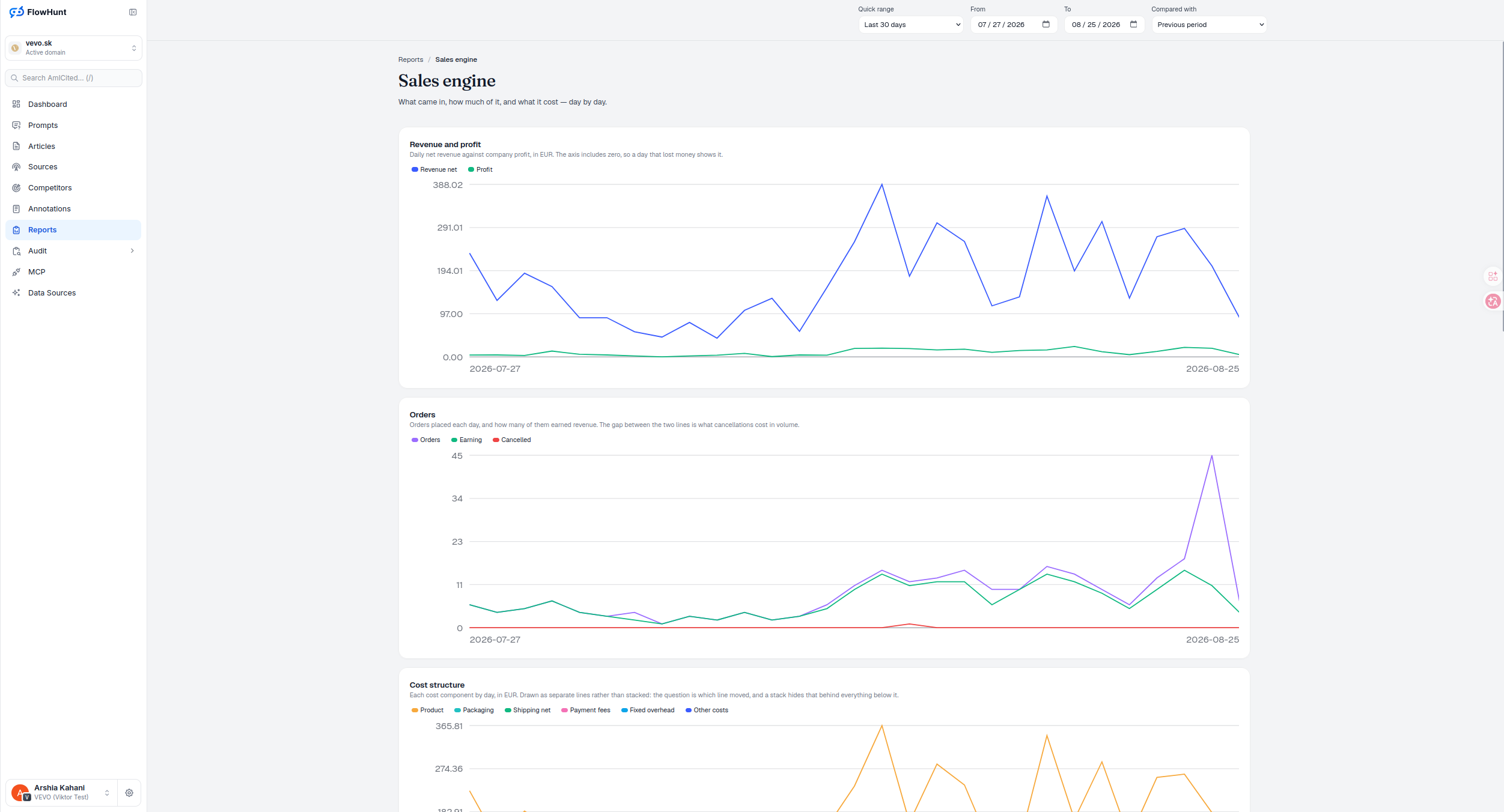
What Is B2C Ecommerce?
B2C ecommerce, short for business-to-consumer ecommerce, is any online sale from a company to a person buying for their own use. When you order sneakers from a brand’s site, a book on Amazon or a meal kit subscription, you are on the consumer side of a B2C transaction.
It is the model most people picture when they hear “online shopping”. It runs on platforms like Shopify, WooCommerce, BigCommerce and Adobe Commerce, and through marketplaces such as Amazon, Etsy and eBay. Compared with B2B ecommerce, B2C means many more customers, smaller orders, payment at checkout, and a buying decision that one person makes in minutes rather than a purchasing team in weeks.
How B2C Ecommerce Works
A B2C sale follows the same basic path regardless of what you sell:
- Discovery. A shopper finds you through search, ads, social media, a marketplace listing or, increasingly, an AI assistant’s recommendation.
- Evaluation. They land on a product page, read reviews, compare prices and check shipping costs.
- Checkout. They pay by card, digital wallet or a buy now, pay later option.
- Fulfillment. You pick, pack and ship the order yourself or through a third-party logistics provider.
- Post-purchase. Delivery, returns, support and the emails that bring them back for a second order.
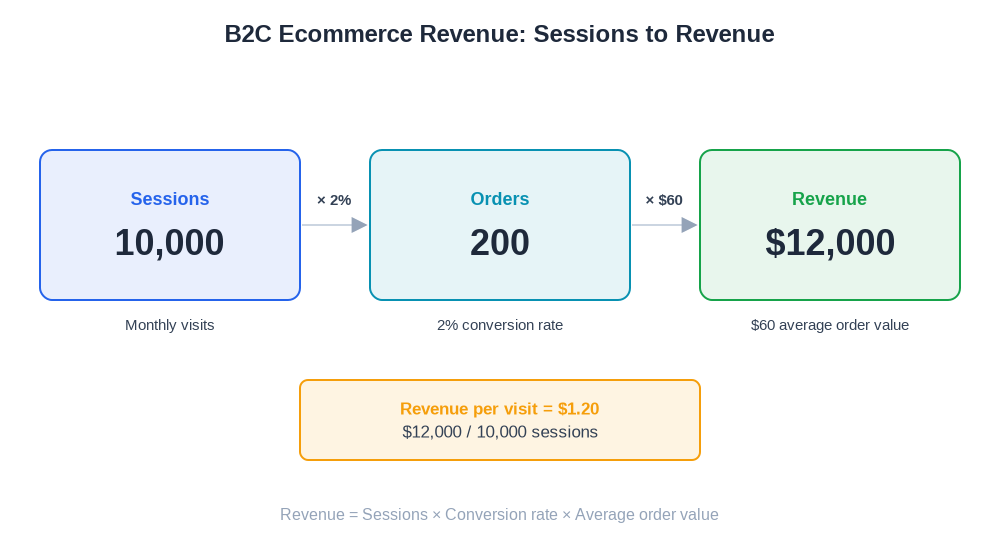
The economics of a B2C store come down to a simple chain. Revenue equals sessions × ecommerce conversion rate × average order value.
Take a store with 10,000 monthly sessions, a 2% conversion rate and a $60 average order value:
- Orders: 10,000 × 0.02 = 200
- Revenue: 200 × $60 = $12,000
- Revenue per visit: $12,000 ÷ 10,000 = $1.20
If paid traffic costs you more than $1.20 per visit before product, shipping and payment costs, that traffic loses money. This is why B2C teams watch margin per order and customer acquisition cost as closely as traffic.
Types of B2C Ecommerce Business Models
B2C is a broad category. These are the main models and how they make money.
| Model | How it works | Examples | Main challenge |
|---|---|---|---|
| Direct-to-consumer (D2C) | Brand sells its own products on its own site | Warby Parker, Allbirds | Paying for every customer you acquire |
| Online retailer | Buys stock from brands and resells it | Best Buy online, Zalando | Thin margins on branded goods |
| Marketplace | Third-party sellers list, platform takes a fee | Amazon, Etsy, eBay | Competition and fees on every sale |
| Subscription | Recurring delivery or access for a fee | Meal kits, razor clubs, streaming | Churn after the first few months |
| Dropshipping | Seller never holds stock, supplier ships | Many small Shopify stores | Low control over delivery and quality |
| Social commerce | Purchase happens inside a social app | TikTok Shop, Instagram shopping | Dependence on one platform’s rules |
B2C vs B2B Ecommerce
The difference is who buys and how. A B2C shopper buys a $40 item on impulse after reading three reviews. A B2B buyer may order $40,000 of parts after a quote, a credit check and approval from finance. That changes almost everything about the store:
- Pricing: B2C uses one public price plus promotions. B2B uses customer-specific price lists and volume tiers.
- Payment: B2C is paid at checkout. B2B often runs on invoices with 30- or 60-day terms.
- Marketing: B2C leans on paid social, search, email and influencers. B2B leans on sales teams, account management and trade relationships.
- Order size and frequency: B2C has many small orders. B2B has fewer, larger and more predictable ones.
Many companies sell both ways from one store. In that case, report them separately, because blending a few large B2B orders into B2C average order value makes both look different from reality.


Stay Updated on AI Visibility Trends
Get the latest insights on AI mentions, brand monitoring, and optimization strategies.
B2C Ecommerce and AI Search
Consumers now ask ChatGPT, Perplexity, Gemini and Google AI Mode questions like “best running shoes for flat feet under $150” and get a short list of products with reasons. For B2C brands, being in that list works like a new front page. Those answers draw on product pages, review sites, Reddit threads and comparison articles, so the brand with clear product data and genuine third-party mentions has an advantage.
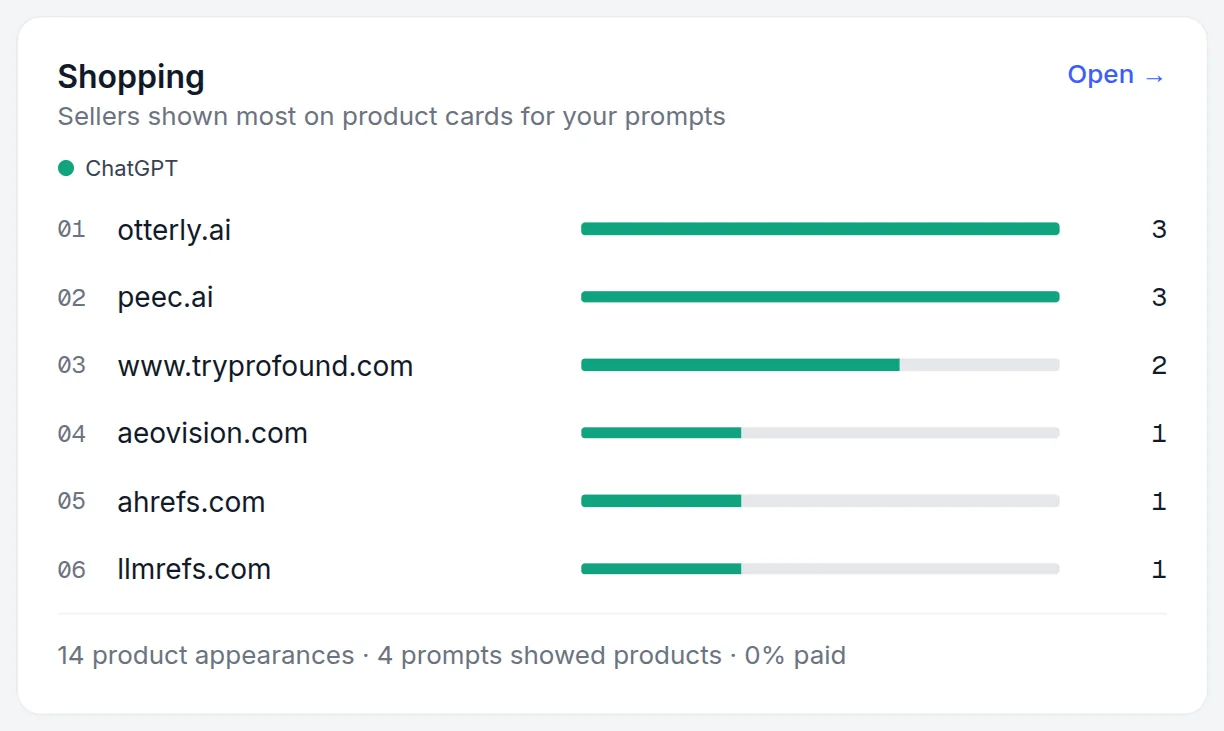
You can check whether AI engines mention and cite your store with AI visibility tracking, and see which of your pages they cite.
Best Practices for B2C Ecommerce
- Show the total price, including shipping, before checkout. Surprise costs at the last step are a common reason shoppers abandon carts.
- Offer guest checkout and digital wallets so a first-time buyer can pay in a few taps.
- Write product pages that answer the questions shoppers ask in search and in AI chats: size, materials, compatibility, delivery time.
- Measure contribution margin per order, not just revenue, so discounts and free shipping do not hide losses.
- Build a second-order program: a post-purchase email sequence and replenishment reminders for consumable products.
- Track revenue per visit by traffic source to see which channels pay for themselves.
Common B2C Ecommerce Mistakes
New stores often spend most of their budget on acquiring customers and almost nothing on keeping them. In B2C, a single order rarely covers the cost of the ad that brought the customer in, so profit usually comes from the second, third and fourth orders.
Other frequent mistakes are slow mobile pages, thin product descriptions copied from the supplier (shared word for word by every competitor), and return policies that are hard to find. Free shipping thresholds set without checking average order value cause problems too. If your threshold sits well below what most customers already spend, you give away margin without changing behavior.