


- PPC management is the ongoing work of planning, running and improving pay-per-click campaigns so paid clicks turn into leads or sales.
- It runs as a loop: research, structure, bids and budgets, ad tests, conversion tracking, pruning with negative keywords, and reporting.
- Judge campaigns on cost per acquisition and return on ad spend against your margin, not on clicks or click-through rate.
- Fix conversion tracking first. Automated bidding trained on bad or double-counted conversions spends in the wrong direction.
Where AmICited fits
AmICited connects your Google Ads and Microsoft Advertising accounts and reports spend, clicks, CPC, conversions and impression share by campaign, keyword and search term, with organic results for the same landing pages next to them.
See the search terms reportWhat Is PPC Management?
PPC management is the ongoing work of planning, running and improving pay-per-click advertising campaigns. In a PPC model you pay the platform each time someone clicks your ad, so the job of a PPC manager is to make each of those paid clicks as likely as possible to turn into a lead or a sale, and to stop paying for clicks that never will.
Most PPC management happens in Google Ads and Microsoft Advertising for search, and in Amazon Ads, Meta Ads and other platforms for shopping and social. The person doing it might be an in-house marketer, a freelancer or an agency. The tools differ by platform, but the work is the same: choose who sees the ads, decide what to pay, write the ads, send people to a page that converts and measure what happened. It sits inside the wider discipline of search engine marketing.
How PPC Management Works
Good PPC management is a loop, not a one-time setup. A typical cycle looks like this:
- Research. Find the keywords, products or audiences that match buying intent, and estimate cost per click from the platform’s planner.
- Structure. Group keywords into campaigns and ad groups by theme, so ads and landing pages can match the query closely.
- Set bids and budgets. Choose a bid strategy (manual CPC, target CPA, target ROAS, maximize conversions) and a daily budget per campaign.
- Write and test ads. Run several headlines and descriptions, for example with responsive search ads, and keep the winners.
- Track conversions. Make sure purchases, calls and form fills are recorded. Without conversion tracking, automated bidding has nothing to learn from.
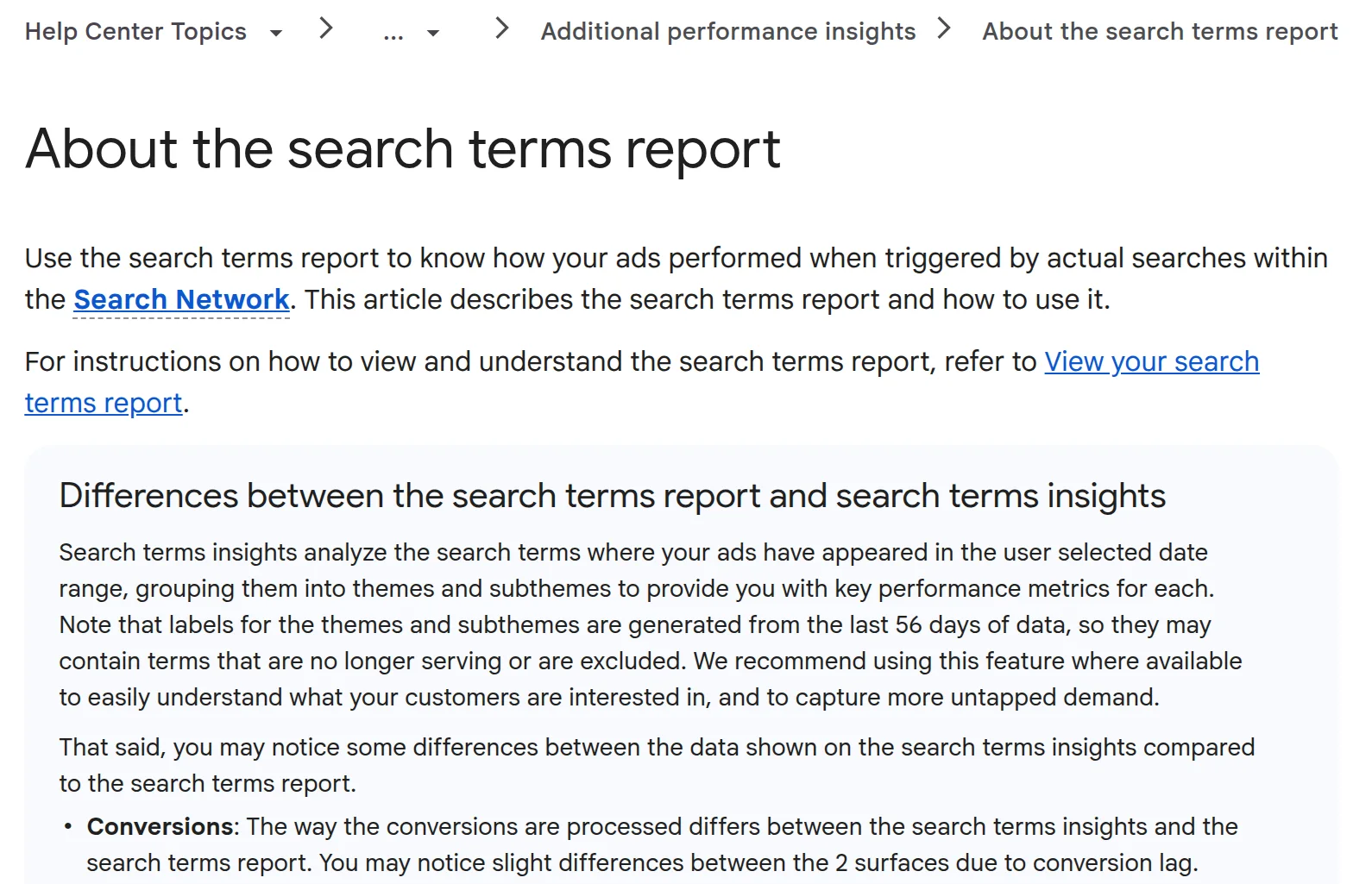
- Prune and expand. Review the search terms report weekly, add negative keywords for irrelevant queries, and add new keywords that convert.
- Report. Judge results on cost per acquisition and return on ad spend, not clicks.
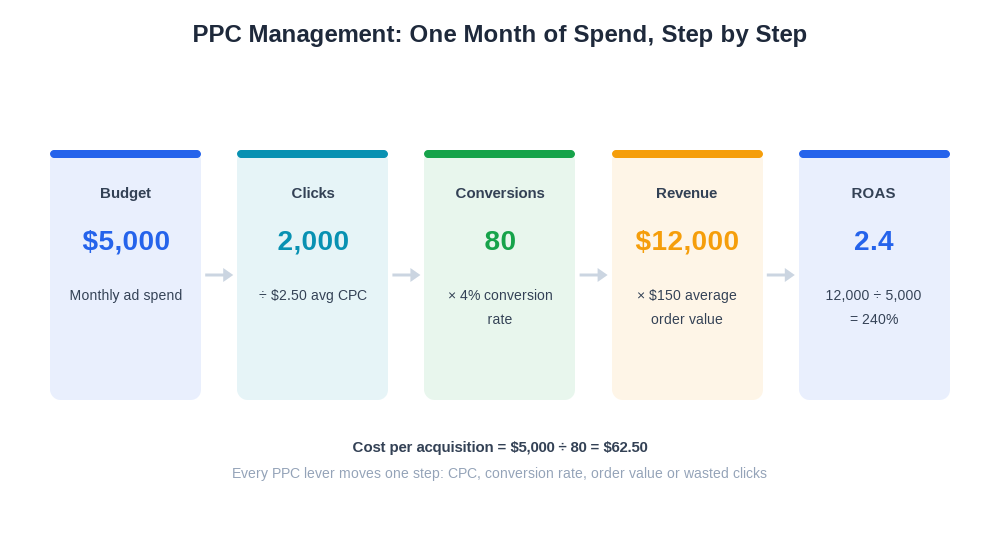
The math that drives every decision is simple. Here is a worked example for one month:
- Budget: $5,000. Average CPC: $2.50. Clicks: 5,000 ÷ 2.50 = 2,000.
- Conversion rate: 4%. Conversions: 2,000 × 0.04 = 80.
- Cost per acquisition: 5,000 ÷ 80 = $62.50.
- Average order value: $150. Revenue: 80 × 150 = $12,000.
- Return on ad spend: 12,000 ÷ 5,000 = 2.4 (240%).
Every lever in PPC management moves one line of that chain. Better Quality Score lowers CPC. Better landing pages raise conversion rate. Negative keywords cut clicks that would never convert. Raising average order value through bundles or upsells lifts revenue without more spend.
In-House vs Agency vs Freelance PPC Management
Who runs the account matters as much as how. Each option has a clear trade-off.
| Option | Typical cost model | Best for | Main risk |
|---|---|---|---|
| In-house specialist | Salary plus tools | Large or complex accounts, fast-moving catalogs | Hard to hire and keep, single point of knowledge |
| Agency | Retainer, % of spend, or both | Mid to large spend, multiple platforms | Your account gets shared attention |
| Freelancer | Hourly or monthly flat fee | Small to mid accounts, one platform | Limited capacity and backup |
| Self-managed with platform automation | Your time only | Small budgets, simple offers | Automation spends freely without good tracking |
A percentage-of-spend fee gives the agency an incentive to raise spend, so ask how they decide when to cut budget. A flat fee removes that tension but may not scale with work. Whichever you pick, keep ownership of the ad accounts and the conversion tracking in your own name.
PPC Management vs SEO
PPC and SEO compete for the same search results page, so people often compare them. PPC is fast: an approved ad can show the same day, and you control the message and landing page exactly. Traffic stops the day the budget stops. SEO is slow to build but keeps working without per-click cost once a page ranks. For a deeper comparison, see SEO vs SEM.
The two work best together. Your paid search terms report shows which queries convert, which tells you what organic pages to build. Your organic rankings tell you where paying for clicks adds little. AmICited’s Organic vs Paid Pages report shows, per landing page, organic impressions and clicks beside cost and ad spend avoided.

Stay Updated on AI Visibility Trends
Get the latest insights on AI mentions, brand monitoring, and optimization strategies.
PPC Management and AI Search
AI answers change two things for PPC managers. First, ad inventory is moving into AI surfaces: Google shows ads in and around AI Overviews, and ChatGPT now runs its own ad program with campaigns, ad groups and conversion tracking. AmICited’s ChatGPT Ads Manager lets you run those campaigns next to your organic citations.
Second, AI answers can take clicks away from both paid and organic results on informational queries. That makes it worth knowing whether ChatGPT, Perplexity or Google AI Overviews already recommend your brand for the queries you pay for. If they do, you may be able to bid less on those terms. If a competitor is the one being recommended, your ads are doing more of the work.
Best Practices for PPC Management
- Fix conversion tracking before you touch bids. Smart bidding trained on bad data spends confidently in the wrong direction.
- Review the search terms report at least weekly and add negative keywords for irrelevant queries.
- Keep ad groups tight enough that the headline can repeat the searcher’s words.
- Send each ad group to the most specific landing page you have, not the homepage.
- Judge campaigns on cost per acquisition or return on ad spend against your margin, not on click-through rate.
- Separate brand and non-brand campaigns so cheap brand clicks do not hide weak non-brand results.
- Change one major thing at a time and give automated bid strategies enough conversions to learn before judging them.
Common PPC Management Mistakes
The most expensive mistake is running broad keywords with no negative list. One broad term can match hundreds of loosely related searches, and without weekly pruning a large share of spend goes to queries that never convert. A close second is trusting platform-reported conversions without checking them against real orders. Platforms count view-through and modeled conversions differently, and double counting across Google and Meta is common.
Other frequent errors: switching to target ROAS bidding on a campaign with only a handful of conversions a month, so the algorithm has nothing to learn from; reporting clicks and CTR to stakeholders instead of profit; letting one campaign absorb the whole budget because it hits its daily cap early; and never testing new ad copy after launch. Many accounts also keep paying for brand terms where they already rank first organically and face no competing ads, without ever testing whether those clicks would arrive anyway.