



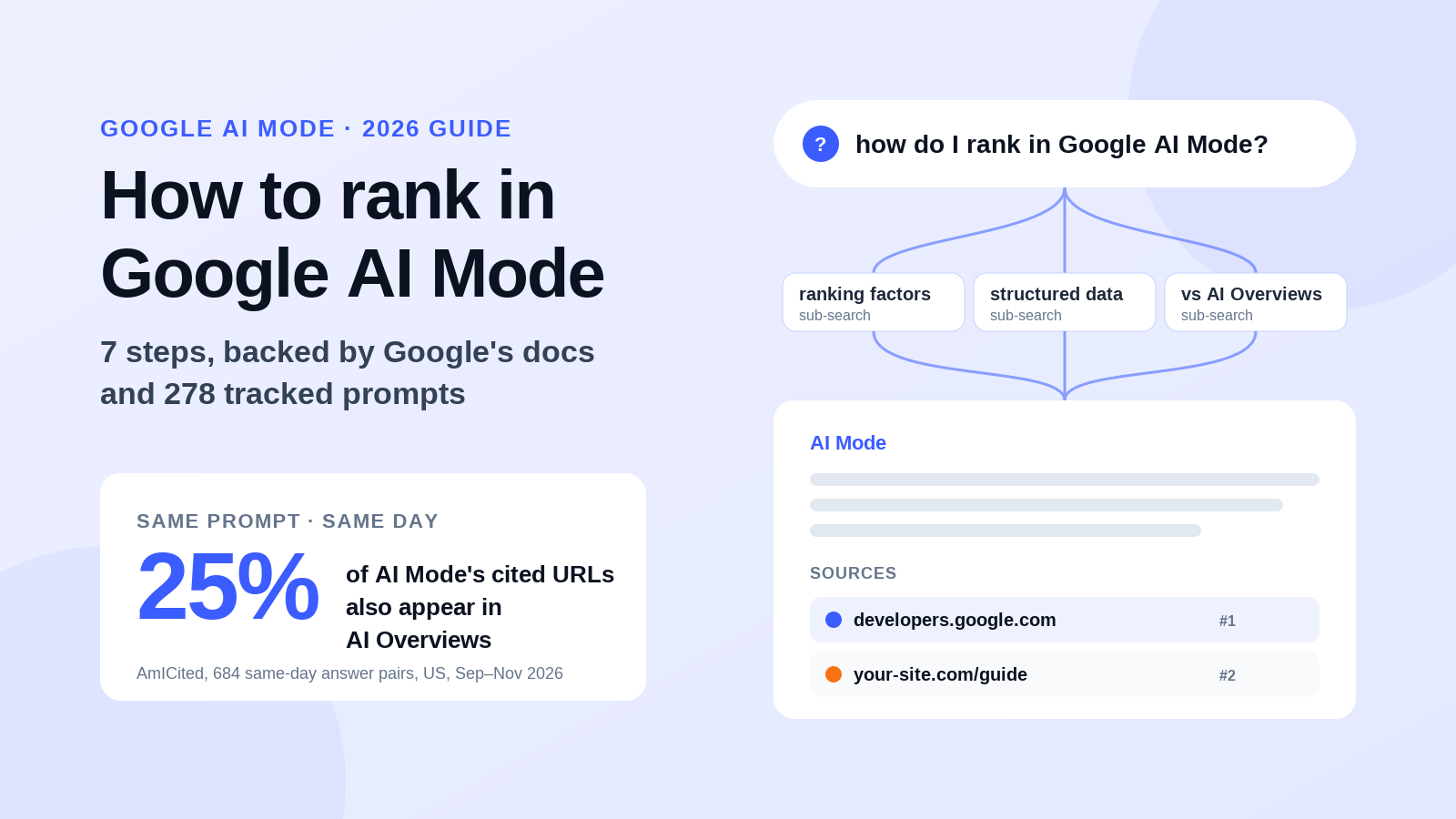
To rank in Google AI Mode, your page has to be indexed, eligible for a snippet in Google Search, and the best answer to one of the many sub-questions AI Mode searches for behind each prompt. Google says there are no additional requirements and no special schema. What decides whether you get cited is how well your pages cover the questions the fan-out produces, how quotable your passages are, and how often trusted third-party sites mention you.
Ranking in classic Google isn’t enough on its own. In AmICited’s tracking of 278 prompts, only 25.2% of the URLs Google AI Mode cited also appeared in Google AI Overviews for the same prompt on the same day. Ahrefs found an even smaller overlap, 13.7%, across 730,000 responses. The two Google surfaces share an index, but they don’t pick the same pages.
This guide covers how AI Mode builds an answer, what Google officially requires, seven steps backed by public studies and our own data, and how to measure whether any of it works.
Key Takeaways
- Google says AI Mode needs no extra technical requirements: a page must be indexed and eligible to show with a snippet ( Google Search Central).
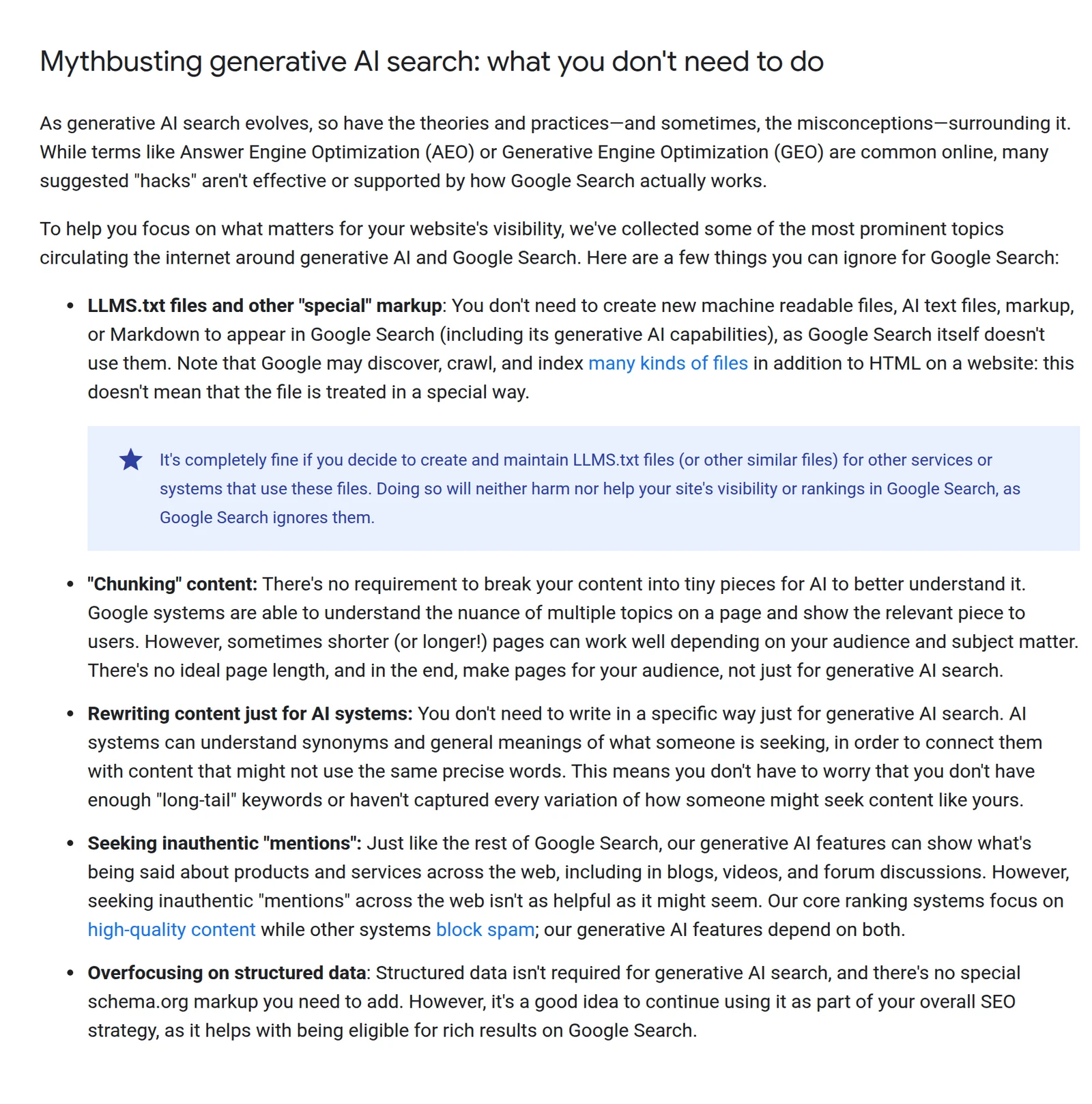
- Google’s AI optimization guide calls llms.txt, “chunking”, AI-only rewrites, inauthentic mentions and overfocusing on structured data things you don’t need to do.
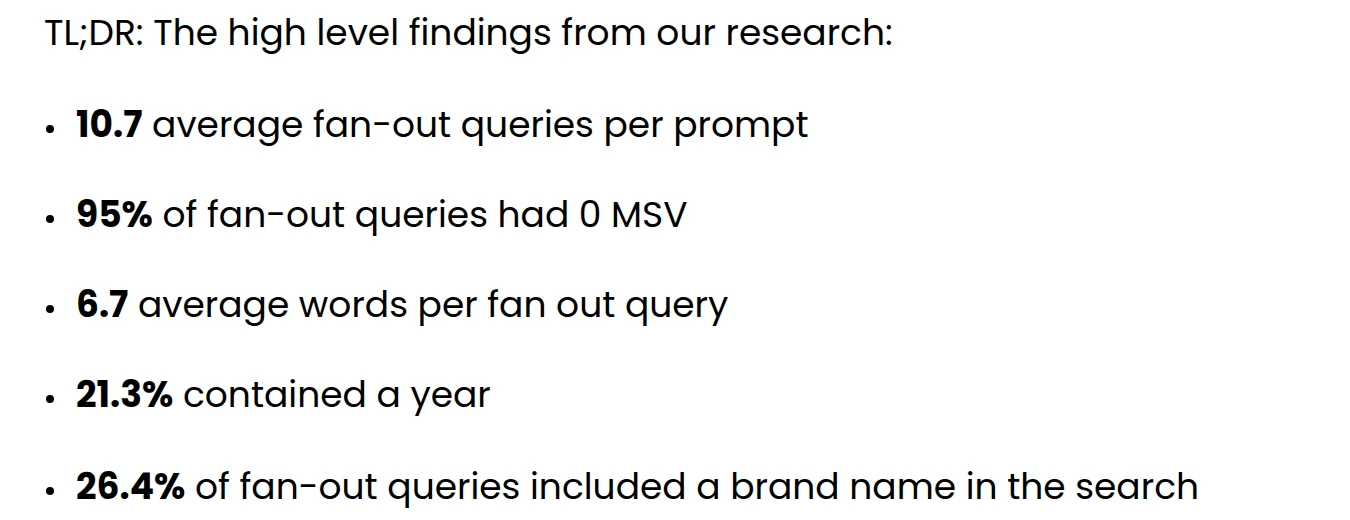
- AI Mode splits a prompt into many sub-searches. Seer measured an average of 10.7 fan-out queries per prompt on Gemini 3, and 95% of them had no measurable search volume ( Seer Interactive).
- In AmICited’s data, only 25.2% of AI Mode’s cited URLs also appeared in AI Overviews for the same prompt on the same day, so track the two surfaces separately.
- Reddit was cited in 37.3% of AI Mode answers in our sample, against 26.7% of AI Overviews answers. YouTube went the other way: 29.5% against 60.0%.
- AI Mode answers change fast: on consecutive days, only 25.9% of the URLs a prompt’s two answers cited were in both, so one check is a snapshot, not a ranking.
How Google AI Mode builds an answer
Google AI Mode answers a prompt in five stages: it reads the question, fans it out into many related sub-searches, retrieves pages for each one from Google’s Search index, grounds the model on selected passages from those pages, and writes a long answer that links to a handful of sources. Your page can drop out at any stage, which is why one ranking position doesn’t predict a citation.
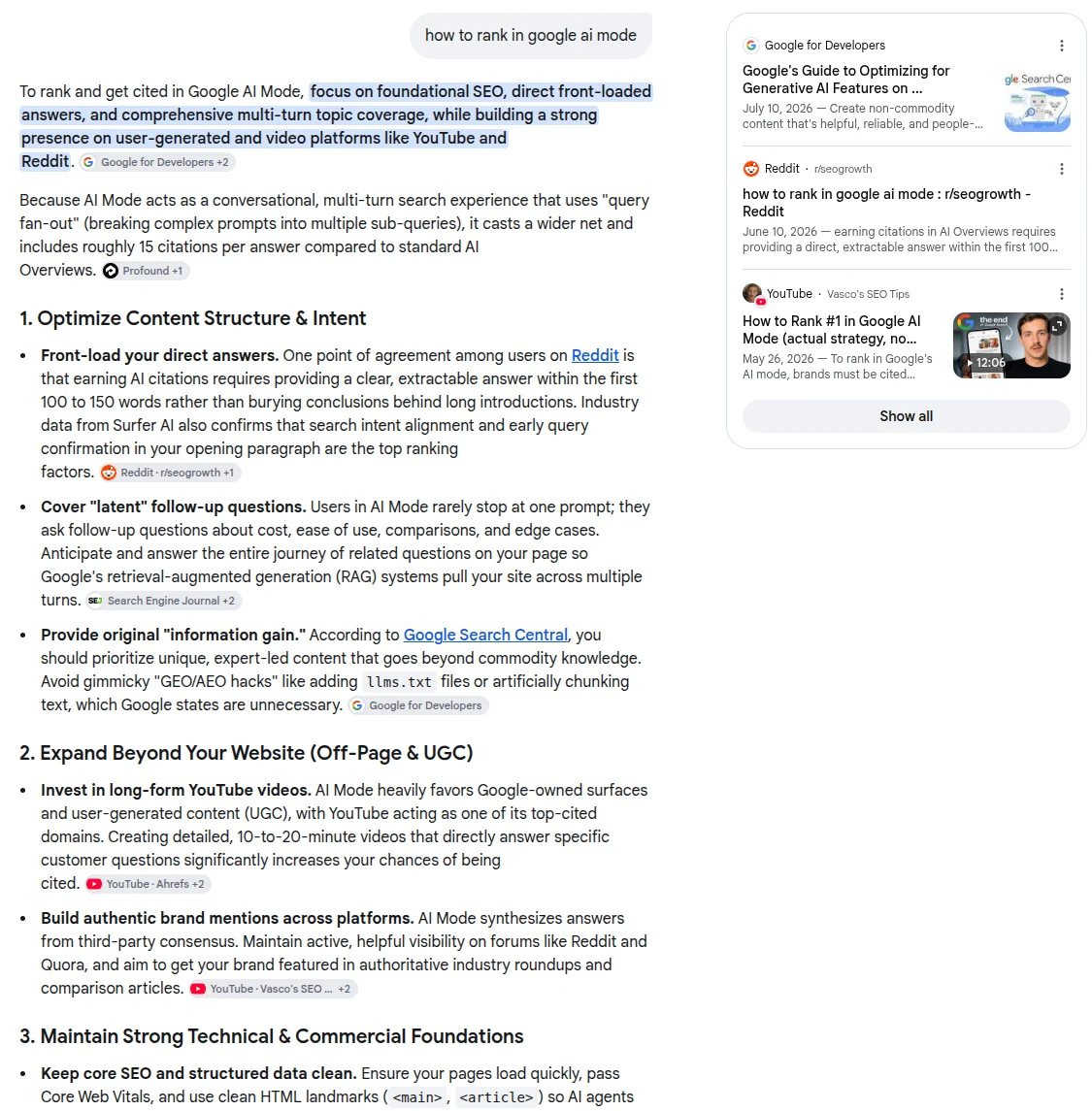
Here is what that produces for this guide’s own question. Asked “how to rank in google ai mode” in the US on November 22, 2026, Google AI Mode recommended foundational SEO, front-loaded answers and a presence on YouTube and Reddit, and its source panel led with Google’s own guide, a Reddit thread and a YouTube video.
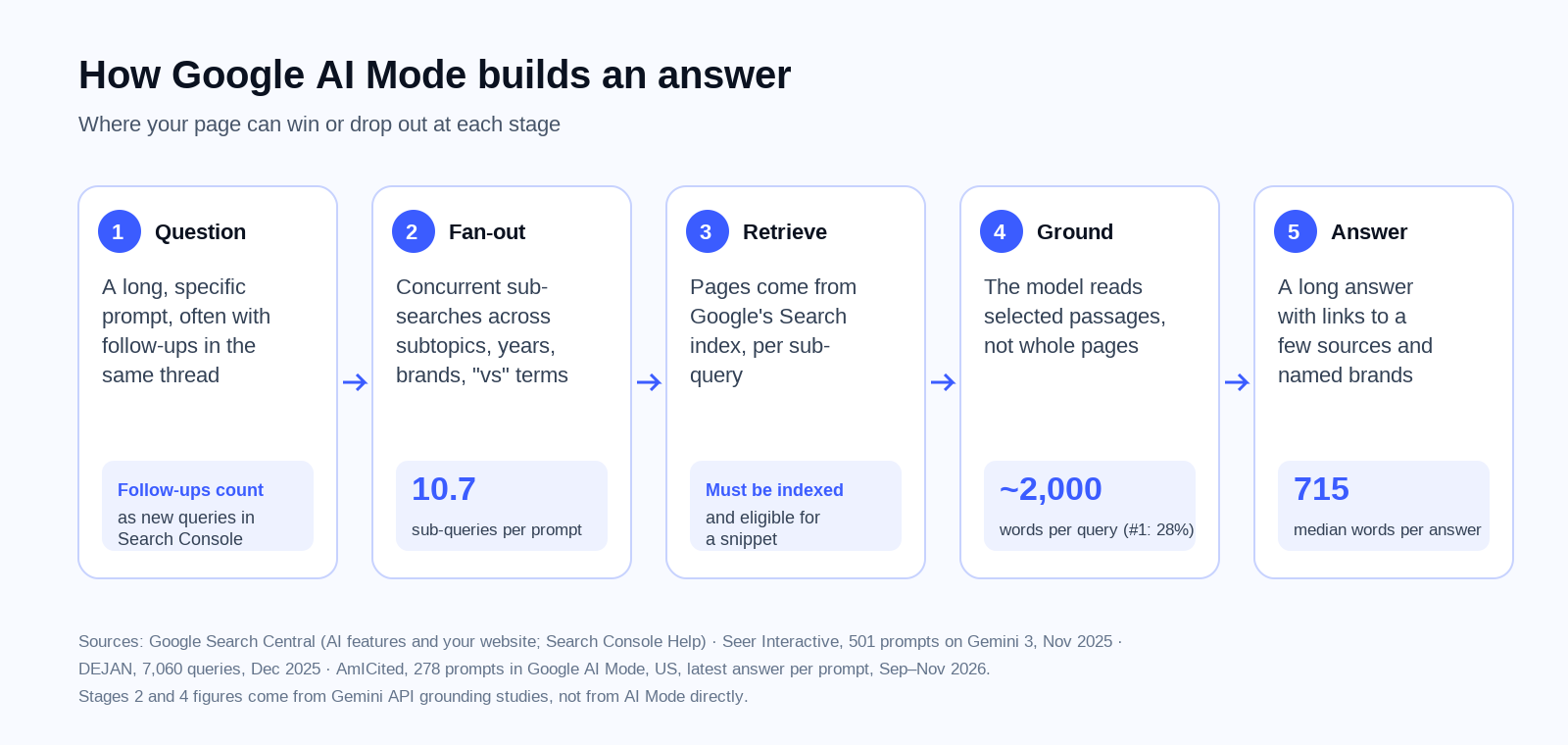
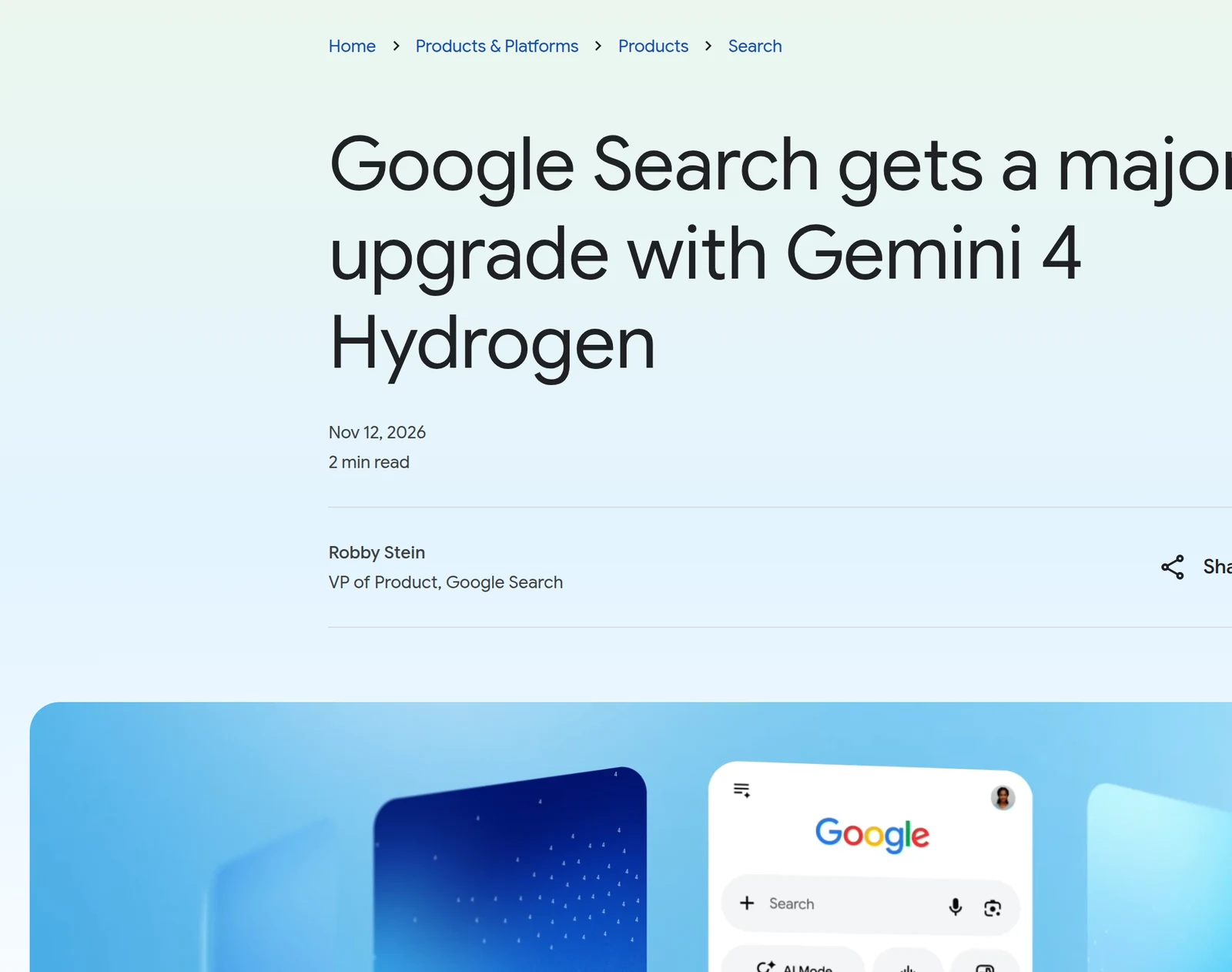
Google defines query fan-out as “a set of concurrent, related queries generated by the model to request more information” in its AI optimization guide. On November 12, 2026, Google said its new Gemini 4 Hydrogen model “supercharges our query fan-out technique in Search, connecting you to a broader range of helpful links than before” ( Google). The post says “Search” rather than naming AI Mode, and four days later AI Mode stopped showing a Gemini model label in its header ( Search Engine Roundtable).
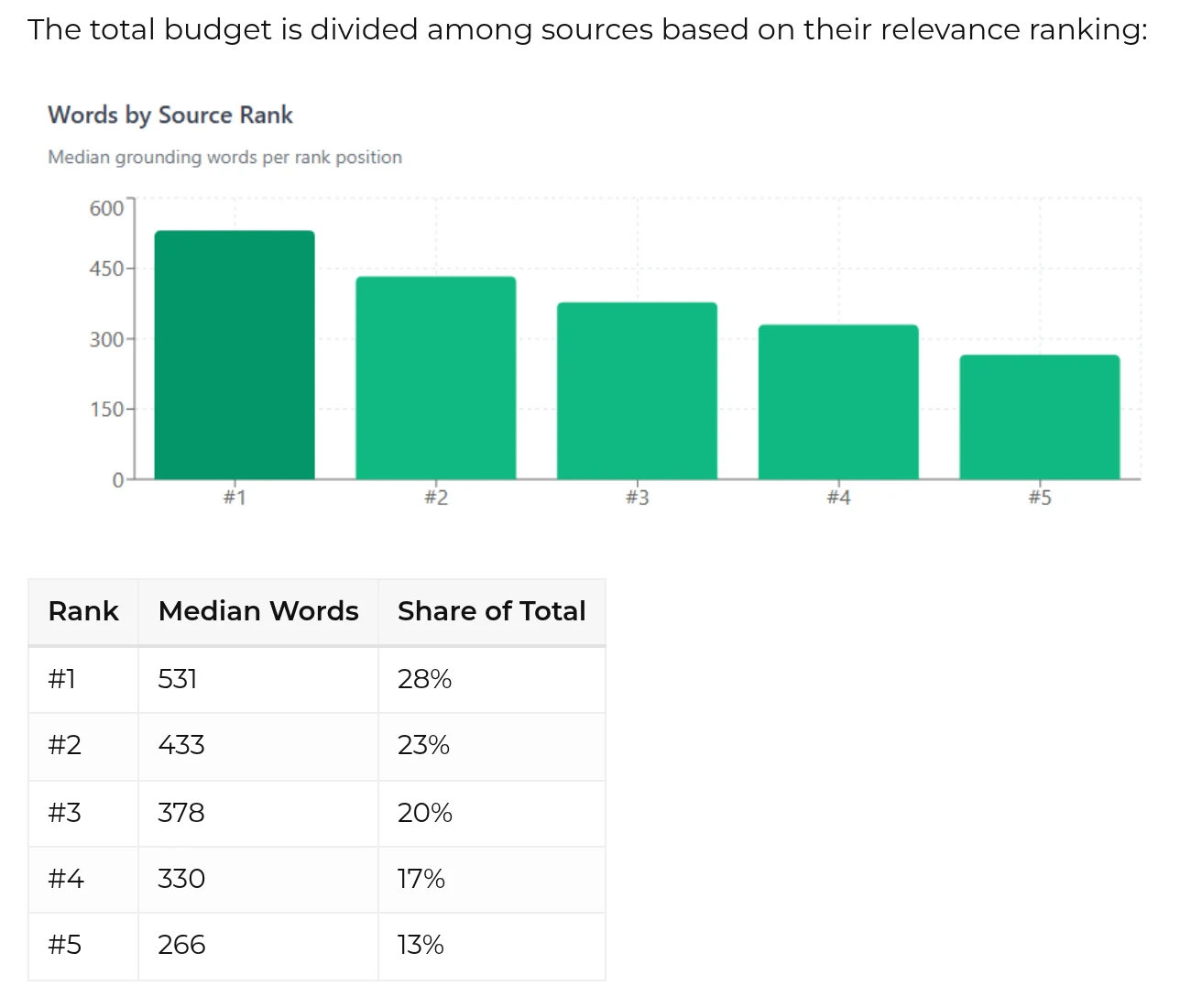
The grounding step is where length works against you. DEJAN’s analysis of 7,060 Gemini grounding queries found a median budget of 1,929 words per query, split by rank: the #1 source got a median 531 words (28%), the #5 source 266 words (13%). Pages under 1,000 words had 61% of their text selected; pages over 3,000 words had 13% ( DEJAN). That data comes from Gemini’s grounding API, not AI Mode itself, but it explains why the answer has to sit near the top of the page.

Ready to Monitor Your AI Visibility?
Track how AI chatbots mention your brand across ChatGPT, Perplexity, and other platforms.
What Google says you need
Google’s documentation for AI Overviews and AI Mode lists one hard requirement: the page “must be indexed and eligible to be shown in Google Search with a snippet.” Google says there is “no special schema.org structured data that you need to add” and you don’t need “new machine readable files, AI text files, or markup” ( AI features and your website).
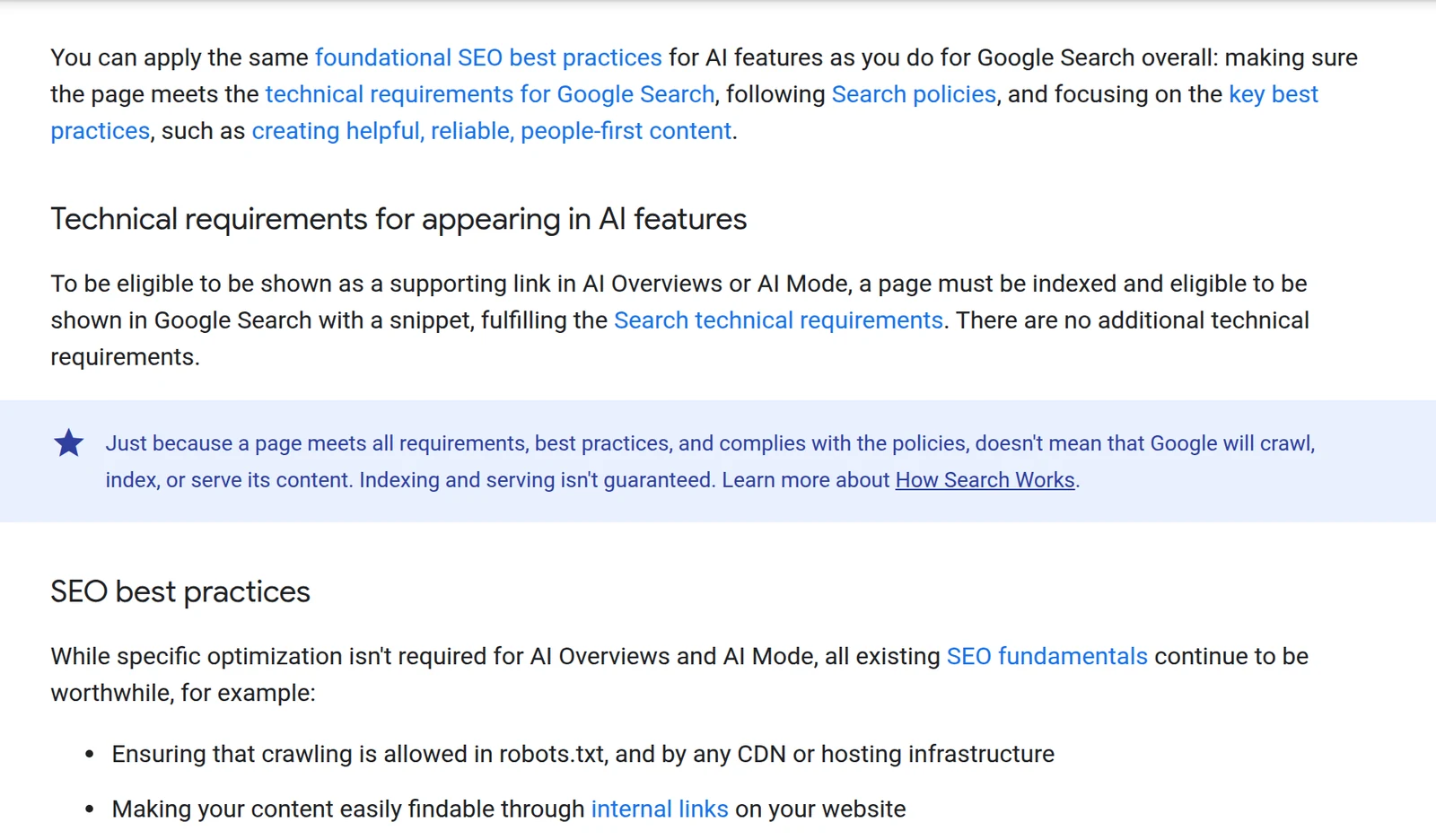
Google’s newer guide, Optimizing your website for generative AI features on Google Search, goes further. It says AEO and GEO work “is still SEO”, that unique, non-commodity content matters “more than any of the other suggestions”, and that “there’s no ideal page length.” When we asked Google AI Mode how to rank in it, both in the live search above and in AmICited’s tracked run, this guide was the first source it cited. Its mythbusting section lists five things you can ignore.
| Google’s position | What it means for you |
|---|---|
| No requirements beyond Search eligibility | Fix indexing, crawlability and snippet eligibility first |
| No AI-specific schema; don’t overfocus on structured data | Keep schema that matches visible content; don’t add markup hoping for AI Mode |
| llms.txt and “special” markup aren’t needed | Google Search doesn’t use llms.txt |
| “Chunking” content isn’t needed | Write clear sections for people; don’t split pages into fragments |
| Don’t create a page for every query variation | Google says pages built for each fan-out query can violate its scaled content abuse policy |
| Don’t seek inauthentic mentions | Earn real mentions; paid or fake ones are listed as a myth to drop |
| Control what’s shown with nosnippet, data-nosnippet, max-snippet or noindex | Restricting snippets also limits how AI features can use the page |
Ranking in Search isn’t enough
Ranking in Google Search makes a page eligible for AI Mode, but it doesn’t make the page the one AI Mode cites. A study of 42,971 AI citations found only 25.3% of the cited URLs ranked in the organic top 10 for the query ( Daniel Shashko, Bright Data). Moz data cited by Ahrefs put the match at 1 in 10 AI Mode citations ( Ahrefs).
AI Overviews and AI Mode also pick different pages from the same index. Across 684 same-day answer pairs in AmICited’s data, AI Mode and AI Overviews shared no cited URL in 407 pairs (59.5%). At the domain level, 34.4% of the domains AI Mode cited also appeared in the AI Overview answer.
The sources each surface leans on differ too. In the last 30 days of AmICited’s tracking for amicited.com, Google AI Mode recorded 2,101 citations; YouTube had 15.1% of them and Reddit 9.9%.
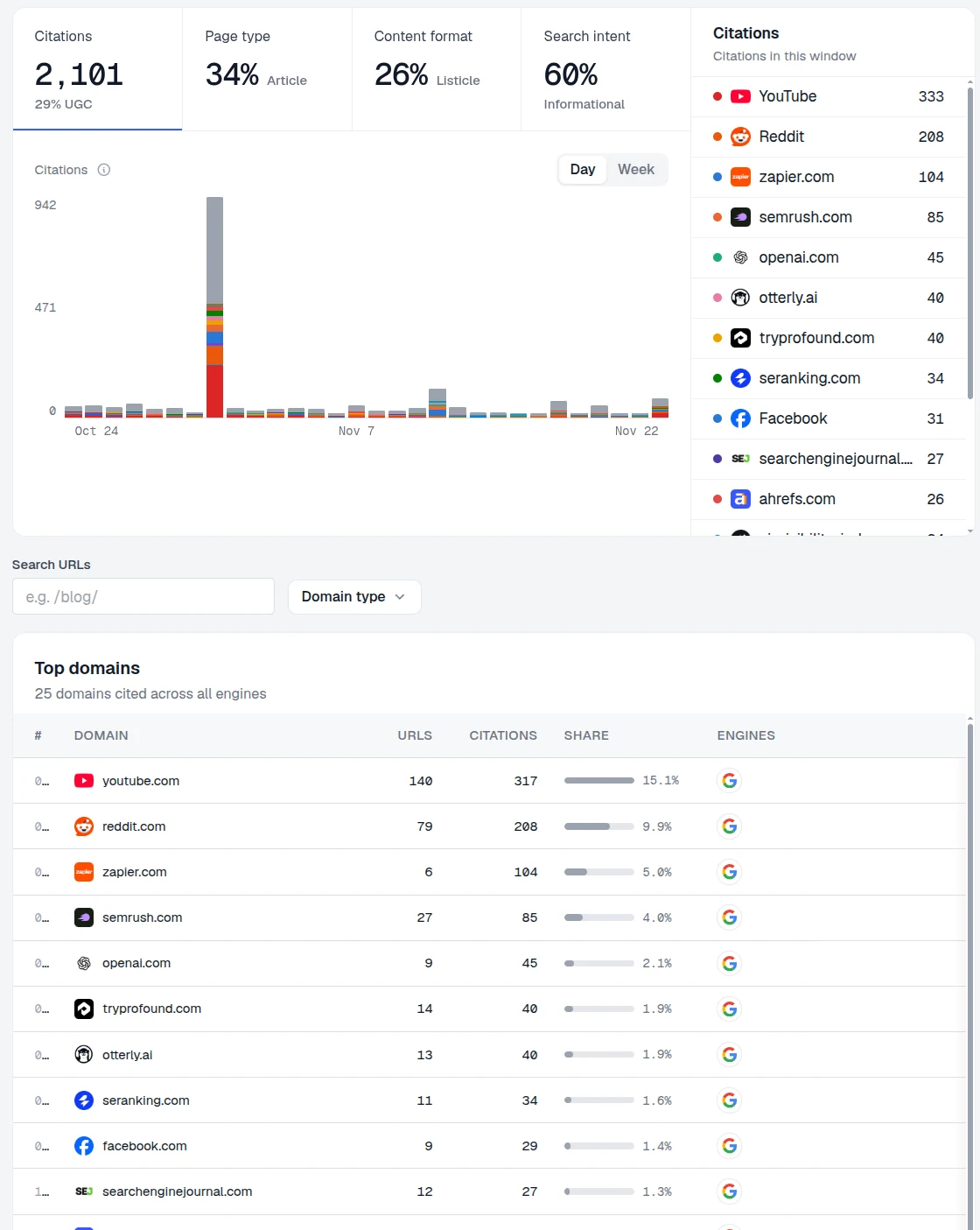
The same prompts in Google AI Overviews produced 4,404 citations over the same 30 days, about twice as many. YouTube’s share was similar (16.1%), but LinkedIn took 4.6% and Reddit only 3.8%.
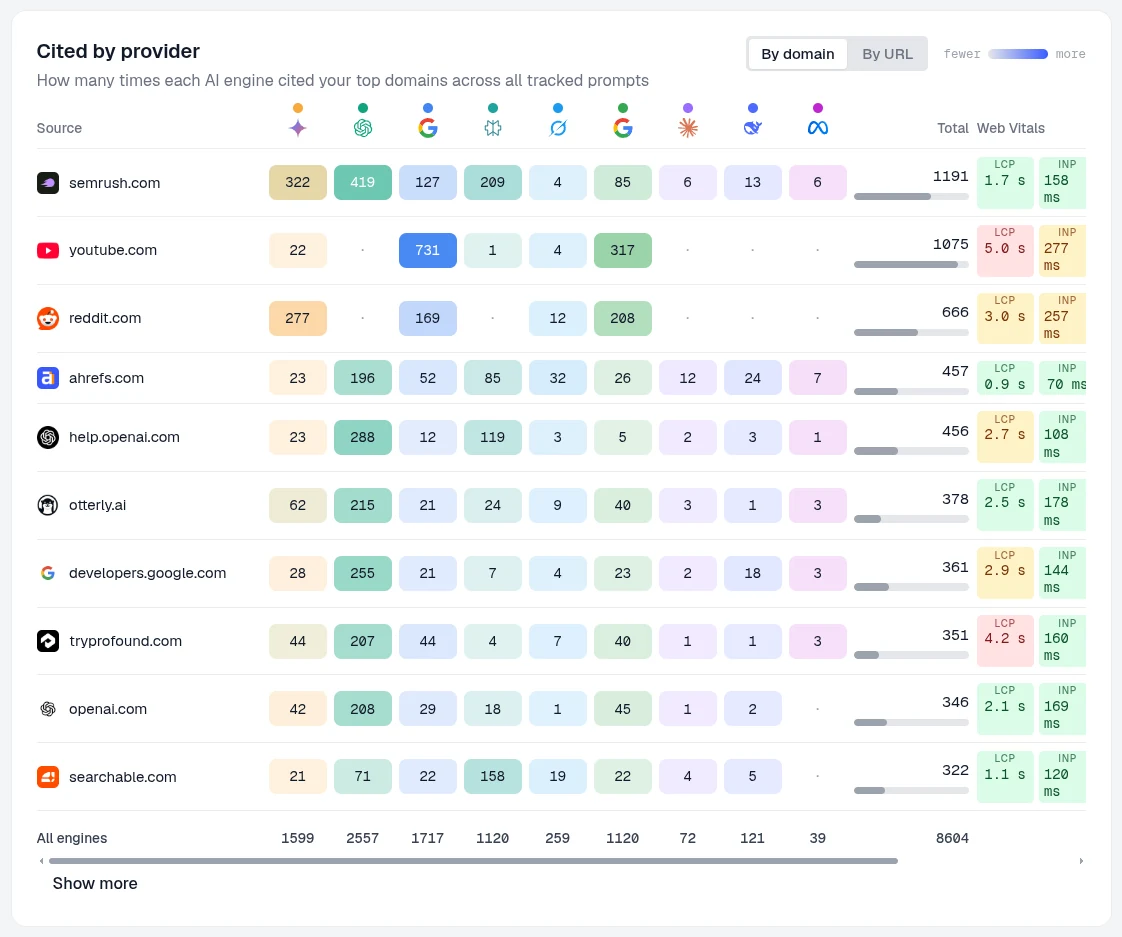
AmICited’s per-engine view shows the split side by side. Across every tracked prompt, YouTube was cited 731 times by AI Overviews and 317 times by AI Mode, while Reddit was cited 169 times by AI Overviews and 208 times by AI Mode.
Share of answers with at least one source that cited the domain (271 AI Mode answers, 270 AI Overviews answers).
Source: AmICited, 278 prompts, latest answer per prompt, US, Sep–Nov 2026
Ahrefs sees the same pattern at web scale: in November 2026, google.com held 23.4% of AI Mode’s mention share among the top 50 sources, followed by reddit.com at 18.1% and youtube.com at 17.0% ( Ahrefs).
Stay Updated on AI Visibility Trends
Get the latest insights on AI mentions, brand monitoring, and optimization strategies.
How to rank in Google AI Mode
These seven steps follow the path an answer takes, from the sub-questions AI Mode searches to the passages it reads and the sites it trusts. None of them is a trick: each one either makes your page the best match for a sub-search or makes your brand easier to confirm from sources Google already uses. The figures behind them are correlations from public studies and our own data, not confirmed ranking factors.
1. Answer the fan-out questions
Every prompt becomes a set of sub-searches, and each one is a separate chance to be retrieved. Seer found 10.7 fan-out queries per prompt on Gemini 3, an average of 6.7 words each; 21.3% contained a year and 26.4% a brand name ( Seer). Nectiv measured 9.06 per prompt across about 9,000 commercial prompts, with software prompts averaging 11.7 and local prompts 3.79, and found “vs” among the most common terms ( Nectiv).
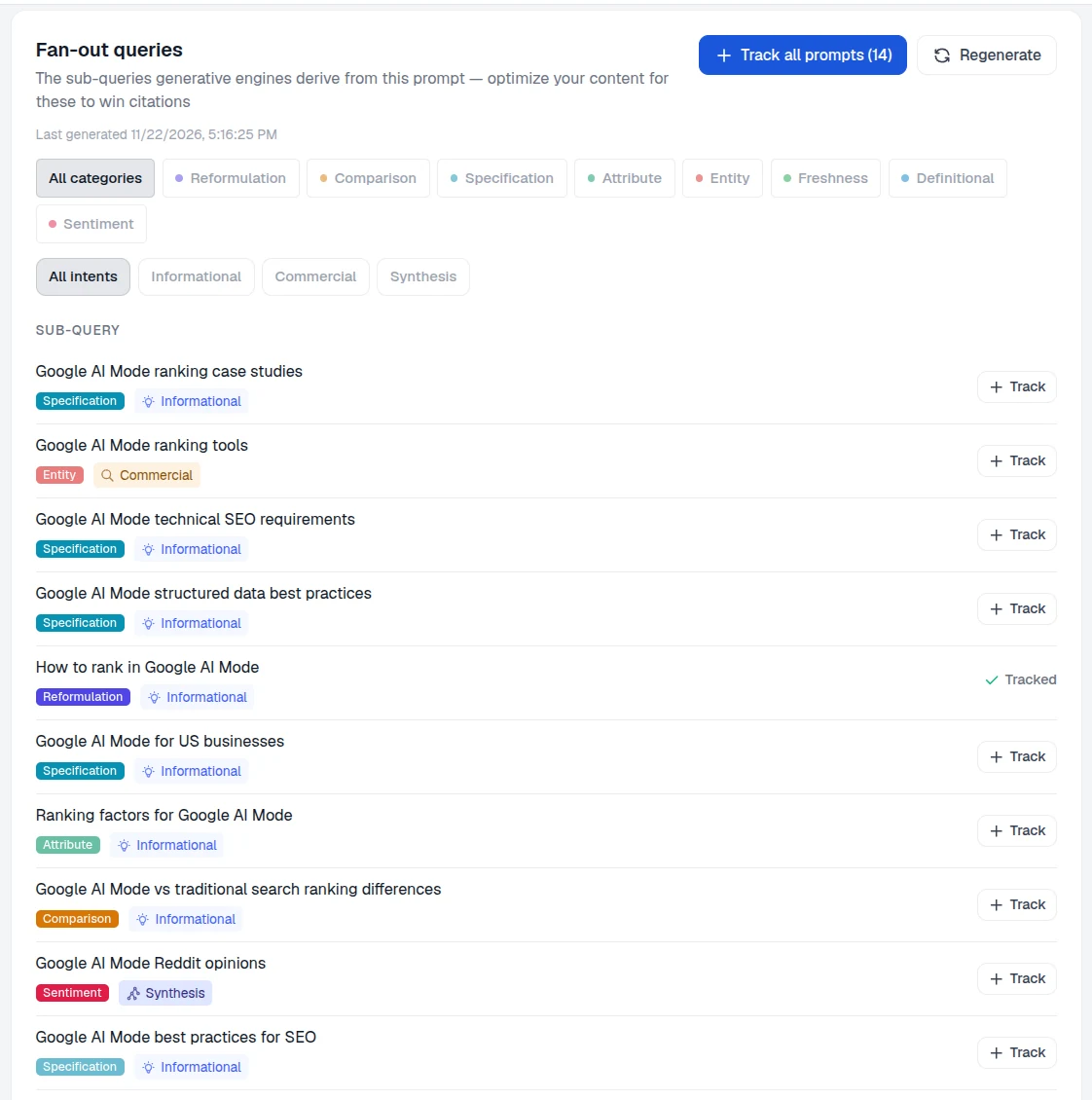
This is the fan-out AmICited generated for “How do I rank in Google AI Mode?”: case studies, tools, technical requirements, structured data, ranking factors, a comparison with classic search, and Reddit opinions. A page that covers the main question but none of these leaves most of the retrieval chances to someone else. Map the sub-questions for your prompts with a semantic map, then answer each one in a section, a table row or an FAQ on the page that owns the topic.
Don’t turn each sub-query into its own thin page. Google’s guide warns that creating pages for every query variation, fan-out queries included, to manipulate results “violates Google’s scaled content abuse spam policy.”
2. Put the answer first in every section
AI Mode quotes passages, so the passage under each heading has to answer the heading on its own. In the Bright Data study, cited sentences had a median length of 10 words and sat on average 34.9% of the way down the page ( Shashko). With a grounding budget of roughly 2,000 words shared across sources, text buried at the end of a long page is less likely to be read at all.
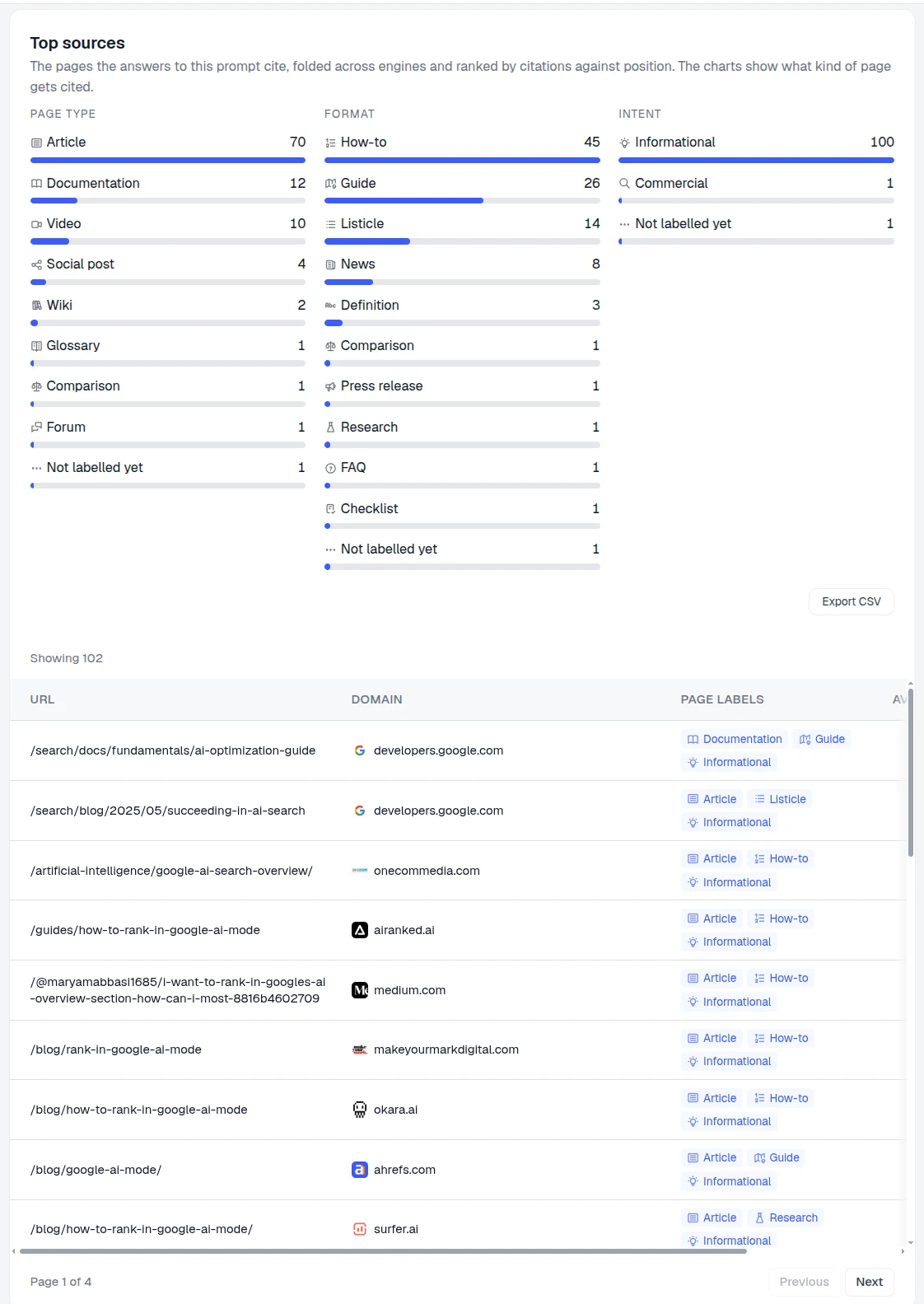
Open each section with a 40–60 word answer, then add the detail. Use the format AI Mode already cites for the query: for “How do I rank in Google AI Mode?”, the pages cited across 10 engines were mostly articles (70 of 102) in how-to (45) and guide (26) formats, led by Google’s own documentation.
3. Make passages stand alone
Clear structure helps a model match a passage to a sub-question. In the same study, 91.3% of structured pages (1,847) had a matched cited sentence, against 39.3% of unstructured pages (84). Use descriptive H2s and H3s, tables for comparisons, numbered steps for procedures, and name the subject in each section instead of “it” or “this tool”.
This isn’t the “chunking” Google calls a myth. You don’t need to break a page into fragments; you need sections a reader could quote without the rest of the page. Keep key facts in the visible text, not only in accordions or tabs; Jeff Riddall’s local SEO advice for AI Mode makes the same point about un-hiding critical details. For a deeper checklist, see how to structure content for AI citation.
4. Keep facts current and dated
Fan-out queries carry dates. Seer found a year in 21.3% of them, and Nectiv found “2024/2025” was the most common n-gram in Google’s fan-outs. Pages that state when they were updated, carry this year’s prices and specs, and drop old claims are better matches for those sub-queries.
Update the facts, not just the date. A refreshed lastmod on unchanged content gives a sub-query about 2026 nothing new to retrieve.
5. Earn mentions where AI Mode looks
AI Mode leans on user-generated content. Reddit was cited in 37.3% of the AI Mode answers in our sample and YouTube in 29.5%, and 29% of all AI Mode citations in our last-30-day view came from UGC sites. When AI Mode named tools in its answer about AI Mode trackers, it linked to vendor pages and third-party roundups, not only to the brands’ own sites.
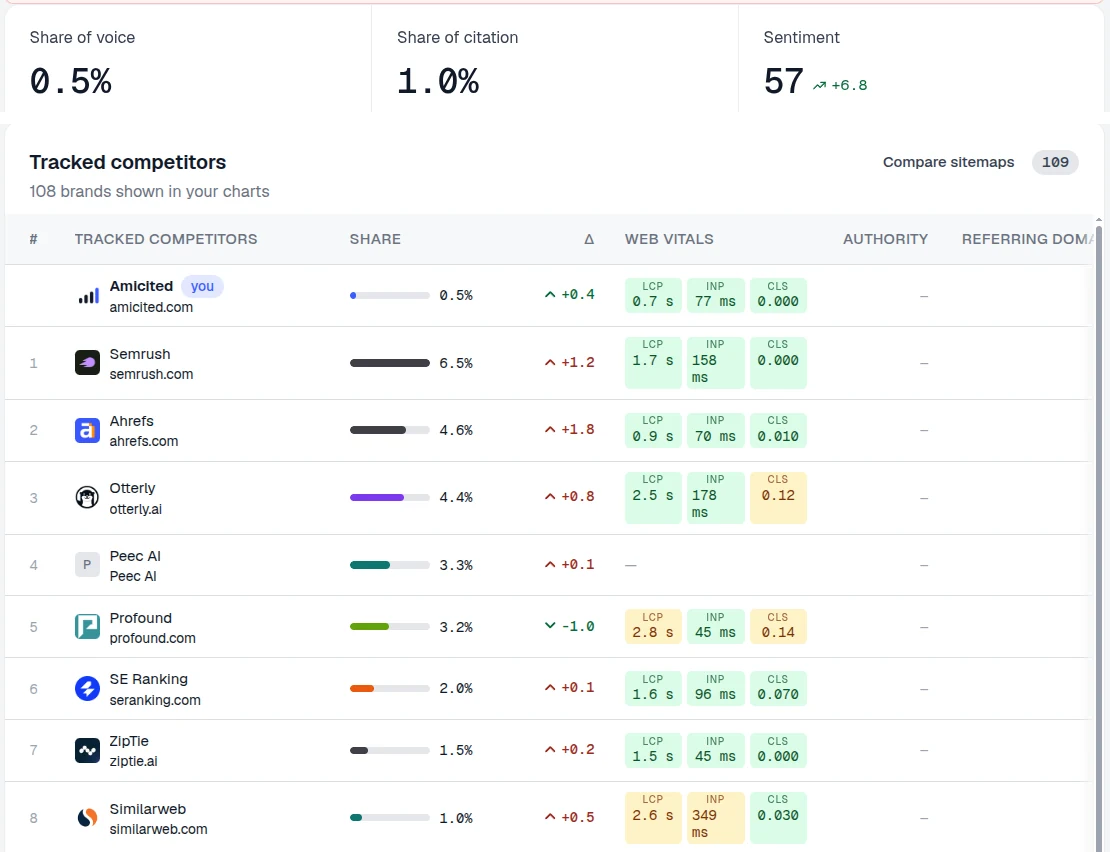
The brands AI Mode names most are the ones that third-party pages already discuss. Among the competitors AmICited tracks for amicited.com, Semrush (6.5%), Ahrefs (4.6%) and Otterly (4.4%) lead AI Mode’s share of voice over the last 30 days; AmICited sits at 0.5%.
Earn those mentions honestly: answer questions in the communities where your buyers ask them, publish video walkthroughs, and get included in reviews and comparison articles. Google lists “seeking inauthentic mentions” as something not to do. UGC influence tracking shows which Reddit threads and videos AI engines cite for your prompts, and our report on how often Reddit gets cited by Google AI Mode has the longer trend.
6. Keep entity and product data consistent
AI Mode checks facts about your brand against other Google sources. Google’s guide tells local businesses and stores to keep their Google Business Profile and Merchant Center feeds accurate, and its May 2025 AI search post gives the same advice for multimodal results. Use the same name, description, prices and specs on your site, your profiles and the directories that rank for your category.
Google is also testing an official pages box at the top of AI Mode and AI Overviews answers, which makes your own site’s accuracy more visible when it is the source.
7. Make pages usable for agents
AI Mode is moving from answers toward tasks. Google’s guide describes browser agents that read the DOM, the accessibility tree or screenshots, points to web.dev’s agent-friendly website practices, and names the Universal Commerce Protocol (UCP) as an emerging standard. Chrome opened an early preview of WebMCP in February 2026 so sites can expose structured tools to agents.
Start with the basics: real buttons and links, labeled form fields, prices and availability in text, and no critical content behind a login. We describe what we exposed in our WebMCP rollout.
AI Mode vs AI Overviews
Google AI Mode and Google AI Overviews use the same index and the same eligibility rules, but they behave like different engines. AI Mode answers are longer and more conversational, cite fewer sources per answer, and pick partly different pages. Optimize the same page for both, but track each surface separately because a win in one doesn’t carry over.
| Google AI Mode | Google AI Overviews | |
|---|---|---|
| Where it appears | Separate conversational tab with follow-ups | Above the classic results |
| Median answer length (AmICited) | 715 words | 253 words |
| Citations, same prompts, 30 days (AmICited) | 2,101 | 4,404 |
| Reddit share of citations (AmICited) | 9.9% | 3.8% |
| Search Console position | Same method as a results page | One position shared by every link |
| Follow-up questions | Counted as a new query | Not applicable |
How to track AI Mode visibility
Track AI Mode in two places: Search Console for the clicks and impressions Google reports, and a prompt tracker for the answers themselves. Search Console includes AI Mode in the Web search type, and Google’s generative AI performance report adds a view for AI features, but neither shows which pages AI Mode cited in place of yours.
Google’s
Search Console Help sets three rules for AI Mode: clicking an external link counts as a click, position “follows the same methodology as a Google Search results page”, and a follow-up question is “essentially performing a new query”, with its impressions and clicks counted against the follow-up. Long, conversational queries in your report are often AI Mode follow-ups. Nectiv filters them with a custom regex for queries of 10 or more words, ^(?:\S+\s+){9,}\S+$ (
Nectiv).
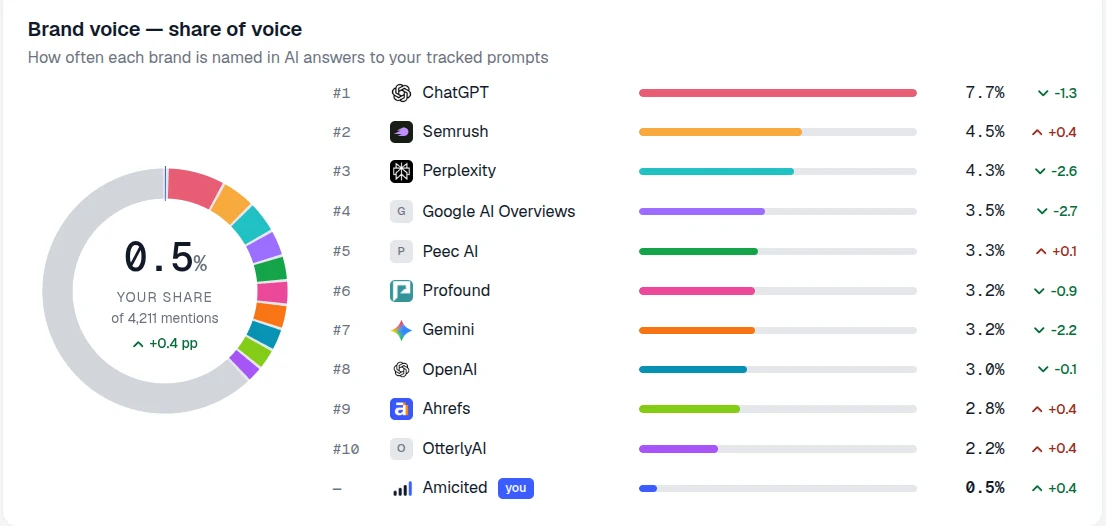
For AmICited’s 293 prompts, AI Mode named AmICited in 0.5% of 4,211 brand mentions over the last 30 days, while ChatGPT (7.7%), Semrush (4.5%) and Perplexity (4.3%) were named most. That’s the baseline this guide is written to move.
A prompt tracker shows the answer itself: the sources AI Mode cited, the brands it named and in what order. Because AI Mode answers change daily, track the same prompts repeatedly and read the trend. For the 13 prompts we track daily, consecutive AI Mode answers shared only 25.9% of their cited URLs (shared URLs as a share of all URLs cited across both days), and on average 45.3% of their named brands. AmICited’s prompt tracking checks Google AI Mode on every plan, alongside AI Overviews, ChatGPT, Perplexity and Gemini, and the source citations view lists every page cited for each prompt.
Does AI Mode send traffic?
AI Mode sends less traffic than classic search, but not none. Semrush’s 2025 clickstream study of about 69 million sessions found 92–94% of AI Mode searches ended without a visit to an external site, and AI Mode queries averaged 7.22 words against 4.0 for classic searches ( Semrush). Similarweb data cited by Ahrefs puts visits at 1.6–2.5% of AI Mode queries, against 17–19% for Google Search.
Buying journeys look different. In Sagapixel’s study of 52 people choosing a dentist, Botox provider or dermatologist in AI Mode, 69% of sessions clicked through to a website and 89% of participants clicked more than one business ( Sagapixel). Being cited is how you get on the shortlist; the visit comes after. Our post on Reddit’s AI Mode traffic drop shows the other side, a large publisher losing referrals.
What to do now
- Confirm eligibility. Check that your key pages are indexed, eligible for snippets and not limited by
nosnippetormax-snippet. That’s the only hard requirement. - Pick 10–20 prompts your buyers ask, and run them in AI Mode and AI Overviews on a schedule with prompt tracking. Record who’s cited today before you change anything.
- Map the fan-out for each prompt with a semantic map, and answer every sub-question on the page that owns the topic.
- Rewrite section openings so each H2 starts with a direct, self-contained answer, and move key facts above the fold.
- Refresh dated facts on pages that target questions with years, prices or versions in them.
- Find the third-party pages AI Mode cites for your prompts in source citations, and work to be genuinely included in those threads, videos and roundups.
- Compare AI Mode with AI Overviews for the same prompts, and with your organic positions in the AI rank tracker, so you know which surface each page wins.
The takeaway
There’s no secret AI Mode checklist, and Google says so. The work is SEO aimed at a different target: not one keyword, but the dozen sub-questions behind each prompt, answered in passages a model can quote, backed by mentions on the sites Google already trusts. What changes is measurement. With a quarter of AI Mode’s sources shared with AI Overviews and a quarter shared from one day to the next, you only know where you stand in Google AI Mode if you check the answers themselves, repeatedly.
 LinkedIn