



Free AI SEO Tools
Six public AmICited tools for AI-search visibility, research, technical files and content checks: brand visibility, query fan-out, robots.txt, llms.txt, waterma...
3 min read
AmICited launched a Free Tools hub with six no-cost utilities for AI search visibility: a brand visibility report, a ChatGPT query fan-out generator, robots.txt and llms.txt generators for AI crawlers, and two LLM watermark tools.
AmICited quietly shipped something new: a Free Tools hub with six utilities that anyone can use to check and improve how their brand shows up in AI search, no subscription required. We took screenshots of every tool and are walking through what each one does, what it’s good for, and where it fits into a broader AI visibility strategy.
The hub sits at amicited.com/free-tools and organizes its six tools into four categories: Visibility, Research, Content, and Technical. Each tool has its own dedicated page with a working form, a plain-English explainer, and an FAQ section.
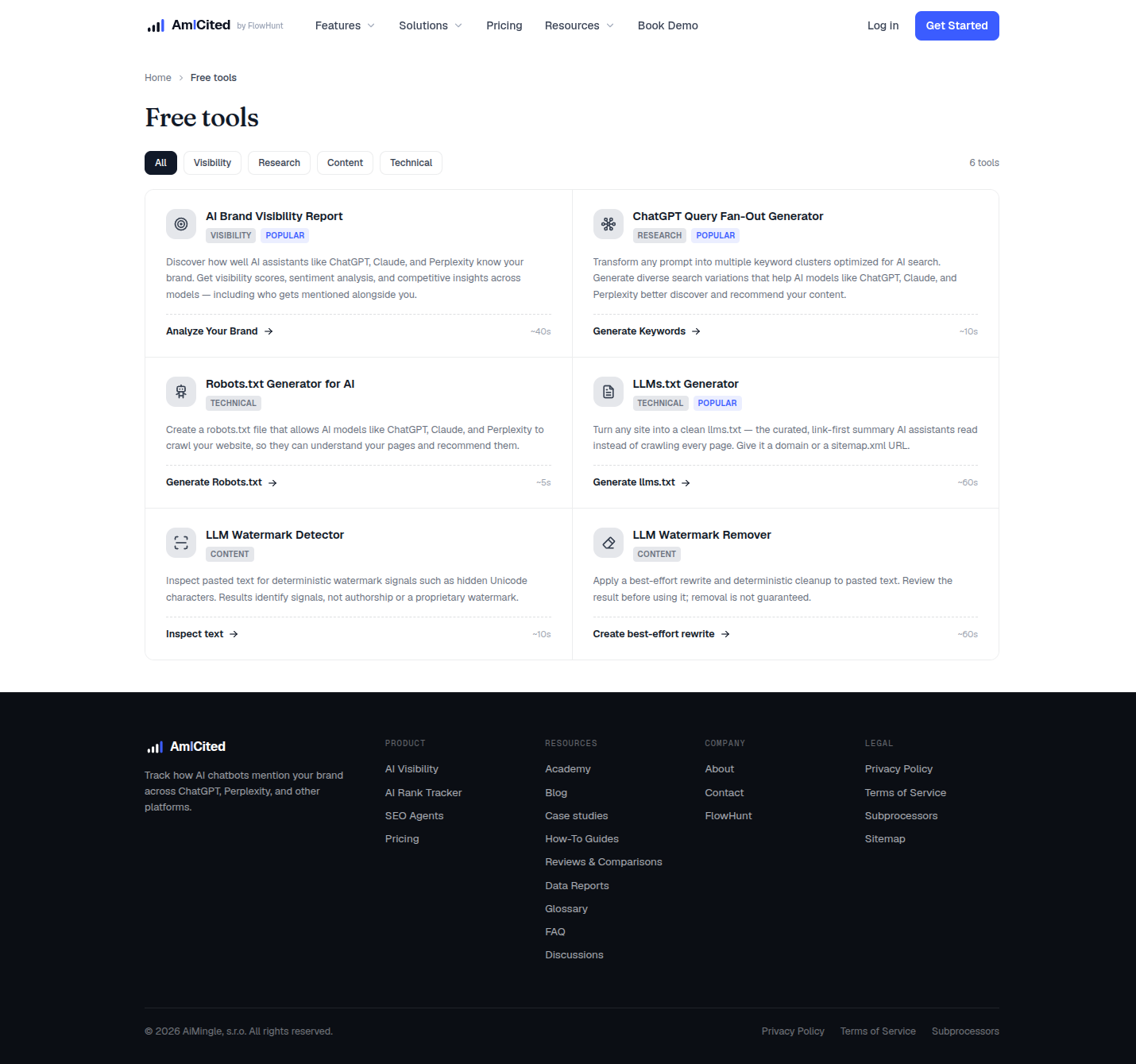
Here’s the full list:
Every page notes the same two things up front: the tool is free, and nothing you enter is saved once you navigate away.
This is the flagship tool, and it’s the one most relevant to anyone tracking GEO (generative engine optimization). Enter your website, and it asks ChatGPT, Gemini, Perplexity, and DeepSeek the same set of category questions about your brand, then scores the answers.
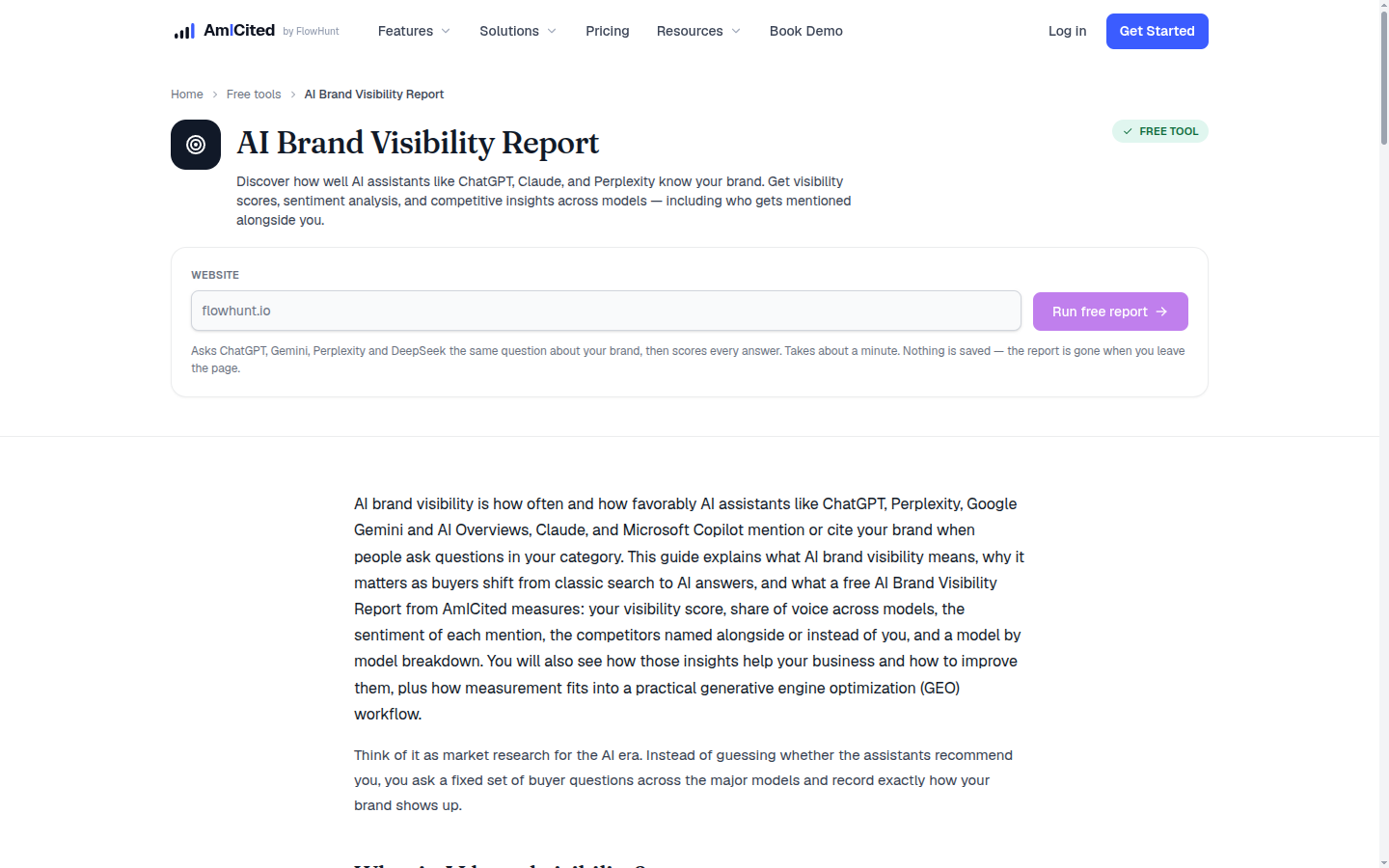
The output covers:
It’s a genuinely useful one-time gut check. The catch, and it’s an honest one the tool’s own FAQ addresses, is that a single AI answer is a noisy sample. A 2026 University of St. Gallen study found that roughly two-thirds of the sources an AI engine cites change from one day to the next , so a single free report tells you where you stood in that moment, not a stable trend line.

Track how AI chatbots mention your brand across ChatGPT, Perplexity, and other platforms.
This is the tool we spent the most time with. Feed it a seed query — we tried “best project management software for startups” — and it’s built to expand that single prompt into the cluster of narrower sub-queries an AI search engine like ChatGPT or Google AI Mode is likely to run behind the scenes before composing one synthesized answer.
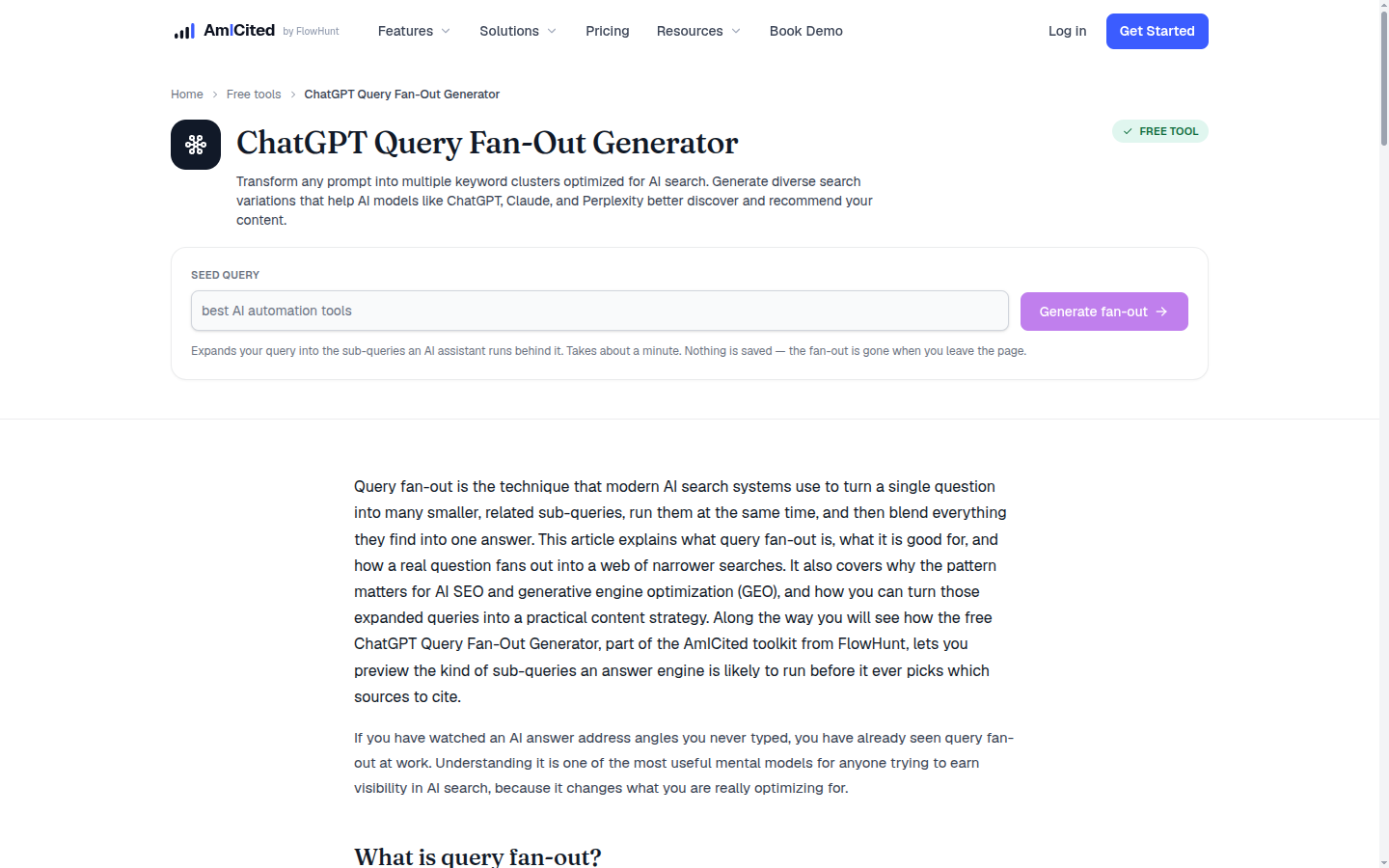
The page’s own worked example shows what that looks like for “best CRM for startups,” fanning out into questions like “Which CRM integrates with Gmail and Slack?” and “Is a CRM worth it for a five-person company?” The point isn’t the exact wording, it’s coverage: a page that answers most of the angles a query fans out into has a real shot at being pulled into an AI answer, even without the top classic search ranking for the head term. Note that actually running a query (not just reading the explainer) requires signing into a free AmICited account.
A narrow, practical tool: it generates a robots.txt file with explicit allow rules for known AI crawler user agents, so ChatGPT, Claude, Perplexity, and similar systems can actually index your site instead of getting caught by an overly broad disallow rule left over from an old configuration.
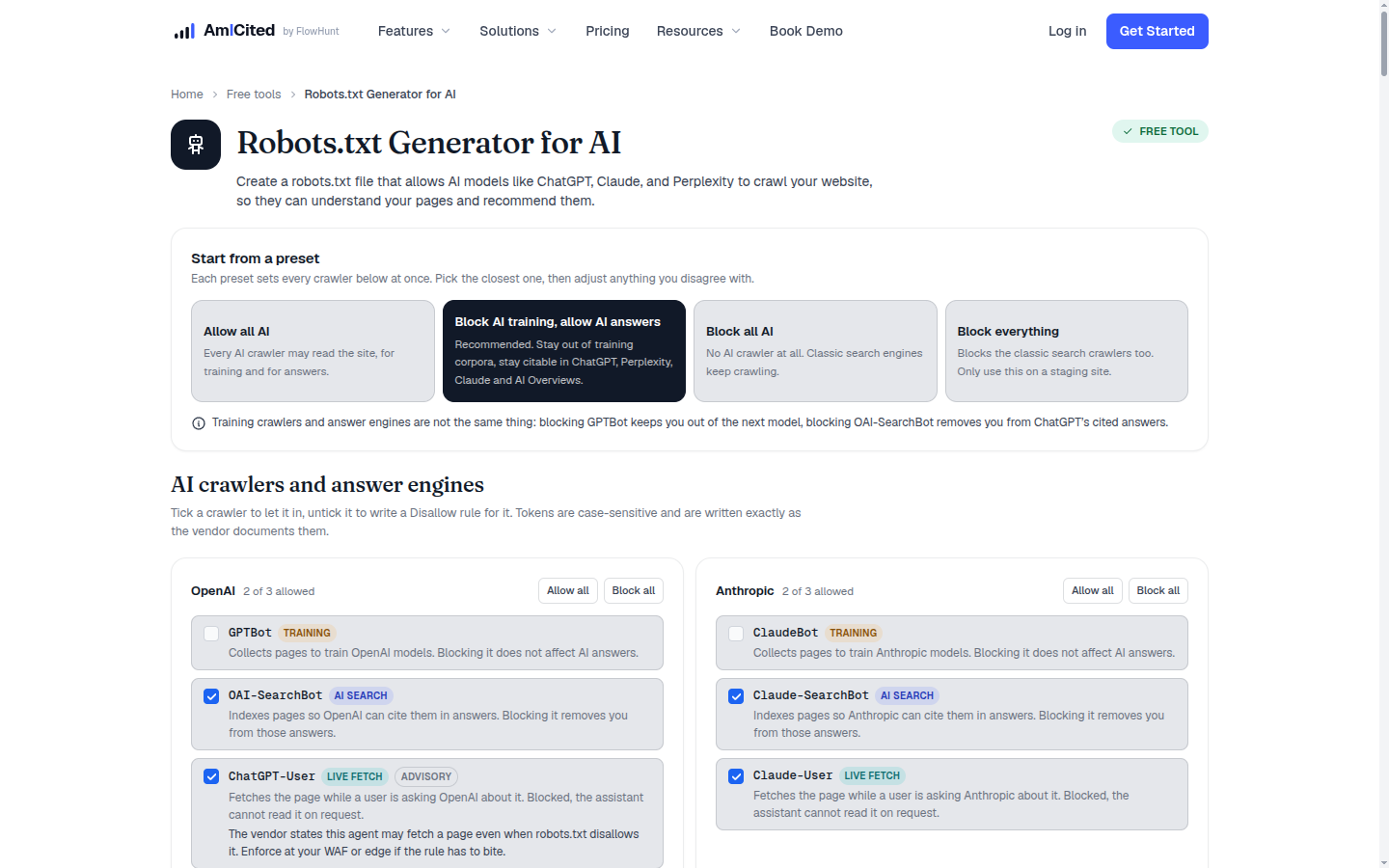
Worth running even if you think your robots.txt is fine — a lot of sites unknowingly block AI crawlers with generic rules that were only ever meant for scrapers.
Get the latest insights on AI mentions, brand monitoring, and optimization strategies.
Give this one a domain or a sitemap.xml URL and it produces an llms.txt file: a curated, link-first summary of your key pages, written in the plain-markdown format AI assistants are increasingly expected to read directly instead of crawling your entire site page by page.
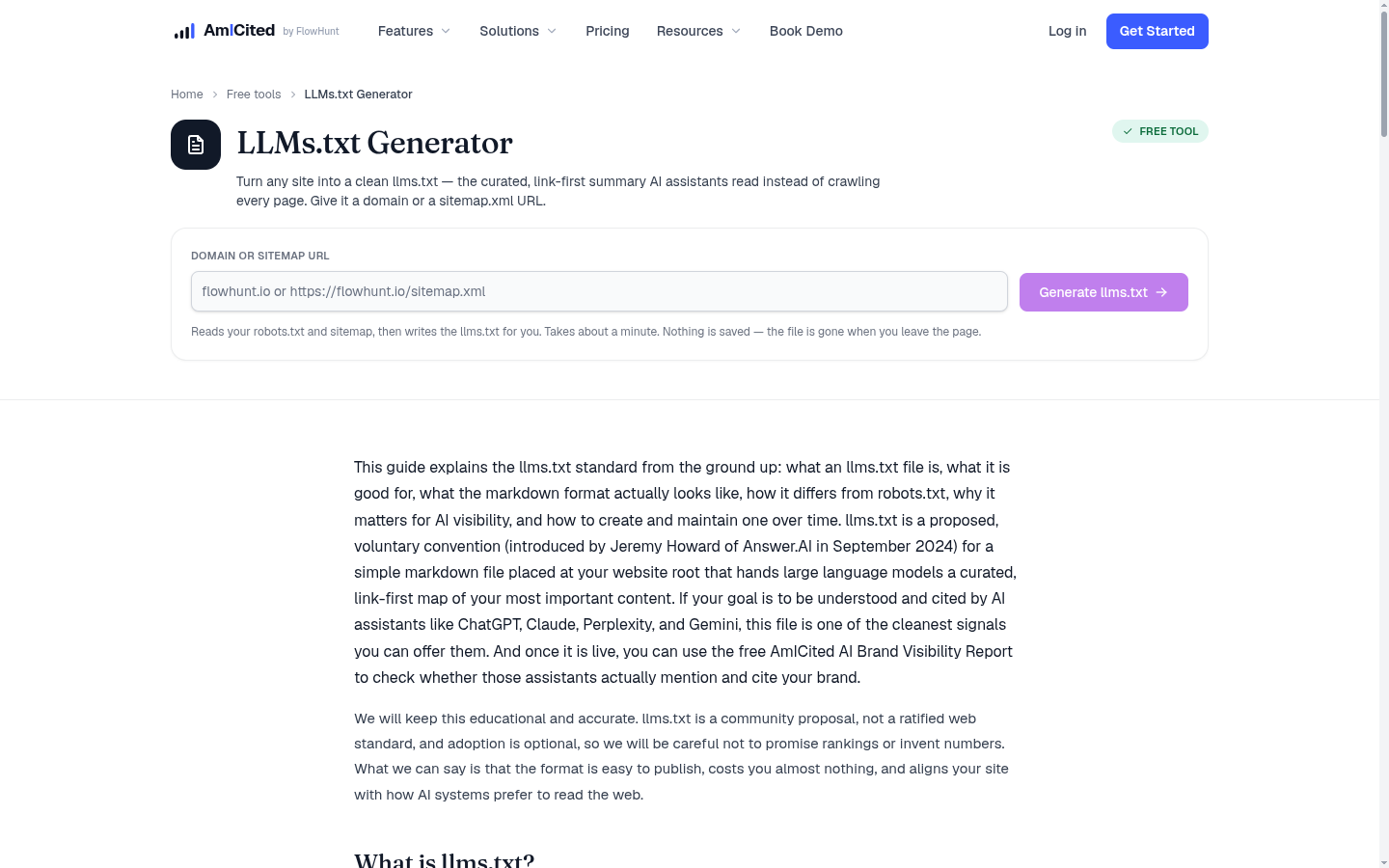
At roughly 60 seconds, it’s the slowest of the six tools, which tracks with it doing the most work — reading your sitemap and deciding what’s actually worth summarizing.
The two content tools are a pair. The Detector inspects pasted text for deterministic watermark signals, like hidden Unicode characters some AI writing tools insert. The Remover applies a best-effort rewrite to strip those signals out.
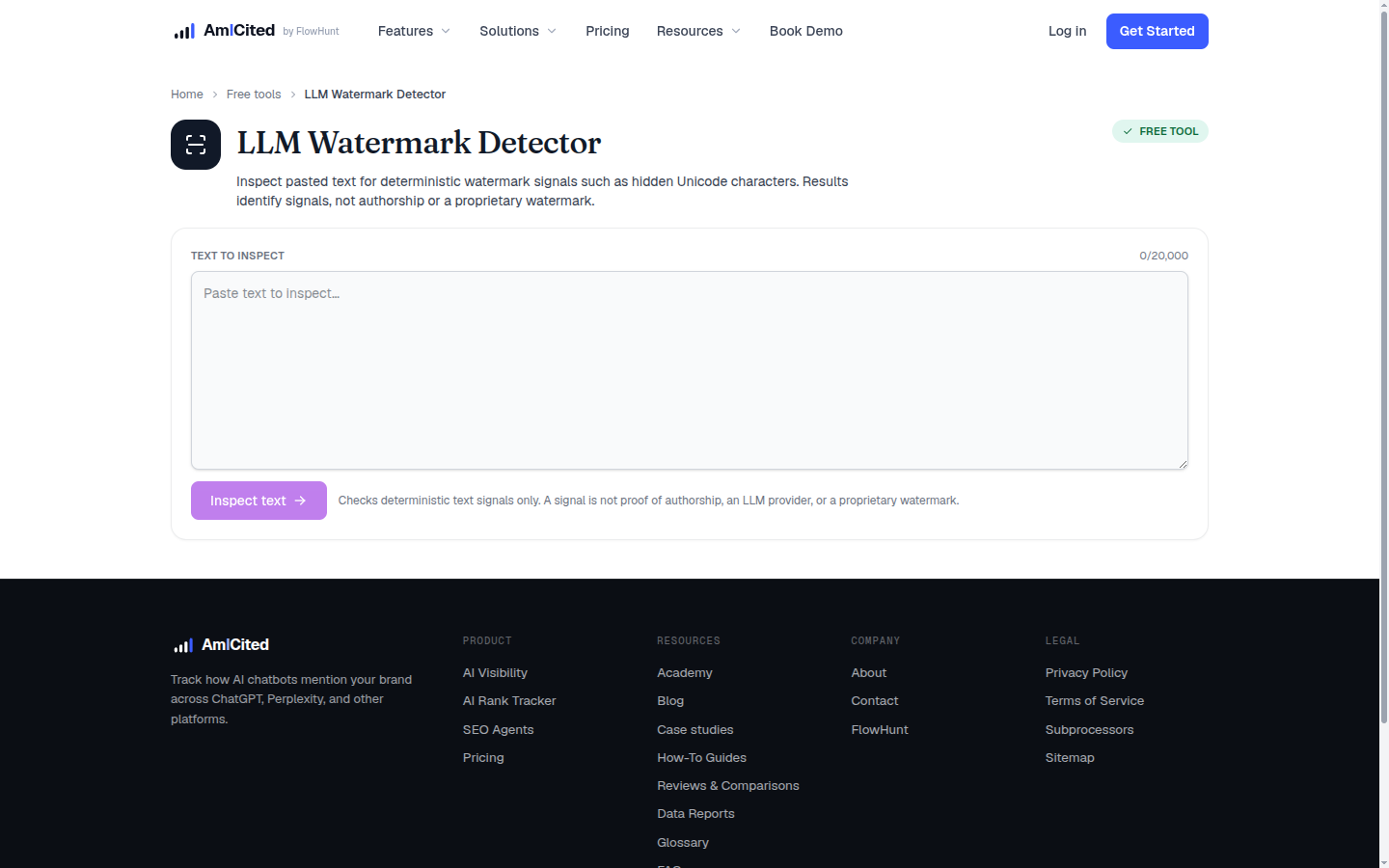
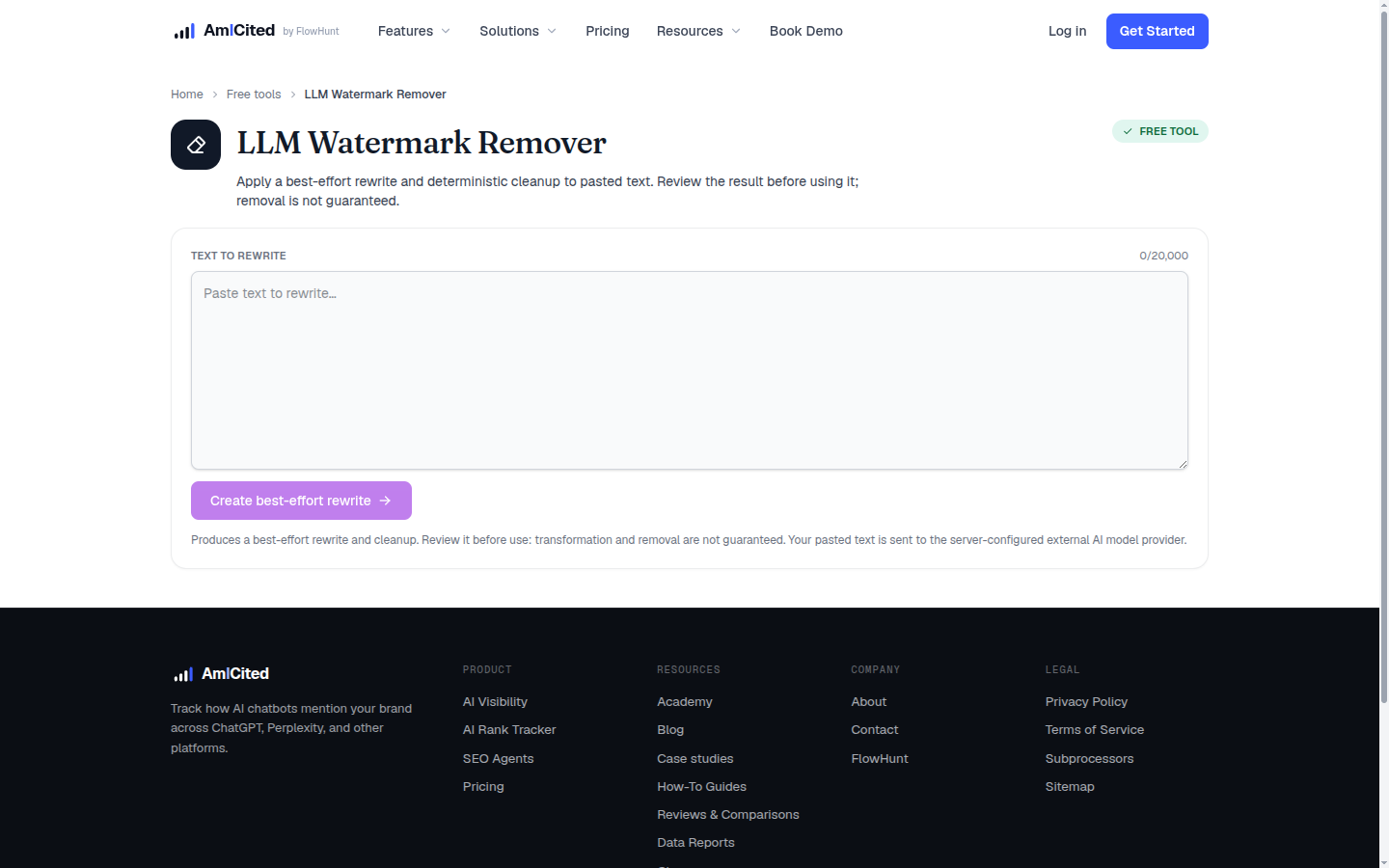
Both tools are upfront about their limits: detection identifies signals, not authorship or a specific proprietary watermark, and removal is “best-effort,” not guaranteed. Review the output before you use it anywhere that matters.
The tool pages are cross-linked deliberately — each one has a “Pairs well with” section pointing at the others, and the intended workflow reads like this:
That last step is the honest limitation of any free, one-off tool. A single Brand Visibility Report is a snapshot, not a trend, and AI answers are noisy enough day to day that one run can over- or under-state where you actually stand. If you want that same kind of analysis running continuously — tracked over time, across the same set of engines, with alerts when something shifts — that’s exactly what AmICited’s paid monitoring is built for. The free tools hub is the right place to start; regular monitoring is what turns a one-time score into an ongoing strategy.
Arshia is an AI Workflow Engineer at FlowHunt. With a background in computer science and a passion for AI, he specializes in creating efficient workflows that integrate AI tools into everyday tasks, enhancing productivity and creativity.

The free tools give you a snapshot. AmICited tracks how ChatGPT, Perplexity, Gemini, and AI Overviews mention your brand every day, so you always know where you stand.
Six public AmICited tools for AI-search visibility, research, technical files and content checks: brand visibility, query fan-out, robots.txt, llms.txt, waterma...

Compare free and paid AI visibility checkers by use case, plan limits, and verified 2026 pricing.
Compare leading AI visibility monitoring tools for 2025 and track your brand across ChatGPT, Perplexity, and Google AI Overviews.
Cookie Consent
We use cookies to enhance your browsing experience and analyze our traffic. See our privacy policy.