


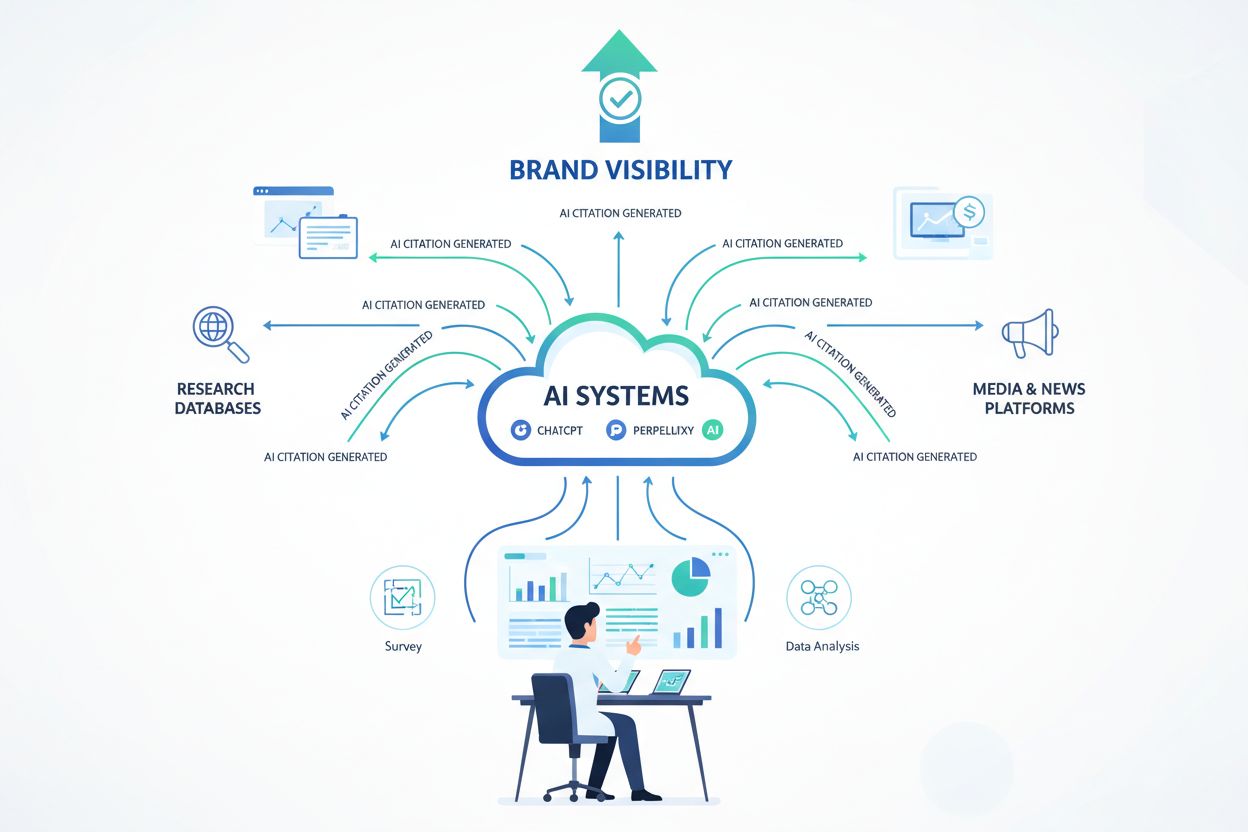
Original Research: The 30-40% Visibility Boost for AI Citations
Discover why original research drives a 30-40% visibility boost in AI citations — the data behind it, how first-party data builds citation authority, and the me...
14 min read

A practitioner’s guide to running a data-driven PR program: the five attributes of citation-worthy research, how to design a rigorous study, where to pitch and distribute it, and how to prove it’s driving AI citations.
Original research has become the most valuable asset in the AI-driven information ecosystem, and PR teams that treat it as a running program — not a one-off deliverable — are the ones building compounding authority with LLMs. The macro case for why original research outperforms aggregated content, including the well-documented 30-40% visibility boost brands see in AI citations, is covered in depth in our companion piece on Original research and the AI citation revolution; this article picks up where that one leaves off and focuses on the practitioner’s side of the job — how to actually design a study, get it in front of the right people, and prove it’s paying off. Remarkably, 90% of ChatGPT citations originate from positions 21 and beyond in traditional search results, meaning AI models are actively rewarding depth and originality over the conventional “top 10” rankings PR teams have spent decades chasing. That shift means the job of a modern PR or content team is no longer to win a ranking — it’s to produce something worth citing in the first place, then make sure it reaches the sources AI systems actually pull from.

| Attribute | Description | Example |
|---|---|---|
| Original Data | Proprietary research, surveys, or studies conducted by your organization | A SaaS company publishing quarterly benchmark data on customer retention rates across 500+ clients |
| Structural Clarity | Well-organized content with clear headings, subheadings, and extractable insights — the content structure an LLM can actually parse | Research findings presented with numbered key takeaways and data visualizations that LLMs can parse |
| Specificity & Quantification | Precise statistics, percentages, and measurable outcomes rather than vague claims | “42% of enterprise buyers prioritize vendor security certifications” vs. “many buyers care about security” |
| Methodological Transparency | Clear explanation of research methodology, sample size, and data collection approach | Detailed methodology section explaining survey sample size, demographics, and statistical confidence levels |
| Contextual Authority | Content published by recognized experts or organizations with established credibility in the field | Research published by industry analysts, academic institutions, or brands with demonstrated expertise |
These five attributes work synergistically to create content that AI models recognize as citation-worthy and reliable. When your research embodies all five characteristics, LLMs are significantly more likely to reference your work as a primary source rather than aggregating information from multiple secondary sources. The combination of original data with transparent methodology creates a trust signal that algorithms recognize and reward with higher citation frequency. Organizations that excel at combining these attributes — publishing original research with clear methodology and specific quantification — consistently see their content cited across multiple AI platforms. This framework should guide every research initiative your organization undertakes, from initial concept through final publication and distribution.

Track how AI chatbots mention your brand across ChatGPT, Perplexity, and other platforms.
To create research that AI systems actively seek out and cite, your program has to begin with systematic gap identification and progress through rigorous execution:
This systematic approach transforms research from a one-time content asset into a foundational authority-building initiative that compounds over time, turning research from a one-time content asset into something that generates research from a one-time project into a program with multiple citation opportunities across different AI platforms and use cases, extending the ROI far beyond traditional PR metrics.
Once a study is locked, distribution is where most of the PR craft actually happens — and the channels that matter for AI citations aren’t quite the same ones that mattered for traditional coverage. Research reveals that Reddit accounts for 40.1% of AI citations, making it the single largest source platform for LLM training data and real-time information retrieval — seeding a well-formatted summary of your findings into relevant subreddit discussions (not just posting a press release) earns far more AI pickup than a wire distribution ever will. Wikipedia represents 26.3% of citations, serving as a trusted reference layer that AI systems heavily weight; getting your study cited as a source on a relevant Wikipedia page is a slower, editorially stricter process than a media pitch, but the payoff compounds for years. Notably, 44% of AI citations originate from first-party brand websites, which means your own published research page is doing more citation work than any single placement you land elsewhere.
For the traditional media side of the pitch, tailor the angle to what a specific reporter covers rather than sending one generic release to a list — the same study can be pitched as a workforce trend to a business reporter and as a product story to a trade outlet, and each angle should lead with the single most surprising number, not the methodology. Offer an exclusive or early-access window to a priority outlet before wider distribution; a placement in a tier-one business publication does double duty, since it both reaches human readers directly and gets indexed as a credible secondary source that other outlets and AI systems can point back to. This distribution pattern fundamentally differs from the backlink-focused strategies of traditional SEO, where external validation dominated rankings. The strategic implication for a PR team: your own website, combined with deliberate placement on Reddit, Wikipedia, and outlets a beat reporter actually reads, creates a citation advantage that a mass press-release blast cannot replicate. This same distribution playbook doubles as B2B thought leadership positioning — every pitch that lands reinforces the same authority signal, whether the audience is a journalist, a subreddit, or an LLM evaluating sources.
Get the latest insights on AI mentions, brand monitoring, and optimization strategies.
Consider a B2B software company that published original research on remote work productivity trends, surveying 2,000 knowledge workers across 15 industries. The initial research generated three major media placements in tier-one business publications, establishing credibility with human audiences. Within weeks, the research began appearing in ChatGPT responses about remote work best practices, cited as a primary source for productivity statistics. As the research gained AI citations, additional journalists discovered it through AI-generated content, leading to secondary media coverage that further amplified visibility. The company then published a follow-up study examining how their initial findings evolved over six months, creating a narrative of ongoing authority that AI systems recognized as authoritative trend analysis. This second study generated citations not only for the new data but also reinforced citations of the original research, creating a compounding effect where each publication strengthened the authority of previous work. Within 12 months, the company’s research had been cited in over 400 AI-generated responses across multiple platforms, establishing them as the go-to source for remote work insights. This case demonstrates how systematic, data-driven PR creates exponential returns, where each research initiative builds on previous authority rather than existing as isolated content assets. The key differentiator was treating research as an ongoing authority-building program rather than one-off content projects.
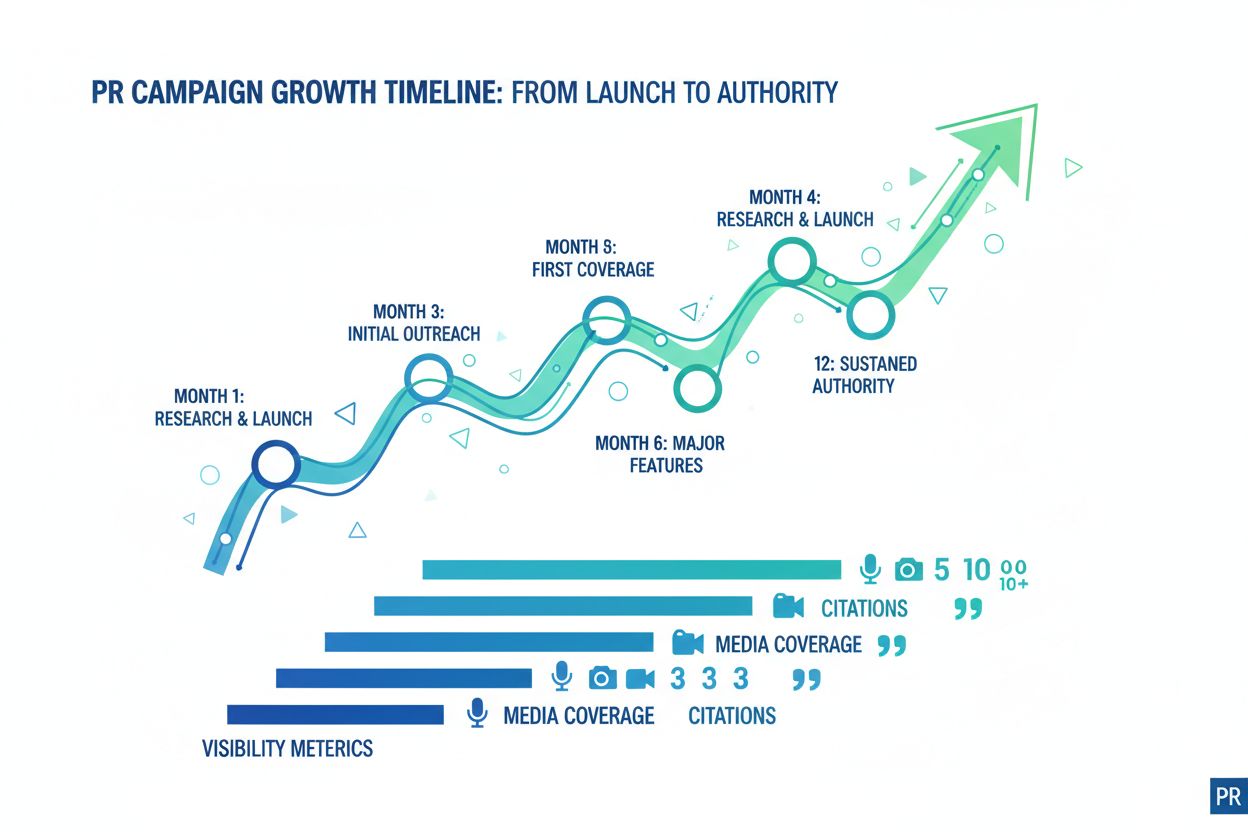
The metric a PR team actually needs isn’t a single citation count — it’s whether the program as a whole is generating a higher citation rate release over release, and whether that trend justifies the next research budget. Track citation velocity per asset over time to identify which research topics generate sustained interest versus a one-time spike, and correlate the timing of your media placements against the timing AI citations for that same asset first appear — placements in outlets AI systems trust tend to precede a jump in citation volume within days to weeks, and seeing that pattern (or not seeing it) tells you whether your distribution channels are actually reaching AI-relevant sources. Compare performance across ChatGPT, Perplexity, and Google AI Overviews rather than treating “AI citations” as one undifferentiated number, since a study that’s a hit on one platform can be invisible on another depending on how each model weights source freshness and authority. For the full breakdown of citation-rate formulas, signal-rate targets, and a prompt-testing methodology you can reuse across studies, see the measurement framework in our companion piece — it’s built for exactly this kind of tracking and there’s no reason to rebuild it here. What matters for a PR program specifically is using that data to answer one question every quarter: which research topics and distribution channels produced the best citation-to-effort ratio, and should the next study double down on the same territory or open new ground. Write the answer down each time — a PR team that doesn’t document your PR program’s citation history ends up re-litigating the same “was this study worth it” debate from scratch every quarter instead of building on what it already learned.
AmICited.com provides the competitive intelligence layer that modern PR teams need to understand how AI systems are citing their research and positioning their brand authority. For a PR team specifically, the most useful view isn’t the raw citation count — it’s the breakdown by research asset, which tells you which studies are still earning citations months after the press cycle ended and which ones died with the news cycle. The platform also surfaces competitive gaps: topics where a competitor’s research is being cited by AI systems and yours isn’t, which is exactly the kind of signal that should shape next quarter’s research calendar rather than guesswork about what “feels” newsworthy. Used this way, AmICited turns the PR program’s AI impact from an anecdote you tell leadership (“we got picked up in three publications”) into a number you can defend (“this study is still generating citations eight months after publication, at a lower cost per citation than our last two campaigns combined”). For PR professionals operating in the AI era, this kind of program-level visibility — not just individual placement tracking — is what separates a research program that compounds from one that resets to zero with every new study.
Yasha is a talented software developer specializing in Python, Java, and machine learning. Yasha writes technical articles on AI, prompt engineering, and chatbot development.

Track how AI systems cite your original research across ChatGPT, Perplexity, and Google AI Overviews. Get real-time insights into your brand's visibility in AI-generated answers.
Discover why original research drives a 30-40% visibility boost in AI citations — the data behind it, how first-party data builds citation authority, and the me...

Learn how proprietary survey data and original statistics become citation magnets for LLMs. Discover strategies to improve AI visibility and earn more citations...

Learn how Digital PR for AI works to generate citations from ChatGPT, Perplexity, and Google AI Overviews. Discover strategies for entity optimization, structur...
Cookie Consent
We use cookies to enhance your browsing experience and analyze our traffic. See our privacy policy.