


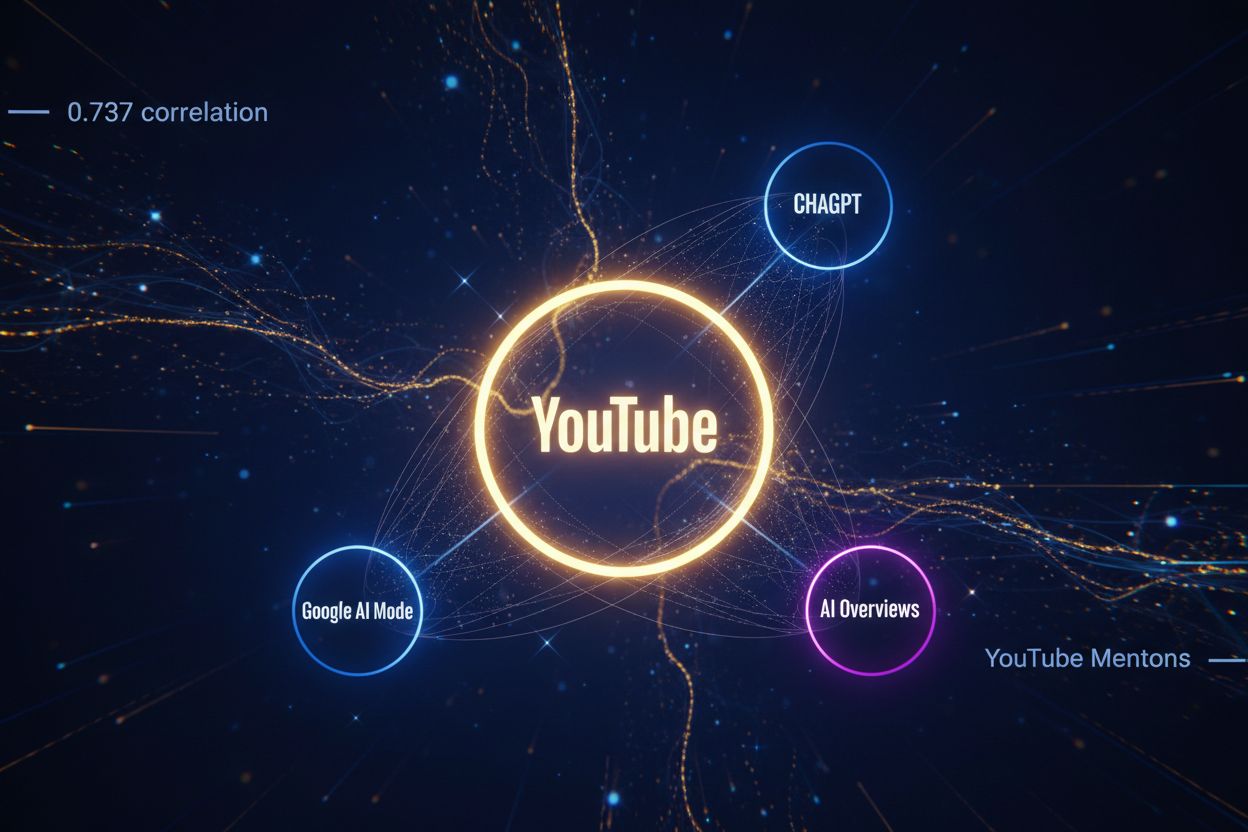
YouTube Mentions: The AI Visibility Correlation Factor
The data behind the 0.737 correlation between YouTube mentions and AI visibility: methodology, the full factor table, and how ChatGPT, AI Mode, and AI Overviews...
9 min read
A practical playbook for earning the YouTube mentions that move AI visibility: channel strategy, creator partnerships, transcript optimization, and how to measure whether it’s working.
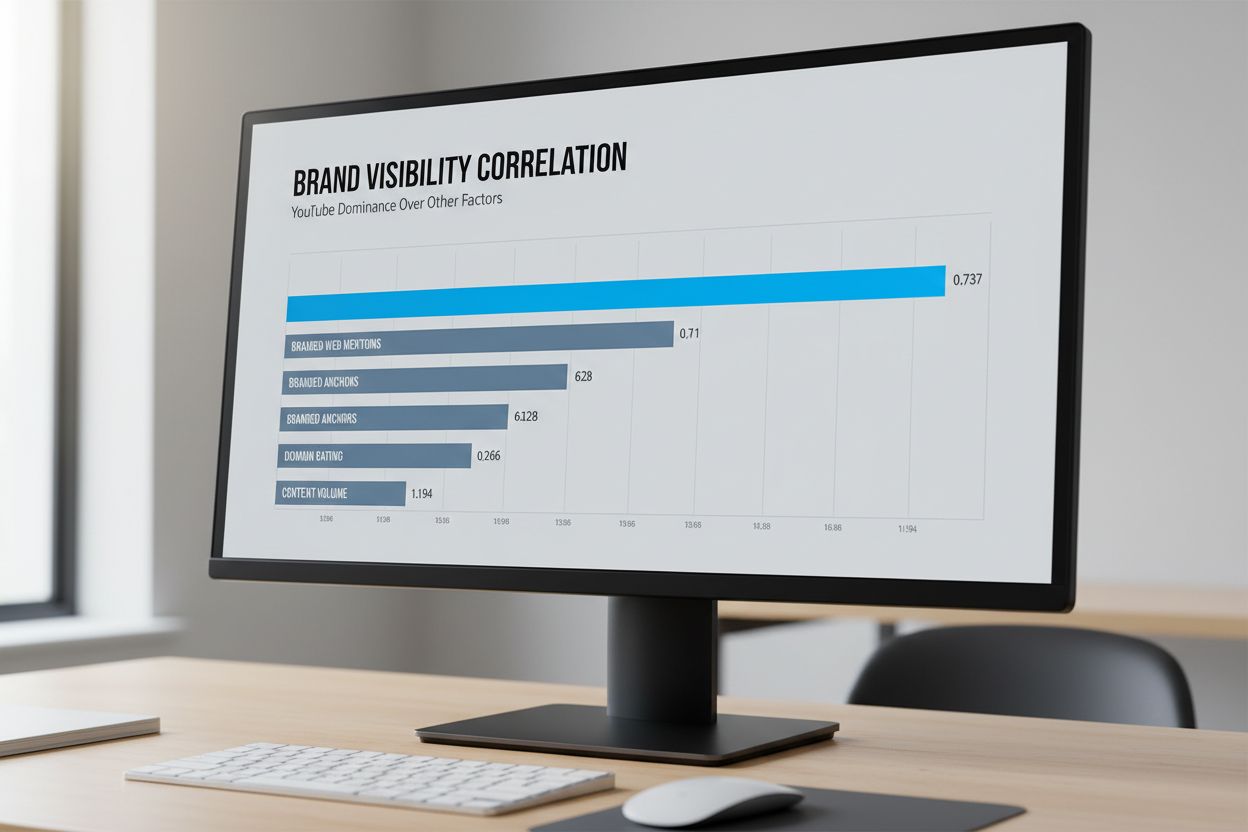
If you’ve seen the number, YouTube mentions correlate with AI visibility more strongly than any other signal Ahrefs measured across 75,000 brands, you already know why YouTube matters. This post is about the how: the concrete steps for building a brand channel, landing genuine creator partnerships, optimizing transcripts, and measuring whether any of it is moving the needle. For the underlying data, the correlation table, the methodology, and how ChatGPT, AI Mode, and AI Overviews weight YouTube differently, see our breakdown of the correlation factor . Here, we skip straight to execution.
The foundation of any YouTube visibility strategy is an owned channel with a consistent publishing cadence. Establish an official brand channel and commit to regular, high-quality video content rather than sporadic uploads. Prioritize educational and value-driven content that naturally attracts viewers over overtly promotional material: how-to guides, behind-the-scenes explainers, and genuine product walkthroughs tend to generate more organic engagement and mentions than ads dressed up as videos. Optimize video titles, descriptions, and spoken content with your brand name and relevant keywords so that every context the correlation data measures, title, transcript, description, works in your favor. A regular publishing schedule matters here too: consistency builds the audience momentum that eventually attracts organic mentions from other creators covering your space.

Track how AI chatbots mention your brand across ChatGPT, Perplexity, and other platforms.
Owned content alone rarely produces the breadth of mentions the data rewards; most brands need mentions from creators they don’t control. Identify creators in your industry with engaged audiences, prioritizing relevance and audience overlap with your buyers over raw subscriber count. Favor authentic partnership opportunities over transactional, one-off sponsorships: a creator who genuinely uses and references your product across several videos generates more of the diverse, widespread mentions that correlate with AI visibility than a single paid placement ever will. Encourage creators to mention your brand naturally within their content rather than reading a scripted ad read, natural language mentions are exactly what YouTube transcripts capture and what AI training data rewards. Track which creators and videos generate mentions so you can double down on the relationships that work.
Because AI systems are trained on YouTube transcripts, not just titles and descriptions, transcript quality is a real optimization surface. YouTube auto-generates transcripts, but manual review meaningfully improves accuracy, especially for brand names, product names, and technical terms that speech-to-text tends to mangle. Make sure your brand name is spoken clearly and consistently across videos, and include key terms and contextual information in the spoken content itself, not just in on-screen text or the description box. Use timestamps and chapters to help structure longer videos, and periodically audit how your brand actually appears in your own video transcripts across the channel to catch mis-transcriptions before they compound.
Get the latest insights on AI mentions, brand monitoring, and optimization strategies.
Not every AI platform rewards the same inputs equally, so sequencing matters. Understanding these platform-specific differences can help you prioritize: if you’re an emerging brand without established authority, the correlation data suggests ChatGPT rewards frequency and diversity of mentions over legacy authority signals, and brand mentions in popular YouTube videos often surface in its responses, making ChatGPT a realistic first target for a young creator-partnership program. Google’s AI Mode and AI Overviews, by contrast, still lean more on traditional signals alongside YouTube activity, so they tend to respond better once you’ve paired YouTube mentions with a broader web-mentions strategy. Rather than re-deriving the full platform-by-platform correlation breakdown here, see our correlation data deep-dive if you want the numbers behind this sequencing advice.
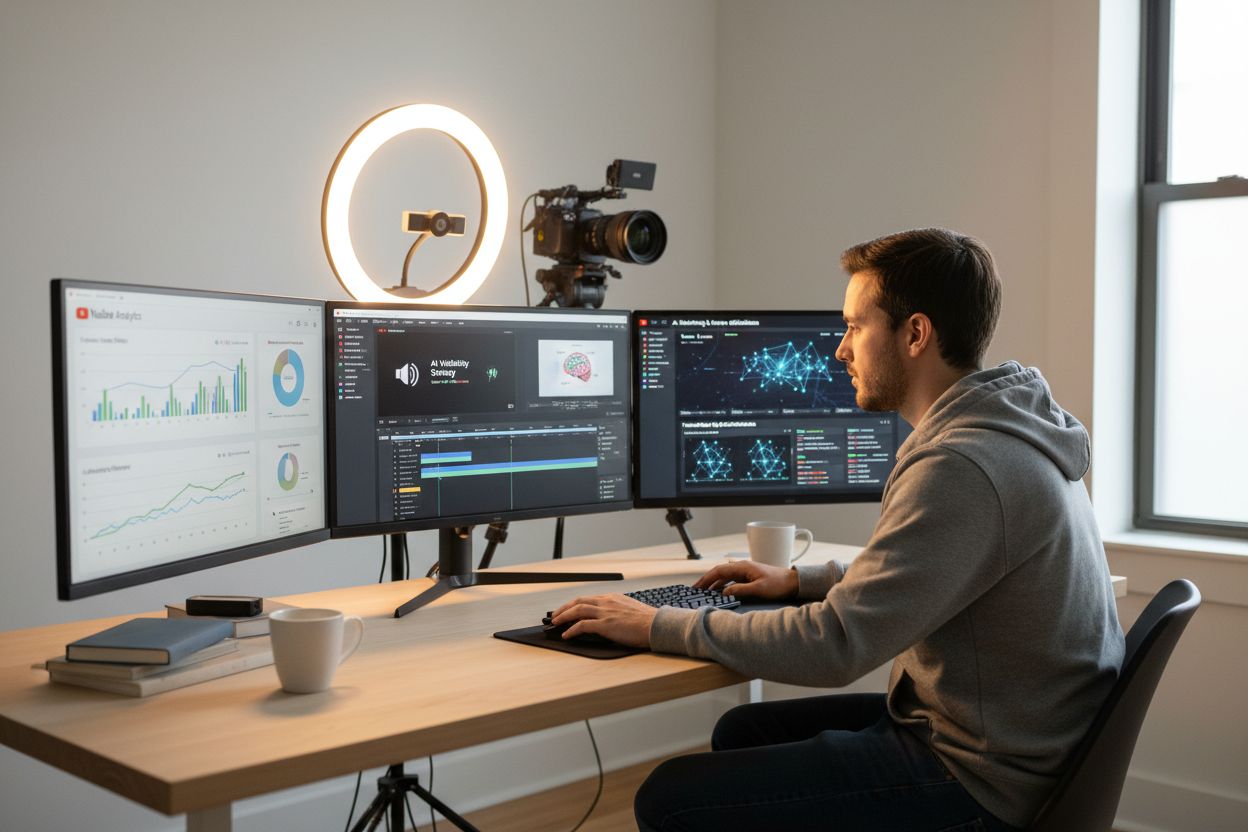
A YouTube strategy without measurement is just content marketing with extra steps. Use YouTube Analytics to track mention frequency and reach for videos where you have visibility (owned channel, disclosed partnerships), and monitor AI visibility changes in parallel rather than treating them as separate reporting streams. Test different content formats, creator tiers, and partnership structures to identify what actually drives mentions rather than assuming your first approach is optimal. Adjust the strategy based on which channels and formats generate the mentions that correlate with visibility gains, not just the ones that generate the most views.
Expect a lag between a mention landing on YouTube and it showing up in an AI answer, and expect that lag to vary by platform. ChatGPT’s training data has cutoff dates, so mentions in recent videos can take weeks or months to surface in responses. AI Overviews and AI Mode incorporate more current data, so visibility improvements can sometimes appear within days or weeks of a mention going live. As a rough planning heuristic, budget 4-8 weeks of consistent execution before drawing conclusions about whether a given tactic, a creator tier, a content format, is working.
Building YouTube mentions systematically is really a shift from SEO thinking to GEO (Generative Engine Optimization) thinking. Traditional SEO optimizes for algorithmic ranking factors, links, keywords, domain authority; GEO means creating content that will actually be captured in AI training data and referenced by language models. In practice, that means treating your YouTube channel and creator-partnership pipeline as core infrastructure rather than a marketing side project: budget for it, staff it, and hold it to the same rigor as your web content calendar. The brands showing up consistently in ChatGPT, AI Mode, and AI Overviews responses are, disproportionately, the ones that made this shift early.
Executing a YouTube strategy is only half the job, you also need to know whether it’s translating into AI visibility. AmICited provides real-time monitoring of how your brand appears across ChatGPT, Google AI Mode, and AI Overviews, so you can watch your citation rate move (or not) as your creator partnerships and content calendar mature. Rather than waiting for a quarterly report to find out a batch of videos didn’t move the needle, AmICited lets you correlate specific campaigns and partnerships with visibility changes as they happen, so you can redirect effort toward what’s actually working instead of what merely felt productive.
Yasha is a talented software developer specializing in Python, Java, and machine learning. Yasha writes technical articles on AI, prompt engineering, and chatbot development.

Track how AI systems reference your brand with AmICited's comprehensive monitoring solution. Get real-time insights into your presence across ChatGPT, AI Mode, and AI Overviews as your YouTube strategy takes effect.
The data behind the 0.737 correlation between YouTube mentions and AI visibility: methodology, the full factor table, and how ChatGPT, AI Mode, and AI Overviews...
Discover the strong correlation between SEO rankings and AI visibility. Learn how traditional SEO drives AI citations and what signals matter most for AI platfo...
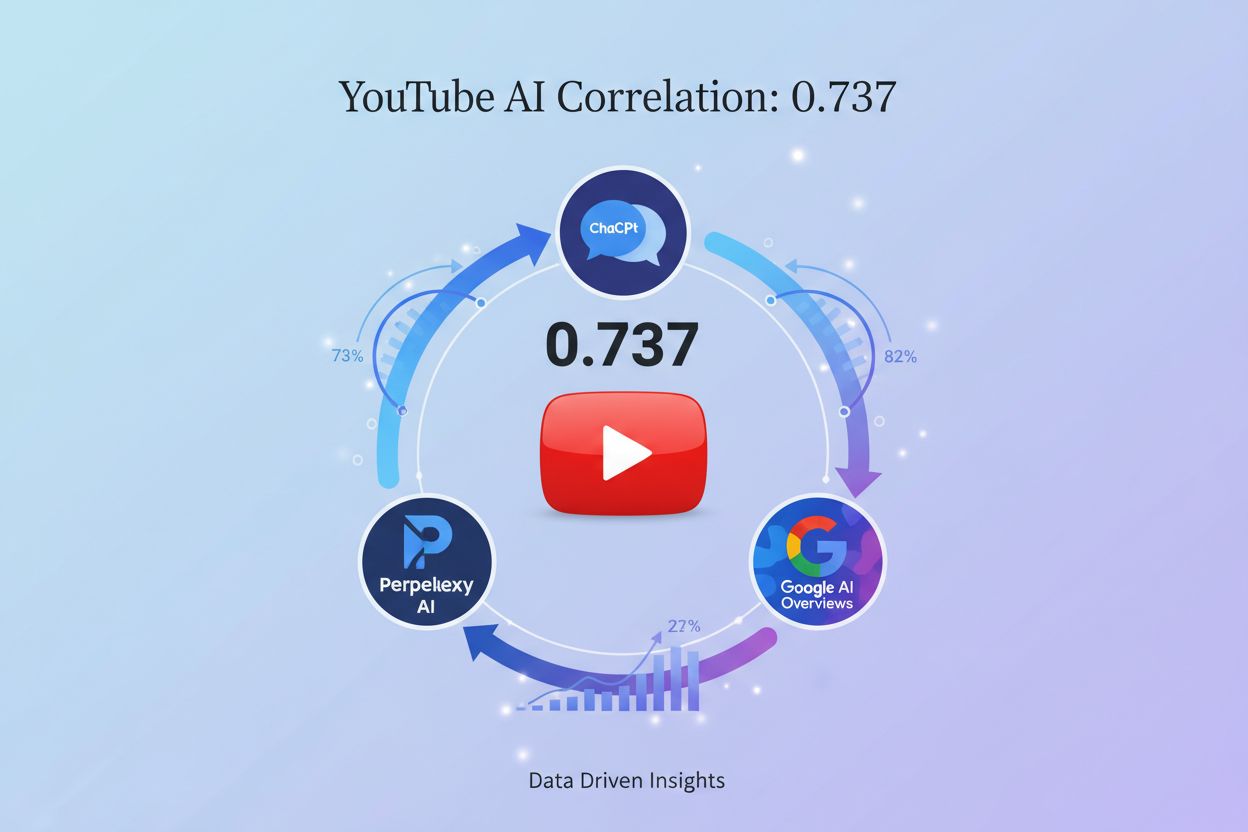
Learn about YouTube AI Correlation (0.737), the strongest off-page factor for AI visibility. Discover why YouTube dominates AI citations and how to optimize you...
Cookie Consent
We use cookies to enhance your browsing experience and analyze our traffic. See our privacy policy.