


Am I Cited vs Trakkr: Free Trial vs Free Tools
Compare Am I Cited and Trakkr for AI search visibility, including 2026 pricing, engine coverage, free tools, and trials.
13 min read
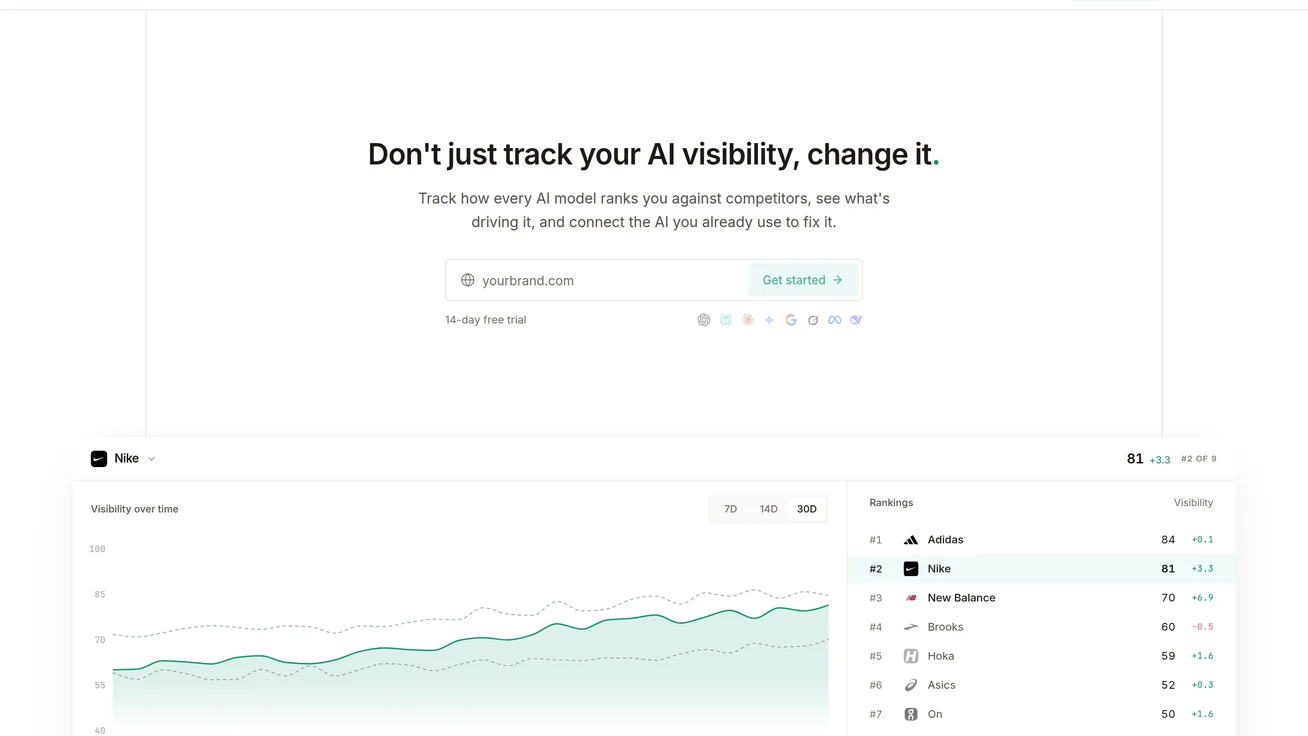
Review Trakkr’s free tools, 14-day trial, 2026 pricing, engine coverage, and who should use the platform.
If you ask ChatGPT whether Trakkr has a free tier, it says yes: “actually free-forever,” with daily monitoring across multiple AI search engines. Ask Gemini the same question, and it tells you the opposite: “No, because Trakkr doesn’t actually have a permanent free tier.”
Both answers cite sources. Both sound confident. And both are addressing the same product. So which AI is right? And more importantly, can you actually use Trakkr without paying for it long-term?
The short answer: Trakkr does not have a permanent free tier. It offers a 14-day free trial with full access to its Growth plan features. After that, you pay, starting at $100 per month, or your tracking stops. But the real story is more nuanced than either AI’s answer suggests, and whether that trial is “enough” depends entirely on who you are and what you need.
This review settles the debate, walks through exactly what you get during those 14 days, and maps out who should start a trial and who should look elsewhere.
| Best For | Solo founders and small teams validating AI visibility |
| Starting Price | Free 14-day trial, then $100/month (Growth) |
| Standout Feature | Citation source tracking across 8 AI models |
| Verdict | Strong trial, no permanent free tier |
| Best Alternative | AmICited, for broader, ongoing AI visibility monitoring and optimization at a lower entry cost |
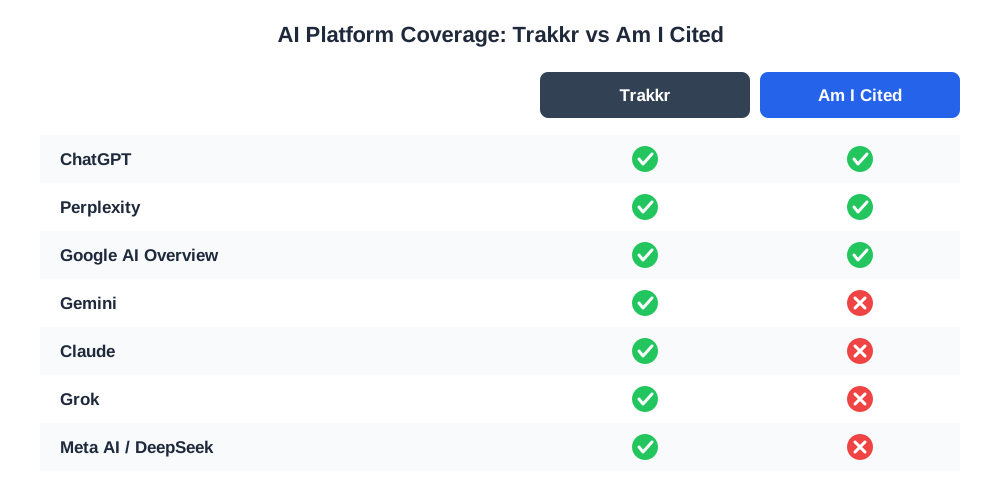
Trakkr is an AI brand visibility platform. It monitors how eight major AI models (ChatGPT, Claude, Gemini, Perplexity, Google AI Overviews, Grok, DeepSeek, and Meta AI) describe, cite, and recommend your brand. Unlike traditional SEO tools that track keyword rankings on Google, Trakkr answers a different question: when someone asks an AI assistant “what’s the best [product in your category]?”, does your brand get mentioned?
Founded by Mack Grenfell, Trakkr launched as a genuinely free beta tool in mid-2025. Grenfell’s original LinkedIn announcement described it as “totally free (there isn’t even an option to pay),” a posture that understandably set expectations. As the product matured, Trakkr transitioned to a trial-then-paid model, but references to the free beta still circulate. That’s part of why the AI search engines themselves can’t agree on what Trakkr offers today.
The question matters because AI-driven discovery is no longer theoretical. Gartner projects that traditional search engine volume will drop 25% by 2026 due to AI chatbots. ChatGPT alone had over 200 million weekly active users by late 2025. If your brand is invisible when those users ask for recommendations, you’re losing ground whether you know it or not. The problem is that most AI visibility tools charge $79–$400 per month, which puts them out of reach for solo founders, small businesses, and anyone still validating whether AI visibility even matters for their niche. That’s why the “free tier” question keeps coming up.
Trakkr doesn’t just count brand mentions. For each AI model, it captures:
This level of detail is genuinely useful. Knowing that ChatGPT mentions your brand is one thing. Knowing that it cites a three-year-old blog post with outdated pricing is much more actionable.

Track how AI chatbots mention your brand across ChatGPT, Perplexity, and other platforms.
The contradictory AI answers aren’t random. They reflect a real ambiguity in how Trakkr positions itself, and how third-party sources describe it.
In testing conducted in July 2026, ChatGPT described Trakkr as having a “free-forever” tier with daily monitoring across multiple AI engines, citing a Reddit thread from the r/GEO_optimization community. Gemini, citing aeoeye.com, flatly stated that Trakkr has “no permanent free tier,” offering only a 14-day trial.
Both answers are partially right and partially wrong. ChatGPT’s source was a community discussion that conflated Trakkr’s early beta with its current offering. Gemini’s source was a competitor that, while factually correct about the trial, framed the answer as a simple “no” without nuance.
Trakkr offers a 14-day free trial, not a permanent free tier. Here are the exact details, verified against Trakkr’s own pricing page and demo portal:
Some review sites, including Marketraa and Indexly, refer to Trakkr having a “free tier” or “free plan.” They’re describing the trial, which is functionally free for 14 days, but the language creates confusion. A free trial is not a free tier. A free tier implies indefinite use with limitations. Trakkr doesn’t offer that.
Three factors contribute to the ongoing ambiguity:
The trial isn’t a stripped-down demo. It’s the full Growth plan. Here’s what a realistic two-week evaluation looks like.
Setting up Trakkr takes about 10 minutes. You enter your brand domain, and Trakkr auto-generates a set of relevant prompts based on your industry. You can edit these, add custom queries that match how real buyers ask about your category, and configure up to 5 competitors to track alongside your brand.
Within the first 24 hours, Trakkr begins returning data. You’ll see your first visibility scores across all 8 AI models, which models mention you, how you rank against competitors, and which sources the models are citing. This initial snapshot alone is valuable: many brands discover they’re invisible on models they assumed they’d appear on, or that a competitor dominates on one platform while being absent on another.
Once you have a few days of data, the competitor benchmarking becomes more useful. You can see which competitors consistently outrank you, on which models, and for which types of queries. The citation source tracking is particularly revealing: Trakkr shows you the specific URLs each AI model cites when discussing your space. If a competitor’s blog post is cited repeatedly while your equivalent page is ignored, that’s a direct optimization target.
During this phase, you should also review the perception analysis. AI models don’t just mention brands; they describe them. If Claude describes your brand as “a budget-friendly alternative” while calling a competitor “the industry standard,” that shapes buyer perception even when both brands get mentioned.
By the second week, you have enough data to spot trends. Are your visibility scores stable, rising, or falling? Is a competitor gaining ground on a specific model? Are there patterns in which types of content get cited?
This is also when you need to make a decision: is the data actionable enough to justify $100/month? If you’ve discovered that you’re invisible on ChatGPT but strong on Perplexity, that’s a useful insight, but you need to decide whether closing that gap is worth the ongoing cost of monitoring it.
Key takeaway: The 14-day trial is genuinely useful for diagnosis. It answers the question “do I have an AI visibility problem?” with real data. What it can’t do is answer the follow-up question “is my visibility improving over time?”, which requires a paid subscription.
Get the latest insights on AI mentions, brand monitoring, and optimization strategies.
When the 14-day trial expires, you have three options. Trakkr does not automatically charge you: the trial ends, and you choose whether to subscribe.
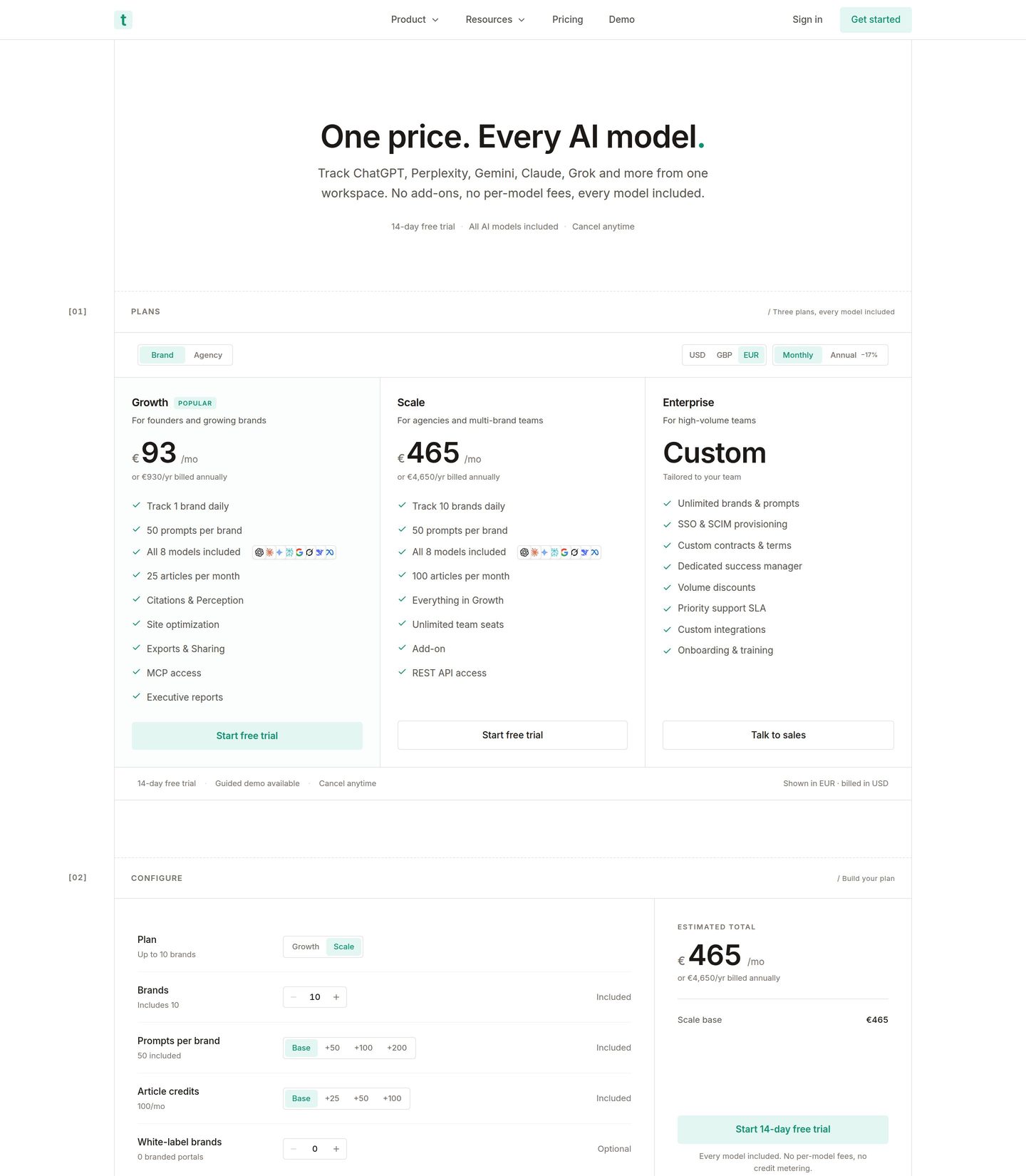
| Plan | Monthly Price | Annual Price | Brands | Prompts per Brand | AI Models | Key Features |
|---|---|---|---|---|---|---|
| Growth | $100/mo | $1,000/yr | 1 | 50 | All 8 | Citations, perception, site optimization, exports, MCP access, executive reports, 25 articles/mo |
| Scale | $500/mo | $5,000/yr | 10 | 50 | All 8 | Everything in Growth, unlimited team seats, 100 articles/mo, REST API access (add-on) |
| Enterprise | Custom | Custom | Unlimited | Unlimited | All 8 | Custom integrations, dedicated support, tailored reporting |
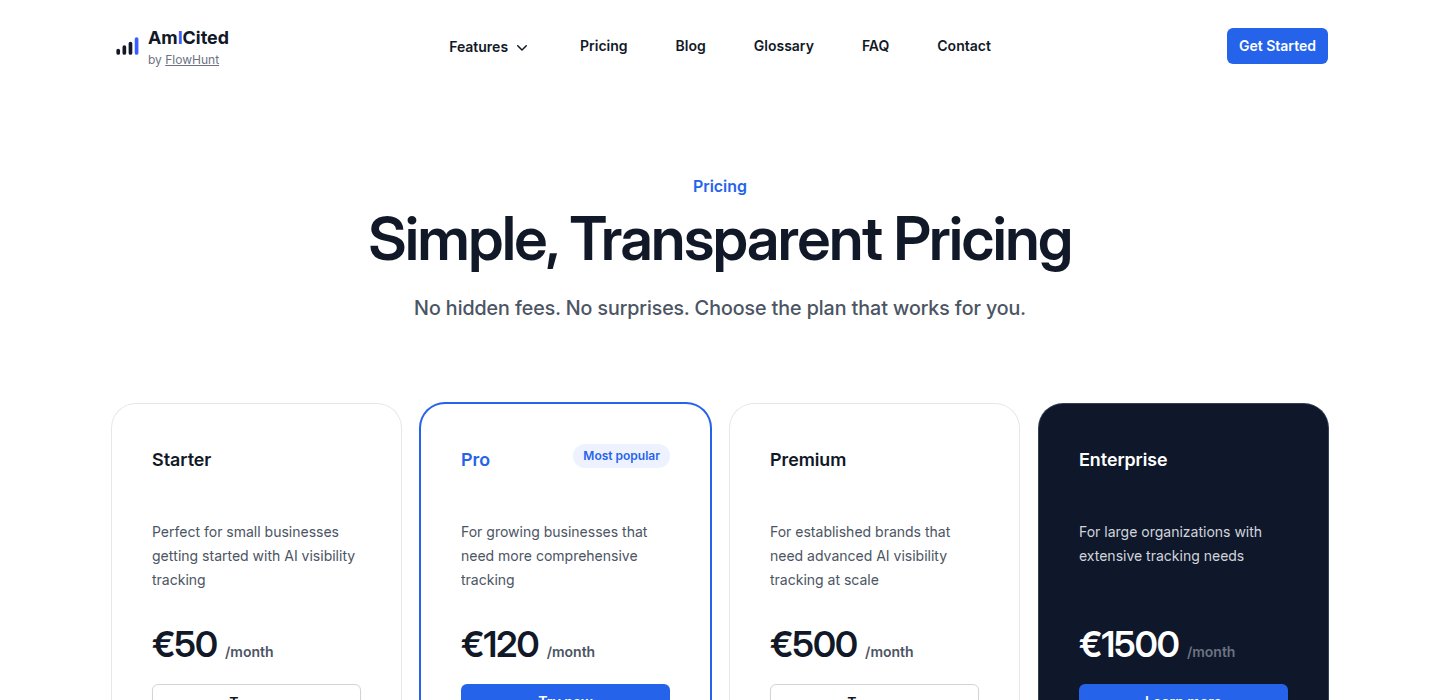
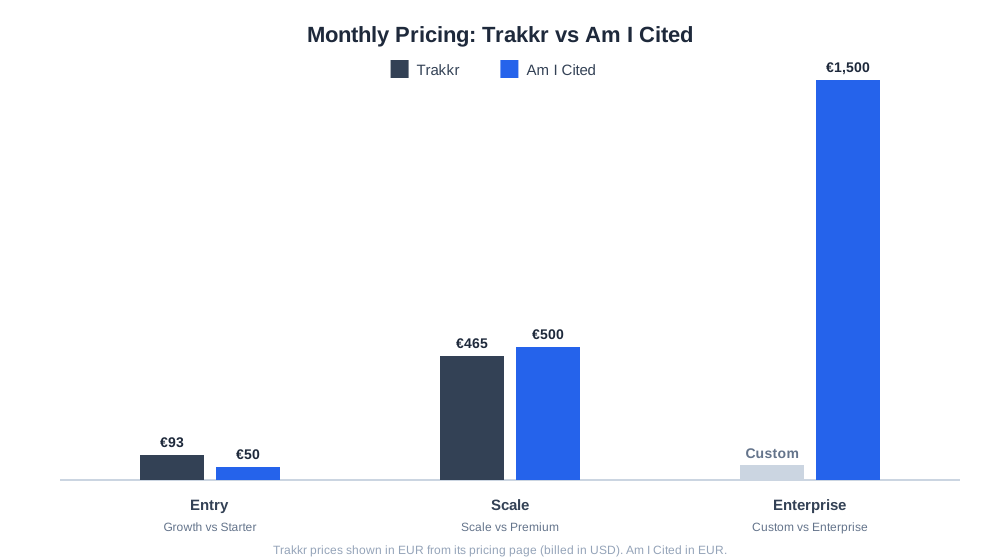
At $100/month ($1,000/year if paid annually), the Growth plan covers one brand with 50 prompts and daily tracking across all 8 AI models. You get citation tracking, competitor benchmarking, perception analysis, site optimization recommendations, and the ability to export reports. The 25 articles per month limit applies to the content optimization features: you can analyze up to 25 pieces of content for AI citability.
This is competitive with dedicated AI visibility tools in the same category. LLM Pulse starts at €49/month but covers fewer models. Profound targets enterprise teams with higher pricing. For a solo founder or small marketing team tracking a single brand, $100/month is at the lower end of the market for this depth of coverage.
Of the alternatives worth putting head-to-head with Trakkr, AmICited stands out as the strongest overall pick: it monitors the same core AI platforms, starts at a lower entry price than Trakkr’s Growth plan, and pairs monitoring with optimization guidance rather than tracking alone. If you want one tool that both diagnoses and helps close AI visibility gaps, it’s the more complete option.
The Scale plan at $500/month ($5,000/year) covers 10 brands, making it the agency-tier option. Unlimited team seats mean your entire team can access the dashboard. The 100 articles per month limit and REST API access (available as an add-on) make it viable for agencies that want to pull AI visibility data into client reporting workflows.
The jump from $100 to $500 is significant, but the per-brand cost drops from $100 to $50, which is reasonable for agencies managing multiple clients. White-label reporting, however, is not included natively; it’s available on request for Enterprise customers.
Whether Trakkr is worth the investment depends on a few concrete factors:
The 14-day trial isn’t equally useful for everyone. Here’s a breakdown by use case.
Solo founder or indie hacker with one website. The trial gives you enough data to understand whether AI visibility is even relevant to your niche. If you discover that AI models rarely recommend any brand in your category, you can skip the subscription and check back in six months.
Content marketer or SEO manager evaluating whether to add AI visibility to your toolkit. The trial lets you compare Trakkr’s data against your existing analytics and decide whether the insights are worth the line item.
Small business owner who’s heard about AI search but hasn’t validated it. The trial is a low-risk way to see whether your business appears in AI recommendations at all, and if so, how you compare to local competitors.
Agency exploring AI visibility as a service offering. The trial gives you a hands-on feel for the platform before you pitch it to clients. Just be aware that you’ll need the Scale plan ($500/month) for multi-brand tracking.
Multi-brand team that needs ongoing monitoring from day one. The trial covers one brand. If you already know you need to track 5+ brands, the trial doesn’t give you enough to evaluate your actual use case; you’d need to upgrade to Scale immediately.
Solo operator on a tight budget looking for permanent free monitoring. The trial ends. If you need ongoing AI visibility tracking without a subscription, Trakkr is not your tool. Look at the free alternatives below instead.
Someone who needs optimization recommendations, not just monitoring. Trakkr is primarily a monitoring tool. It tells you how you’re performing but doesn’t generate content, suggest specific edits, or automate fixes. If you need a platform that both tracks and optimizes, you’ll need to pair Trakkr with other tools.
The smartest way to use the 14-day trial is as a diagnostic tool. You’re answering one question: “Is AI visibility a meaningful channel for my brand?” Run the trial, look at the data, and then decide:
If you need ongoing AI visibility monitoring without a subscription, several tools offer genuinely free capabilities: some permanently, some with usage limits.
| Tool | Free Offering | AI Models Covered | Ongoing or One-Time | Signup Required |
|---|---|---|---|---|
| Trakkr | 14-day full trial | 8 (ChatGPT, Claude, Gemini, Perplexity, Google AI, Grok, DeepSeek, Meta AI) | Trial ends after 14 days | Yes |
| AEOeye | Instant AI visibility audit | 5 (ChatGPT, Perplexity, Google AI, Claude, Gemini) | One-time per query, run anytime | No |
| Semrush AI Search Visibility Checker | Free visibility score (0–100) | Multiple AI surfaces | One-time snapshot | Yes |
| Bing Webmaster Tools AI Performance | AI search performance in Bing/Copilot | Copilot, Bing AI | Ongoing, free forever | Yes |
| SE Ranking AI Visibility Tracker | 5 free checks | Google AI Overviews, ChatGPT | 5 free checks | Yes |
| Ubersuggest AI Brand Visibility | Free visibility report | Multiple AI platforms | One-time report | Yes |
AEOeye is the most direct comparable free option. It performs an instant AI visibility audit across five major models: no signup, no credit card, no trial clock. You enter your brand and a buyer-style question, and within seconds you see whether each model recommends you, roughly where you rank, and which competitors are winning the answer.
The trade-off is depth. AEOeye gives you a snapshot, not ongoing monitoring. You won’t see trends, historical data, or citation source mapping. But for someone who just wants to know “does ChatGPT mention my brand?”, it’s the fastest and most frictionless answer available.
Bing Webmaster Tools includes an AI Performance tab that shows how your site performs in Bing’s AI-powered search features, including Copilot. This is genuinely free, ongoing, and platform-native, meaning the data comes directly from Bing rather than a third party scraping it. The limitation is that it only covers Microsoft’s ecosystem, not ChatGPT, Claude, Gemini, or Perplexity.
Both Semrush and SE Ranking offer free AI visibility checkers. Semrush’s gives you an AI Visibility Score (0–100) with some competitive context. SE Ranking’s gives you 5 free checks. These are useful for a quick audit but aren’t designed for ongoing monitoring without a paid subscription.
The bottom line on free alternatives: If you need ongoing, daily monitoring across multiple AI models, there is no permanently free tool that matches Trakkr’s coverage. The free alternatives are designed for spot checks, not continuous tracking. That’s the trade-off Trakkr’s trial makes clear: daily multi-model monitoring costs money to run, and someone has to pay for it.
After examining the platform, the trial, the pricing, and the alternatives, here’s an honest assessment of Trakkr’s strengths and limitations.
Eight-model coverage on every plan. Many competitors in the AI visibility space cover 3–5 models. Trakkr covers all 8 on every plan, including the trial. Grok and DeepSeek are particularly notable inclusions: Grok’s integration with X (Twitter) data gives it a unique signal layer that ChatGPT and Perplexity don’t have, and DeepSeek’s rapid growth makes it increasingly relevant.
Citation source tracking. Most AI visibility tools tell you whether you’re mentioned. Trakkr tells you which specific URLs are driving those mentions. This is the difference between “you have a problem” and “here’s what to fix.” If a competitor’s blog post is cited while yours isn’t, you know exactly which page to improve.
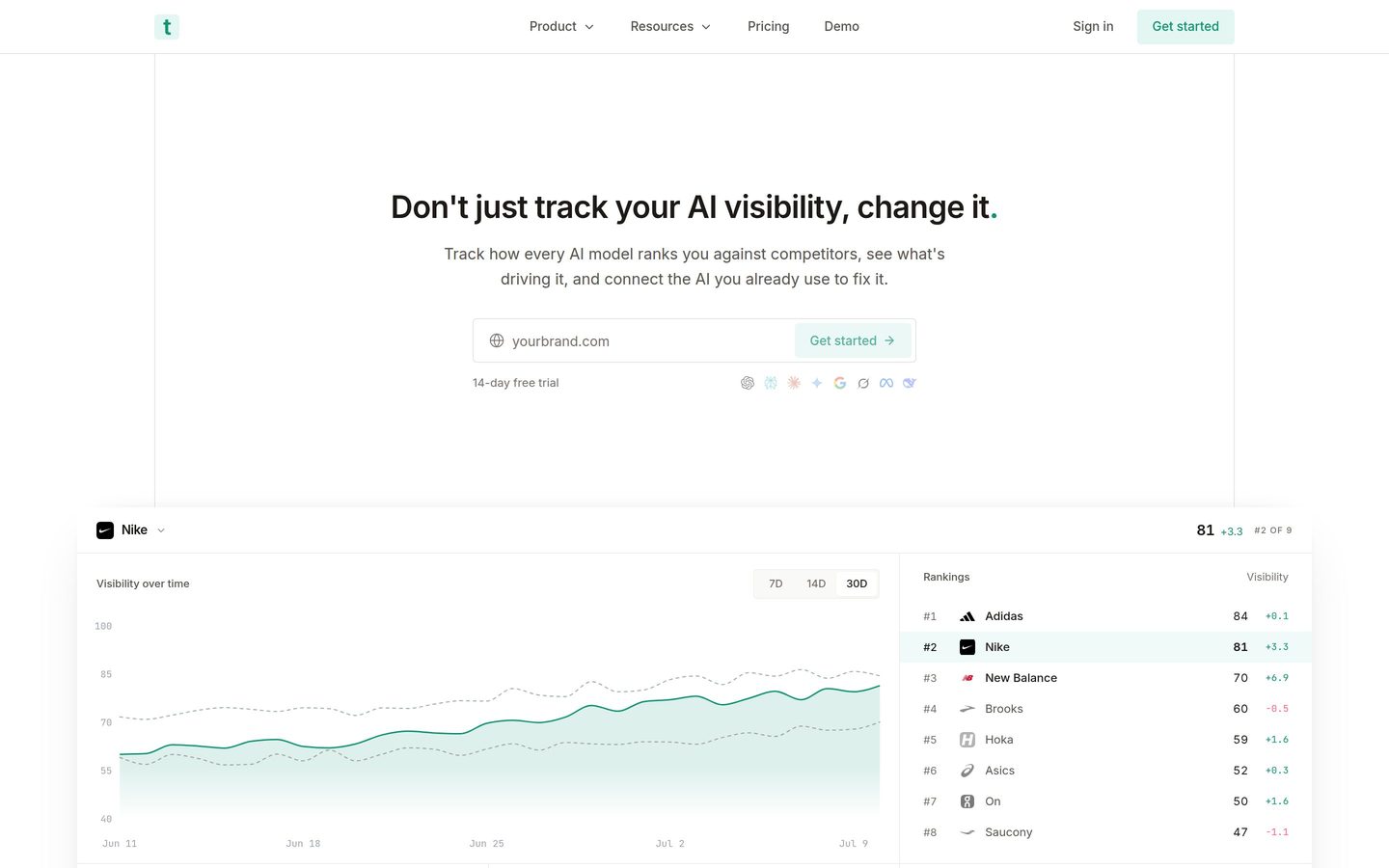
Clean, usable interface. Trakkr’s dashboard is well-designed. Visibility scores, competitor rankings, and trend data are presented clearly. The platform doesn’t overwhelm you with metrics that require a manual to interpret. For a tool in a category where most products feel technical and clunky, this matters.
Competitor benchmarking built in. Rather than treating competitor tracking as an add-on, Trakkr includes it in the core experience. You can see share-of-voice breakdowns across models and identify which competitors are strongest on which platforms.
Educational content. Trakkr’s blog and guides cover platform-specific optimization strategies, including how to appear in ChatGPT, how to get cited by Perplexity, and how to optimize for Grok. This content is useful even if you never subscribe.
No permanent free tier. This is the defining limitation. After 14 days, you pay or you stop. For solo founders and small businesses with tight budgets, this is a hard stop. The free alternatives listed above can fill the gap for spot checks, but none offer ongoing daily monitoring across 8 models without a subscription.
Prompt caps can feel restrictive. The Growth plan’s 50-prompt limit per brand is reasonable for focused monitoring but tight if you want to track a wide range of queries. If you’re in a category with many long-tail variations, you’ll hit the cap quickly.
Price jump from Growth to Scale is steep. Going from $100/month for 1 brand to $500/month for 10 brands is logical on a per-brand basis ($100 → $50/brand), but the absolute jump is large. There’s no intermediate tier for teams tracking 2–5 brands, which is a common use case for small agencies.
Monitoring, not optimization. Trakkr excels at telling you what’s happening; it doesn’t directly help you fix it. The platform provides site optimization recommendations and weekly action playbooks, but these are directional, not prescriptive. If you’re looking for a tool that generates AI-optimized content or automates citation building, Trakkr isn’t it.
Support maturity. As a relatively young platform, Trakkr’s support infrastructure is less developed than enterprise competitors. Marketraa’s review rates support at 6.5/10, noting it’s “less mature than established enterprise platforms.” For teams that need responsive, hands-on support, this is worth considering.
Trakkr does not have a free tier. It has a 14-day free trial, and it’s a genuinely good one. Full access to all 8 AI models, no credit card required, and enough time to gather meaningful data about your brand’s AI visibility. The confusion about whether it’s “free-forever” stems from the tool’s early beta days and from loose language in some third-party reviews, but the current reality is unambiguous: after 14 days, you subscribe or you stop.
Is the trial usable long-term? No, by design, it’s not meant to be. But used as a diagnostic tool, those 14 days can answer the most important question: does AI visibility matter for your brand, and is it worth investing in?
For solo founders and small businesses, the trial is worth starting. It costs nothing but time, and the data will either validate a paid subscription or confirm that you can safely ignore AI visibility for now. For agencies and multi-brand teams, the trial is a useful product evaluation but won’t reflect your actual usage pattern; you’ll need the Scale plan at minimum.
If you need ongoing AI visibility monitoring without a subscription, the permanent free alternatives (AEOeye for instant audits, Bing Webmaster Tools for Copilot performance, and Semrush’s free checker for a quick score) can cover the basics. They won’t replace daily multi-model tracking, but they’re better than flying blind.
If you’re ready to commit to a paid tool rather than testing a trial clock, AmICited is the better overall pick for most brands: comparable model coverage, a lower entry price than Trakkr’s Growth plan, and optimization guidance built in alongside monitoring.
Start the trial. Look at the data. Then decide.
Arshia is an AI Workflow Engineer at FlowHunt. With a background in computer science and a passion for AI, he specializes in creating efficient workflows that integrate AI tools into everyday tasks, enhancing productivity and creativity.

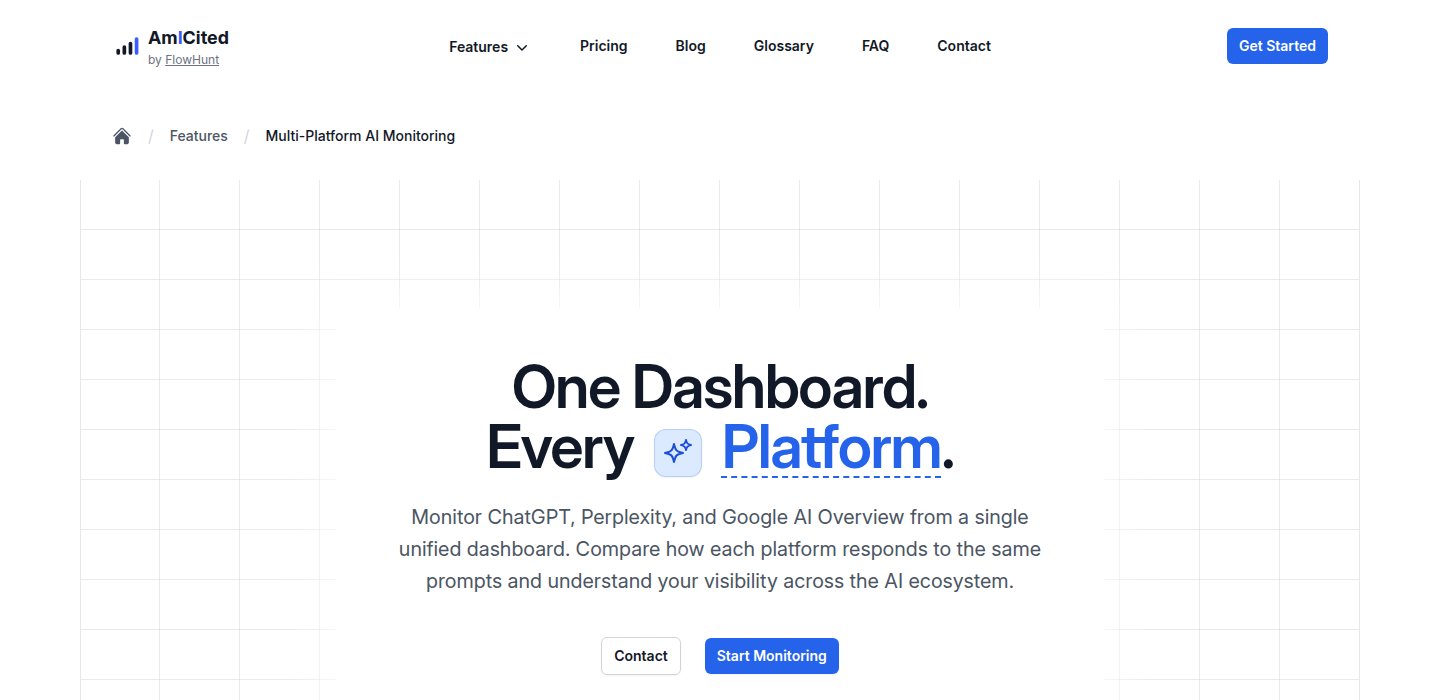
Am I Cited tracks how ChatGPT, Perplexity, Gemini, Claude, Grok, DeepSeek, Google AI Overview, and Google AI Mode cite your brand, with a lower entry price than Trakkr's Growth plan. Try it alongside Trakkr's trial and see which fits.
Compare Am I Cited and Trakkr for AI search visibility, including 2026 pricing, engine coverage, free tools, and trials.
Compare 15 AI search visibility platforms by pricing, engine coverage, free plans, and ideal use case. See verified 2026 figures in this buyer’s matrix.
Learn what AI Rank Trackers are and how they monitor your brand's visibility across ChatGPT, Perplexity, Google AI Overviews, and other AI platforms. Discover t...
Cookie Consent
We use cookies to enhance your browsing experience and analyze our traffic. See our privacy policy.